



Ovarian Cystectomy
An ovarian cystectomy removes a cyst, often an endometrioma (a "chocolate cyst"), and keeps as much healthy ovary as possible. It can relieve pain, protect how the ovary works, and support your fertility plans.
- How
- Minimally invasive; the ovary stays
- Home
- Usually the same day
- Back to desk work
- Often in 1–2 weeks
Medically reviewed by Dr. Steven Vasilev, MD
Board-Certified Gynecologic Oncologist & Integrative Medicine Diplomate, Advanced Robotic Endometriosis Excision Surgeon, Director of Lotus Endometriosis Institute · Updated Nov 2026
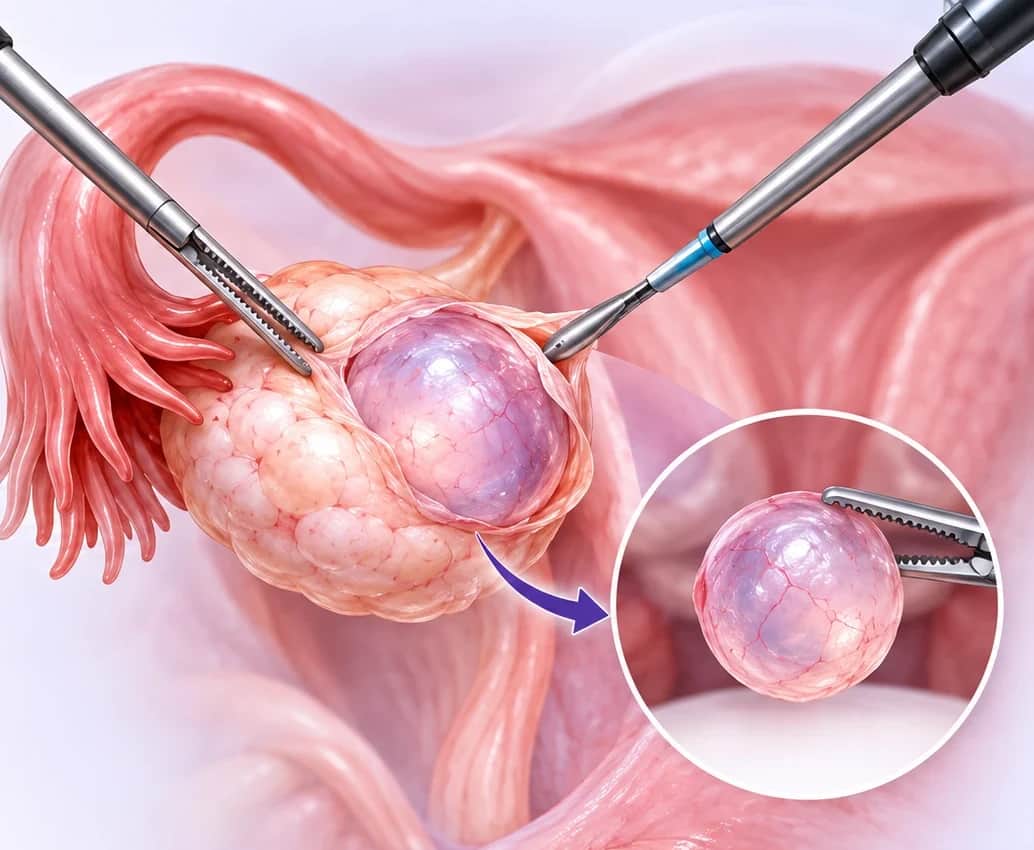
- The cyst is peeled awaySeparated from the ovary, lining and all.
- The ovary staysAs much healthy ovary as possible is kept.
- Removed wholeThen sent to pathology to confirm what it is.
Why ovarian reserve matters
Removing an endometrioma can take some healthy ovarian tissue with it, depending on the cyst's size and any earlier surgery. If pregnancy matters to you, we talk about freezing eggs or embryos, or timing with a fertility specialist, before surgery.
Who it’s for
Is it right for me?
When a cyst persists, grows, hurts or gets in the way of fertility, or imaging can't rule out something other than a simple cyst.
A cyst that's still there, or bigger, on a later scan is worth a closer look. So is one that hurts: pressure, ovulation pain, or flares that have sent you to the ER. If it's an endometrioma, a "chocolate cyst" caused by endometriosis, that's another reason to consider surgery.
If you're trying to get pregnant, the cyst may be getting in the way of ovulation or fertility treatment. And when imaging isn't clear because it doesn't look like a simple cyst, or a cyst came back after it was drained or removed before, surgery is worth asking about.
Not every cyst needs surgery: some simple cysts go away on their own and can be watched.
Often improves
- Pressure and one-sided pain from the cyst
- Period pain, pain with sex and cycle flares, when endometriosis is excised at the same time
- Access to the ovary for fertility treatment
- A definite diagnosis, from pathology
Won’t fix on its own
- Endometriosis elsewhere in the pelvis, unless it's treated in the same operation
- Adenomyosis (heavy bleeding and cramping)
- Pelvic floor tension or nerve sensitization
That's why cyst removal is usually planned with excision of endometriosis elsewhere, and pelvic floor therapy can follow.
Your options
How does it compare?
Draining a cyst leaves its lining behind, so it often comes back. A cystectomy removes the lining and keeps the ovary.
What stays behind decides whether a cyst returns. A cystectomy separates the cyst and its lining from the healthy ovary, keeping as much normal ovary as possible, and pathology confirms what the cyst was. An endometrioma can still return if endometriosis stays active, so treating endometriosis elsewhere in the same operation usually gives the most lasting relief.
Draining gives only short-term relief. Watching with repeat imaging suits simple cysts that come and go, which often go away on their own.
| Compared | Cystectomy | Draining the cyst | Watching it |
|---|---|---|---|
| What it does | Removes the cyst and its lining; keeps the ovary | Empties the fluid; the lining stays | Checks it with repeat imaging |
| Will it come back? | Less likely, though an endometrioma can return if endometriosis stays active | Often | Simple cysts often go away on their own |
| Confirms what it is | Yes, from pathology | No | No |
| Often right for | Endometriomas, and cysts that persist, grow or hurt | Short-term relief only | Simple cysts that come and go |
Cystectomy
- What it does
- Removes the cyst and its lining; keeps the ovary
- Will it come back?
- Less likely, though an endometrioma can return if endometriosis stays active
- Confirms what it is
- Yes, from pathology
- Often right for
- Endometriomas, and cysts that persist, grow or hurt
Draining the cyst
- What it does
- Empties the fluid; the lining stays
- Will it come back?
- Often
- Confirms what it is
- No
- Often right for
- Short-term relief only
Watching it
- What it does
- Checks it with repeat imaging
- Will it come back?
- Simple cysts often go away on their own
- Confirms what it is
- No
- Often right for
- Simple cysts that come and go
From first visit to recovery
What happens, step by step?
A video consultation, the tests needed to plan around your ovary and fertility, then one operation and a week or two of recovery.
It starts with a video consultation about your symptoms, what imaging shows, and your goals for pain relief, fertility and keeping the ovary. If pregnancy matters to you, testing can include ovarian reserve, and we talk about freezing eggs or embryos before surgery. We agree in advance on what the surgery may include, such as excising endometriosis elsewhere. Insurance and a fixed price are settled before anything is booked.
The operation is minimally invasive, through small incisions, and many patients go home the same day. Many people are back at a desk job in 1–2 weeks; physical jobs take longer. Three months on, a video check-in goes over your pathology results.
Before surgery
Planning consultation
By video: your symptoms, what imaging shows, and your goals for pain relief, fertility and keeping the ovary.
If pregnancy matters to you, we talk about freezing eggs or embryos, or timing with a fertility specialist, before surgery.
Testing
Depending on your case: repeat or specialized imaging, bloodwork, and tests of ovarian reserve if fertility matters to you.
Your plan
We agree on what the surgery may include, such as excising endometriosis elsewhere. Insurance and a fixed price are settled before anything is booked.
Surgery day
The operation
Minimally invasive, through small incisions. The cyst is separated from the healthy ovary and removed, keeping as much normal ovary as possible, and sent to pathology.
Endometriomas often come with endometriosis and adhesions elsewhere. Treating the whole pattern, not only the cyst, usually gives the most lasting relief.
Often in the same operation: endometriosis excision · adhesion release
Going home
Day 0
Many patients go home the same day.
Recovery
Recovery
Weeks 1–2
Tiredness, bloating and soreness for several days, improving over 1–2 weeks. Many people are back at a desk job in 1–2 weeks; physical jobs take longer.
If endometriosis was excised in the same operation, recovery is more layered: the pelvis stays tender for a while as inflammation settles.
Follow-up
Follow-up
3 months
Your pathology results and a video check-in. Symptom tracking, and hormonal or integrative support if it helps keep cysts from coming back.
Pain that continues doesn't mean you failed. It usually means endometriosis elsewhere, or tense pelvic muscles, need a plan too.
Your surgeon
Who should do it?
A surgeon who treats endometriosis, because endometriomas usually come with endometriosis elsewhere, and who protects the ovary while removing the cyst.
Endometriomas are often stuck tightly to the ovary and surrounded by inflammation. Keeping the ovary working while lowering the chance the cyst comes back takes judgment and precision, and an experienced surgeon recognizes when the pain comes from endometriosis beyond the cyst.
“The cyst you can see is often only part of the problem. The plan has to cover the endometriosis around it, and your future fertility.”
Patients often ask
Endometrioma removal vs draining: what’s the difference?
Draining an endometrioma removes the fluid but leaves the cyst wall behind, so symptoms and the cyst often come back. Ovarian cystectomy is designed to peel the capsule off the ovary and remove the lining, which typically offers a more durable result.
Does an ovarian cystectomy remove the ovary?
Usually not: an ovarian cystectomy aims to remove the cyst wall and preserve the ovary. In a small number of cases, the plan can change if the ovary is severely damaged, blood flow is significantly compromised, or findings raise concern for something other than a benign cyst.
Will ovarian cystectomy improve fertility?
Ovarian cystectomy can improve fertility in some situations, especially when a cyst disrupts ovulation, distorts pelvic anatomy, or drives inflammation. However, ovarian surgery can also reduce ovarian reserve, depending on how much healthy ovarian tissue is affected.
Will an ovarian cyst come back after cystectomy?
Some ovarian cysts can come back after cystectomy, with a higher risk for endometriomas because they are tied to endometriosis. Removing the cyst helps, but if endometriosis remains active, new cysts or recurring symptoms are more likely.
You’re on step 1 of 3
Next: Who should operate?What to look for in any surgeon, and Dr. Vasilev’s results.