

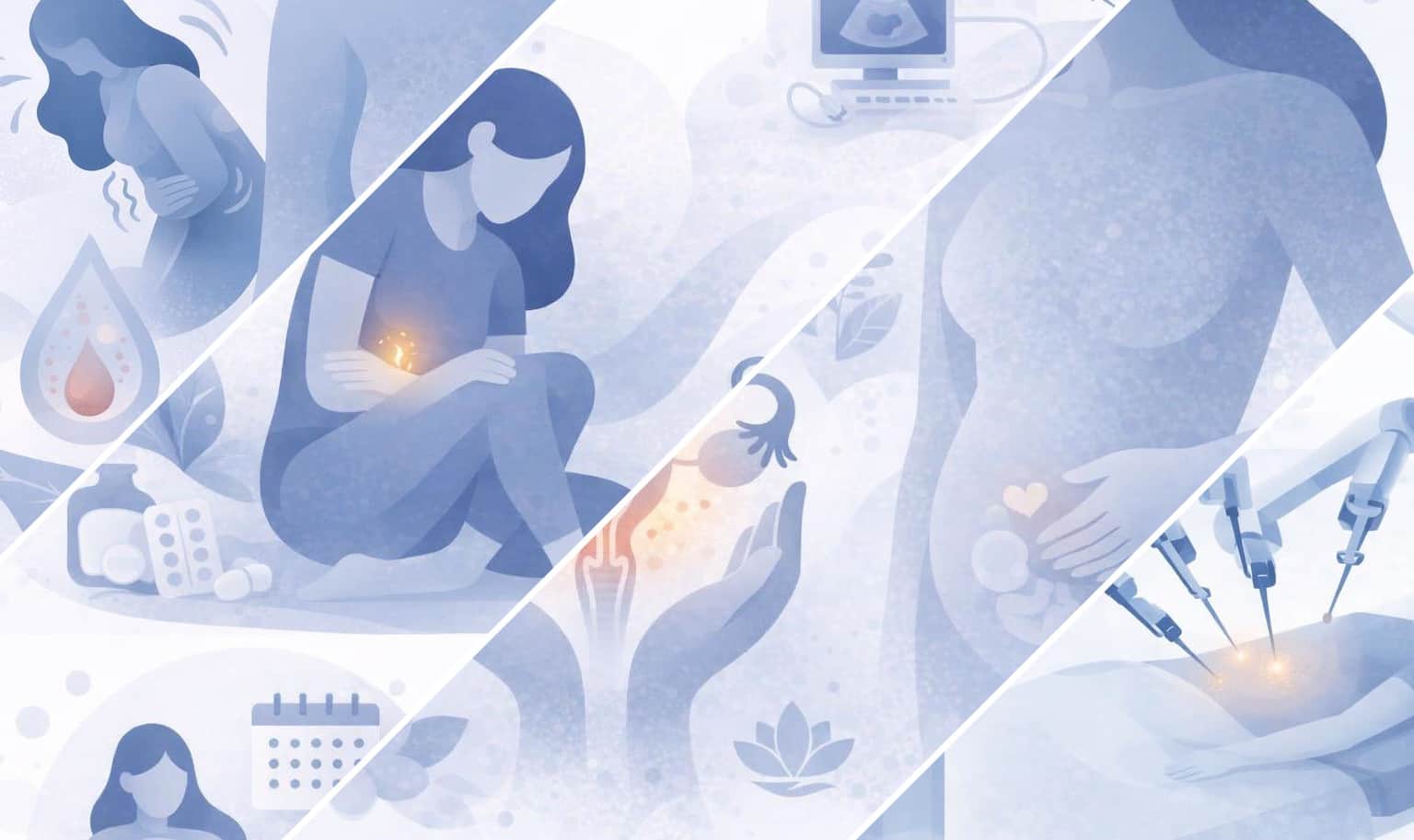
Endometriosis Excision Surgery
Endometriosis excision surgery removes endometriosis lesions from their root to reduce pain, inflammation, and organ irritation—often with better long-term relief than “burning” lesions, which is known as ablation. It’s considered the gold standard surgical approach for many people with endometriosis.
Overview
Endometriosis excision surgery is a minimally invasive procedure that aims to remove endometriosis (endometrial-like tissue growing outside the uterus) rather than simply cauterizing the surface and hoping that the damage is deep enough to eradicate the endo lesions. The latter is called ablation. By removing disease more completely, down to healthy tissue below the lesions, excision surgery may offer more durable relief of symptoms like pelvic pain, painful periods, pain during intercourse, and certain bowel/bladder symptoms.
Absolute proof for excision in all situations has been elusive. For superficial endometriosis, both ablation and excision can improve pain in the short term. The challenge there is mainly whether or not the surgeon can correctly identify endo lesions, assess risk to nearby delicate structures like the ureters, and is able to determine that the disease is not actually deeper than they thought. This last part is hard to do when looking at the surface in all but minimal endo cases. However, for endometriomas and deeper disease, excision has stronger evidence for improved pain outcomes and reduced persistence/recurrence risk, and it allows tissue confirmation. Pathologic confirmation of endo supports accurate staging and leads to treatment decisions down the line that are not based on guessing what the diagnosis is.
Endometriosis can look and behave differently from person to person—superficial lesions, deep lesions, atypical looking lesions, scar tissue/adhesions, ovarian cysts (endometriomas), or even deeper disease affecting pelvic nerves, bladder, bowel, ureters, or diaphragm. Excision is designed to address endometriosis comprehensively and thoughtfully, while preserving healthy organs whenever possible. So it is not just a matter of excision vs ablation. It is a matter of surgeon experience in determining what, why, when and where to do what. Learn more about the condition itself here: endometriosis.
At Lotus Endometriosis Institute, excision surgery is part of a larger care plan that may include advanced diagnostic evaluation, pain-focused support, and integrative recovery tools. We generally go beyond routine evaluation to ensure the treatment plan is as well grounded as possible. You can explore our services and surgery and advanced excision to see how care is coordinated.
When Is It Recommended?
Excision surgery is commonly recommended when symptoms are persistent, worsening, or life-limiting despite medical therapy—especially when you’ve tried options like anti-inflammatory strategies, hormonal suppression, or targeted hormonal therapy but still have significant pain, fatigue, or functional limitations. It may also be considered when imaging or exam suggests endometriomas, deep disease, or adhesions that are unlikely to improve with medication alone.
It’s also an option when endometriosis is suspected but you’re stuck in the “maybe/unclear” stage—especially if your symptoms are cyclical and classic (for example: severe painful bowel movements, bladder pain, or urinary urgency that flares with your cycle). A specialist evaluation can help determine whether surgery is likely to be helpful, and what else should be considered. Start with evaluation and diagnosis.
For people trying to conceive, excision may be recommended to improve pelvic anatomy and reduce inflammatory burden—particularly if endometriosis is suspected to be contributing to infertility. Because fertility goals change surgical planning, it’s important to discuss your timeline and priorities early in the consultation.
What to Expect
The goal of excision surgery is to reduce pain drivers and improve quality of life—often by decreasing inflammation, releasing organs that are “tethered” by adhesions, and removing endometriosis lesions that irritate sensitive tissues. Many patients report meaningful improvement in period pain, daily pelvic pain, bowel/bladder flares, and pain with intimacy, although results vary based on disease location, coexisting conditions, and how long pain has been present.
It’s equally important to know what excision surgery doesn’t do: it doesn’t guarantee complete or permanent symptom elimination, and it may not address every contributor to pain (for example, pelvic floor muscle spasm, nerve sensitization, IBS-like symptoms, bladder pain syndrome, or adenomyosis). Lotus integrates supportive care such as pain management, integrative medicine and lifestyle care, and pelvic floor therapy to help your nervous system and muscles recover and to cover other possible related or unrelated pain generators. Endo causes a lot of problems but it usually does not directly cause all of them.
During your planning visit, you can expect a detailed conversation about your symptoms, goals (pain relief, fertility, avoiding hysterectomy, etc.), prior treatments, and what organs might be involved. If symptoms suggest overlapping conditions, your team may also discuss related diagnoses—such as adenomyosis or other issues listed under related conditions.
About the Surgery
Endometriosis excision surgery is typically performed using minimally invasive laparoscopy (with advanced robotic assistance in most cases at Lotus). Through small incisions, the surgeon carefully identifies endometriosis lesions and removes them with an excision technique—aiming to eliminate disease while protecting healthy tissue and organ function.
Because endometriosis can hide in complex areas (around the bowel, bladder, ureters, pelvic nerves, or diaphragm), the “scope” of surgery depends on what is found and what you and your surgeon agreed to in advance. Some patients also need treatment of associated problems during the same operation—such as removal of ovarian cysts/endometriomas, release of adhesions, or evaluation/treatment of suspected deep disease. (Those may align with procedures like Excision of Endometriomas, Pelvic Adhesiolysis, Bladder Surgery for Endometriosis, or Bowel Surgery for Endometriosis, depending on your case.)
At Lotus, surgery is approached as one part of a long-term plan: remove disease thoughtfully, confirm diagnoses when possible, look for other pain generators, and create a recovery strategy that supports healing and reduces the chance that symptoms persist due to untreated overlap issues. Learn more about the surgical approach here: surgery and advanced excision.
Recovery Expectations
Most patients go home the same day or after a short stay, depending on surgical complexity and individual needs. In the first several days, it’s common to have abdominal soreness, fatigue, bloating, and shoulder/upper back discomfort related to laparoscopy. Many people can do gentle walking right away, but you’ll want to plan for help with childcare, lifting, and household tasks early on.
A typical recovery involves gradual improvement over 2–6 weeks, but it’s not unusual for full “settling” of pelvic inflammation and nerve irritation to take longer—especially after complex excision or long-standing pain. Your team will give guidance on activity, incision care, bowel support, and when to resume sex, exercise, work, and travel. If pelvic floor tightness is part of your symptoms, pelvic floor therapy may be recommended after surgery to support lasting relief.
If you have ongoing symptoms after surgery, it does not automatically mean the surgery “failed.” It may mean you need targeted treatment for adenomyosis, pelvic floor dysfunction, bladder/bowel overlap conditions, or central sensitization. That’s why coordinated follow-up and a personalized plan through our services matters.
Why Expertise Matters
Excision surgery is highly skill-dependent. Endometriosis lesions can be subtle, hidden, or located near structures where precision is critical (ureters, bladder, bowel, pelvic nerves, diaphragm). A surgeon with advanced excision training is more likely to recognize the full pattern of disease, remove it thoroughly when safe, and avoid incomplete treatment that can leave behind active lesions or unresolved adhesions.
Expertise also matters for protecting fertility and organ function. Decisions like how to manage ovarian endometriomas, how to handle deep disease, and when to involve additional surgical support can affect outcomes—pain relief, recurrence risk, and complication risk. This is why many patients seek a specialist center focused on endometriosis rather than general gynecologic laparoscopy.
Lotus Endometriosis Institute is led by Dr. Steven Vasilev, known for being an early adopter and published leader in surgical complex-case care, including advanced excision surgery before the term MIGS was even coined. If you’re considering surgery—or you’ve had prior surgery and still have symptoms—you can schedule a consultation to review options and build a plan that matches your goals.
Patients Often Ask
How is multi-organ endometriosis treated without organ removal?
In many multi-organ cases, the goal is conservative surgery: removing endometriosis while preserving the organs themselves. That typically means meticulous excision of disease from surfaces and deeper planes around the bowel, bladder, ureters, ovaries, and pelvic sidewalls—freeing organs from scar tissue and restoring normal anatomy without taking the organ out. Because endometriosis can hide in distorted or “frozen” anatomy, the safest way to preserve organs is often a highly precise approach that can dissect around vital structures.
In our practice, we use robotic excision to improve visualization and fine-control dissection, which is especially helpful when disease involves multiple compartments or has been operated on before. When endometriosis is close to structures like the ureters, bowel, diaphragm, or certain nerves, treatment planning may include coordinated work with other surgical specialists so the disease can be fully addressed in one operation while still prioritizing organ-sparing techniques.
Organ removal is usually considered only when an organ is severely damaged, there are multiple large endometriomas that can’t be safely managed with tissue-sparing techniques, fertility-safety concerns arise (like a badly damaged tube), or there’s concern for tumor or malignant change. If you’re trying to avoid organ removal, we can help map likely disease sites, clarify your priorities (pain relief, function, fertility), and outline what organ-preserving excision could realistically look like in your specific case—then build a surgical plan around that.
How much time off work do I need after endometriosis surgery?
Most people need about 2–3 weeks off work after minimally invasive endometriosis excision, especially if your job is mainly desk-based and you can ease back in. With robotic excision, patients often go home the same day or next day, start walking comfortably within about a week, and many feel ready for a gradual return to typical daily routines in that 2–3 week window.
The exact time off depends less on the incision size and more on what we need to treat during surgery—for example, ovarian endometriomas, bowel/bladder/ureter involvement, extensive scar tissue (“frozen pelvis”), or additional procedures like appendix removal or adenomyosis-related surgery. More complex, multi-organ cases can mean more fatigue, more activity restrictions, and a higher chance of needing an overnight stay, which can extend the time you’ll want to plan away from work.
In most straightforward recoveries, many patients are back to full activity by about a month. If you tell our team what you do for work (lifting, long shifts, travel, on-your-feet all day vs remote/desk), we can help you plan a realistic time-off request and a safer return-to-work ramp based on the surgical plan we’re building for you.
Why do I look pregnant from bloating with constant pelvic pressure?
Feeling so bloated you “look pregnant” along with constant pelvic pressure usually points to more than simple gas—often it’s a pelvic condition creating inflammation, swelling, or a sense of bulk. Endometriosis can irritate the bowel and pelvic lining, trigger scarring that tethers organs, and create the classic “endo belly” sensation that comes and goes (sometimes not perfectly cyclical). Pelvic pressure can also happen when endometriosis involves deeper tissues or nearby organs like the bladder, ureters, or rectum.
Just as important: these symptoms can be driven by endometriosis neighbors or coexisting conditions, especially adenomyosis and fibroids, which can make the uterus feel heavy, full, or “bulky” and add pressure on the bladder and bowel. Ovarian cysts and other benign pelvic findings can contribute, and IBS-like bowel sensitivity can overlap so closely that symptoms alone don’t reliably sort out what’s causing what. Our team focuses on mapping the full picture—uterus, ovaries, bowel, bladder, and pelvic support structures—so treatment targets the true driver(s), not just the most obvious diagnosis.
If this pressure/bloating is persistent, worsening, or changing your ability to eat, move your bowels, or urinate comfortably, it’s a strong reason to pursue a deeper evaluation rather than being told it’s “normal.” You can explore our educational content on bowel symptoms, bladder symptoms, and overlapping conditions, and reach out to schedule a consultation so we can review your history, imaging, and symptom pattern and outline a plan aimed at lasting relief.
Can endometriosis cause infertility and pelvic pain in your 20s?
Yes. Endometriosis can absolutely show up in your late 20s and it can be a driver of both chronic pelvic pain and fertility challenges. Pain can include severe or worsening period cramps, pain with sex, bowel or bladder pain, and “flare” patterns that track with your cycle—although symptom severity doesn’t always match how much disease is present.
Endometriosis can affect fertility in several ways, including adhesions that distort tubo‑ovarian anatomy, inflammation and immune signaling that interferes with fertilization or embryo development, and ovarian factors—especially when endometriomas are involved. For some patients, the uterine environment also matters, particularly when adenomyosis is present alongside endometriosis. In our practice, we focus on listening to your full symptom and fertility story and then building an evaluation that looks for endometriosis while also checking for common look‑alikes or coexisting issues, so we can tailor a plan to your goals—whether that’s pain relief, preserving fertility, or both.
Why do I have chronic fatigue and pelvic pain?
Chronic fatigue plus pelvic pain often feels “unexplainable” because it’s rarely caused by just one issue—and many of the most common drivers don’t show up on routine labs or a quick ultrasound. Endometriosis and adenomyosis can cause persistent pelvic pain, painful periods, bowel/bladder symptoms, and deep fatigue through inflammation, disrupted sleep, heavy bleeding (and possible iron deficiency), and the sheer energy cost of living with ongoing pain. It’s also common for more than one gynecologic condition to coexist—like fibroids, polyps, or benign cysts—so a single label may not fully match what you’re experiencing.
Another reason symptoms can persist is that the nervous system can become more pain-sensitive over time (often called central sensitization), meaning pain can spread, linger outside your cycle, or feel disproportionate to what imaging shows. In those cases, symptom relief alone can miss the bigger picture: we think in terms of both treating disease (for example, addressing endometriosis lesions or uterine drivers like adenomyosis/fibroids) and building a personalized pain-management plan so your body can “turn down the volume” on pain signals.
If your fatigue and pelvic pain have been brushed off or left without a clear plan, our team can help you sort through the likely contributors, including endometriosis/adenomyosis and common coexisting conditions, and map next steps that fit your goals. You can explore our educational resources on fatigue, chronic pelvic pain, and comprehensive treatment approaches, and reach out to schedule a consultation when you’re ready.
Why does sex hurt more around my period?
Pain with sex that flares around your period often points to a hormonally driven pelvic pain source—meaning tissue and nerves in the pelvis become more inflamed and reactive in the days leading up to bleeding and during menstruation. Endometriosis is a common reason: lesions can irritate nearby nerves and organs, and the inflammatory chemicals they produce can amplify pain signals. Adenomyosis (endometrial-like tissue within the uterine muscle) can also make the uterus unusually tender and crampy, so penetration, orgasm-related uterine contractions, or even pelvic pressure can feel painful around that time.
The “where” and “when” of the pain matters. Deep pain with penetration can be related to endometriosis near the uterosacral ligaments, cervix/vaginal fornix, rectovaginal space, bowel, or bladder—especially if scarring or adhesions have altered how those structures move. Pain after sex or after orgasm can happen when pelvic floor muscles spasm or when uterine contractions tug on sensitized areas. If this pattern is recurring, our team can help map your symptom timing and triggers and evaluate for endometriosis, adenomyosis, pelvic floor dysfunction, and overlapping bladder/bowel involvement so treatment targets the real driver of your pain rather than just masking it.
Why are bowel movements painful and bloating worse during my period?
Painful bowel movements and bloating that flare during your cycle are common in endometriosis—especially when disease is deep in the pelvis near the rectum/rectosigmoid, or when inflammation and scarring tether the bowel to nearby structures. Even without endometriosis growing “inside” the bowel, pelvic lesions can irritate surrounding tissue and nerves, creating cramping, pressure, and the deep, sharp pain some people feel with passing stool. Hormonal cycling can amplify inflammation and swelling, which is why symptoms often peak around bleeding and then ease. Many patients also notice alternating constipation/diarrhea or an “endo belly” pattern that tracks with their period.
These symptoms are often confusing because standard GI workups (including colonoscopy) can be normal—bowel endometriosis frequently affects the outside of the bowel wall or deeper layers rather than the inner lining that a colonoscopy evaluates. What matters most is mapping where symptoms point anatomically and whether there are red flags like cyclical rectal bleeding, escalating severity, or signs of narrowing/obstruction. Our team focuses on a whole-pelvis evaluation and, when appropriate, targeted imaging and surgical planning to confirm what’s driving your bowel pain and bloating and treat it effectively. If you’d like, you can reach out to schedule a consultation so we can review your symptom pattern and discuss next steps.
Why is my period pain so severe it disrupts my daily life?
Severe, life-disrupting period pain isn’t “normal cramps,” and it often points to an underlying driver that deserves a real explanation—not just symptom masking. One common cause is endometriosis, where tissue similar to the uterine lining grows outside the uterus and can irritate pelvic structures, trigger inflammatory chemicals, and sometimes involve organs like the bowel or bladder. Another key point is that pain severity doesn’t reliably match “stage,” so someone can have intense pain even if imaging looks normal or disease appears limited.
When period pain is severe, worsening over time, starts years after your first period, or comes with heavy bleeding, painful sex, bowel pain with periods, urinary pain, or fatigue, we think in patterns—because endometriosis and related conditions can overlap with pelvic floor dysfunction, nerve pain/central sensitization, GI dysbiosis, vascular issues, or adenomyosis. Our approach is to take your full timeline and flare pattern seriously and then tailor evaluation with careful exam and expertly interpreted imaging when helpful. If your pain is disrupting school, work, relationships, or daily functioning, reach out to schedule a consultation—our team can help you identify what’s driving it and map out a plan aimed at lasting relief.
Related Symptoms
This procedure may help address the following symptoms:
Related Articles
Excision, Ablation, and Robotic Surgery: Key Differences
Excision vs ablation vs robotic surgery for endometriosis: indications, risks, recovery, and evidence to help you choose the right treatment.
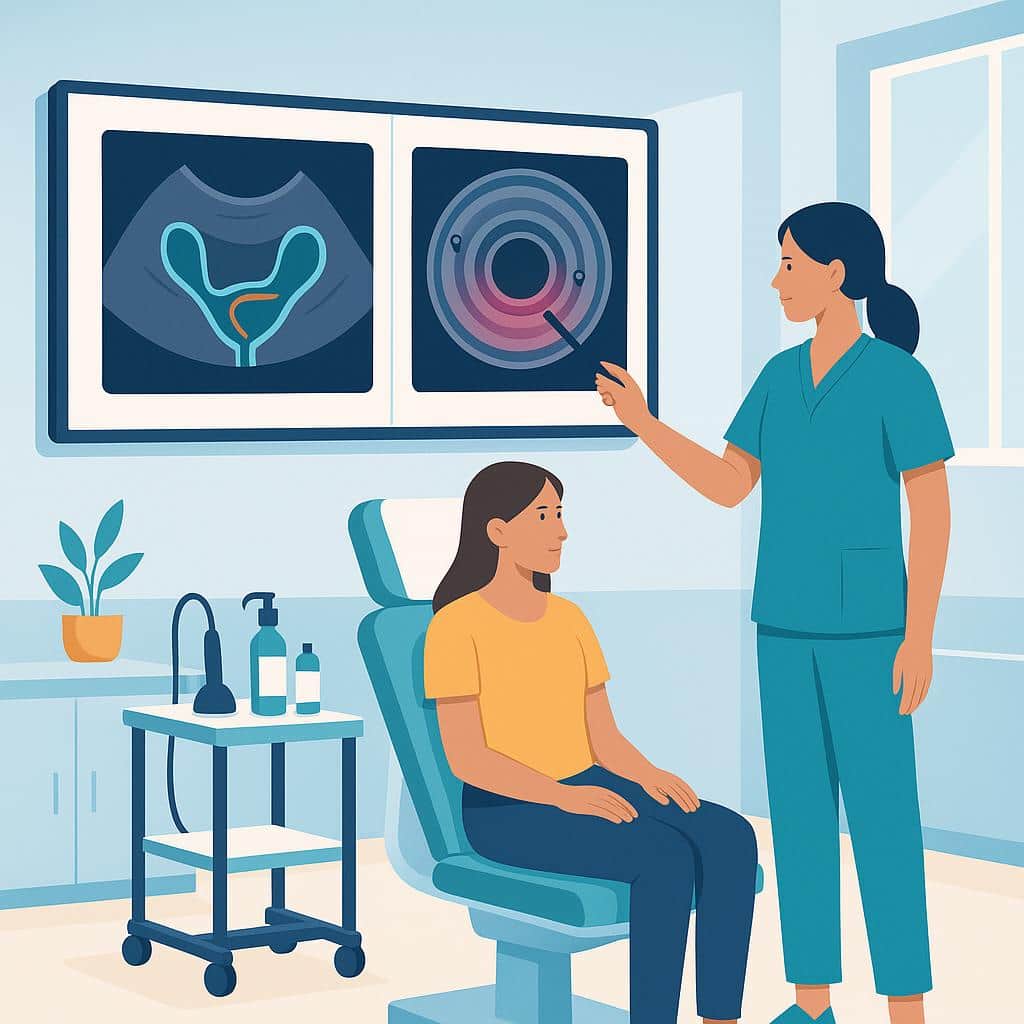
Do You Need Two Ultrasounds Before Bowel Endometriosis Surgery?
How TVS (transvaginal) and ERUS (endorectal) map rectal endometriosis, guide bowel surgery planning, flag stenosis and risks, and who benefits.
Does a Longer Endometriosis Surgery Mean More Complications? What a 2025 Study Found.
2025 study in stage III–IV minimally invasive endometriosis surgery: longer cases didn’t raise short-term complications but increased overnight-stay risk.
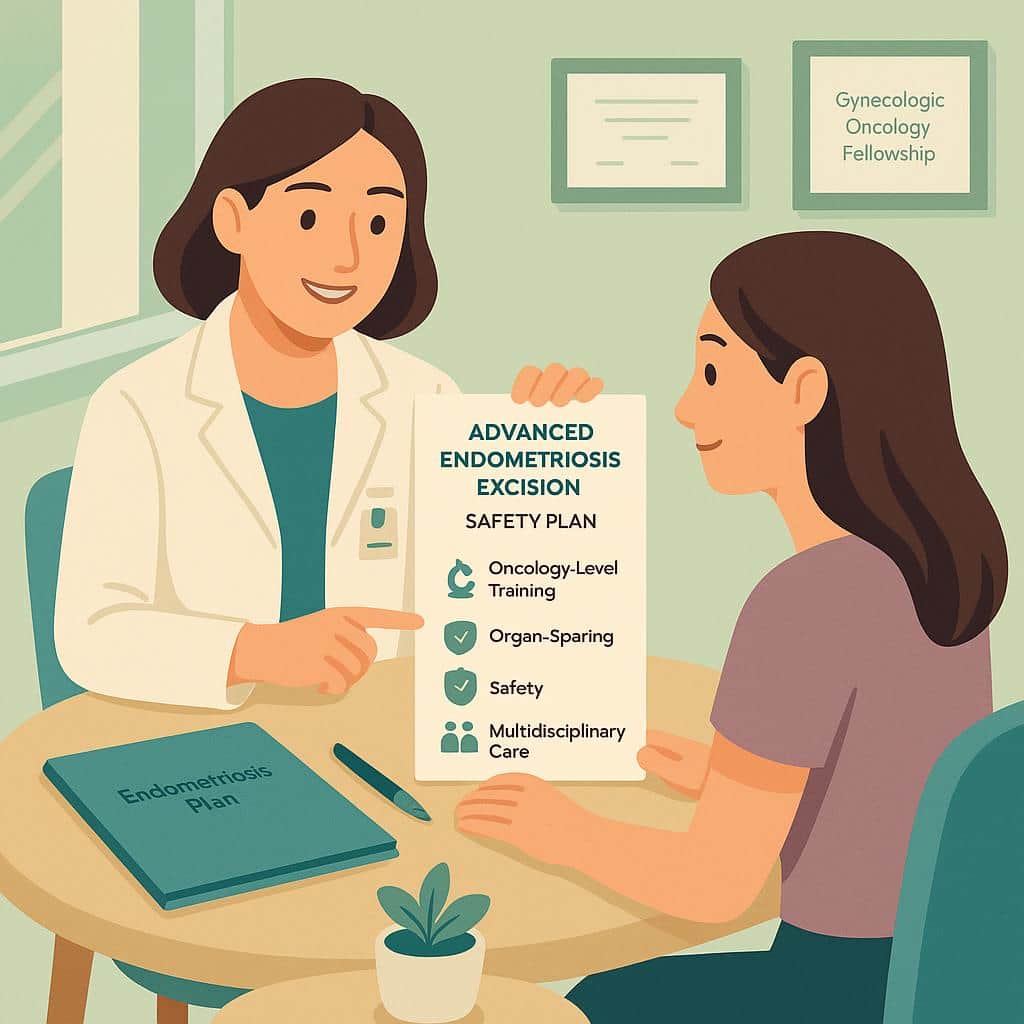
Gynecologic Oncologists - Safest Choice for Complex Endometriosis Surgery?
For deep or advanced endometriosis, oncology-trained surgeons often provide safer, more complete excision. Learn what this means for you at the Lotus Endometriosis Institute.
Life Beyond Endometriosis Surgery: Recovery & Well-Being
Your guide to endometriosis surgery recovery: healing tips, nutrition, mental health support, recurrence prevention, and planning for long-term wellness.
Considering Endometriosis Excision Surgery?
If you're exploring this procedure as a treatment option, our specialists can help you understand if it's right for your situation and answer any questions you may have.
Schedule a Consultation