

General
Does endometriosis increase cancer risk?
The short answer
Yes, endometriosis is associated with increased ovarian cancer risk, especially clear cell and endometrioid types. The increase is relative to people without endometriosis; absolute risk remains low, and most people with endometriosis never develop cancer.
Yes, endometriosis is associated with increased cancer risk, with the strongest and most consistent evidence involving clear cell and endometrioid ovarian cancers. Studies have reported ovarian cancer risk increases up to tenfold in some groups compared with people without endometriosis, but endometriosis is benign, absolute risk remains low, and most people with it never develop cancer.
Evidence for links to other cancers, including endometrial cancer, is less consistent, and their absolute risks generally remain low; endometrial cancer starts in the uterine lining and is distinct from endometrioid ovarian cancer. Rarely, endometriosis tissue can become cancerous, including in the bowel, but leaving endometriosis untreated does not mean cancer will develop.
Deep infiltrating endometriosis and ovarian endometriomas can behave aggressively in the pelvis, distort anatomy, and share some molecular features with cancers without being malignant. These features can make treatment complex and may require advanced, organ-sparing surgical skill, especially when fertility preservation is a priority.
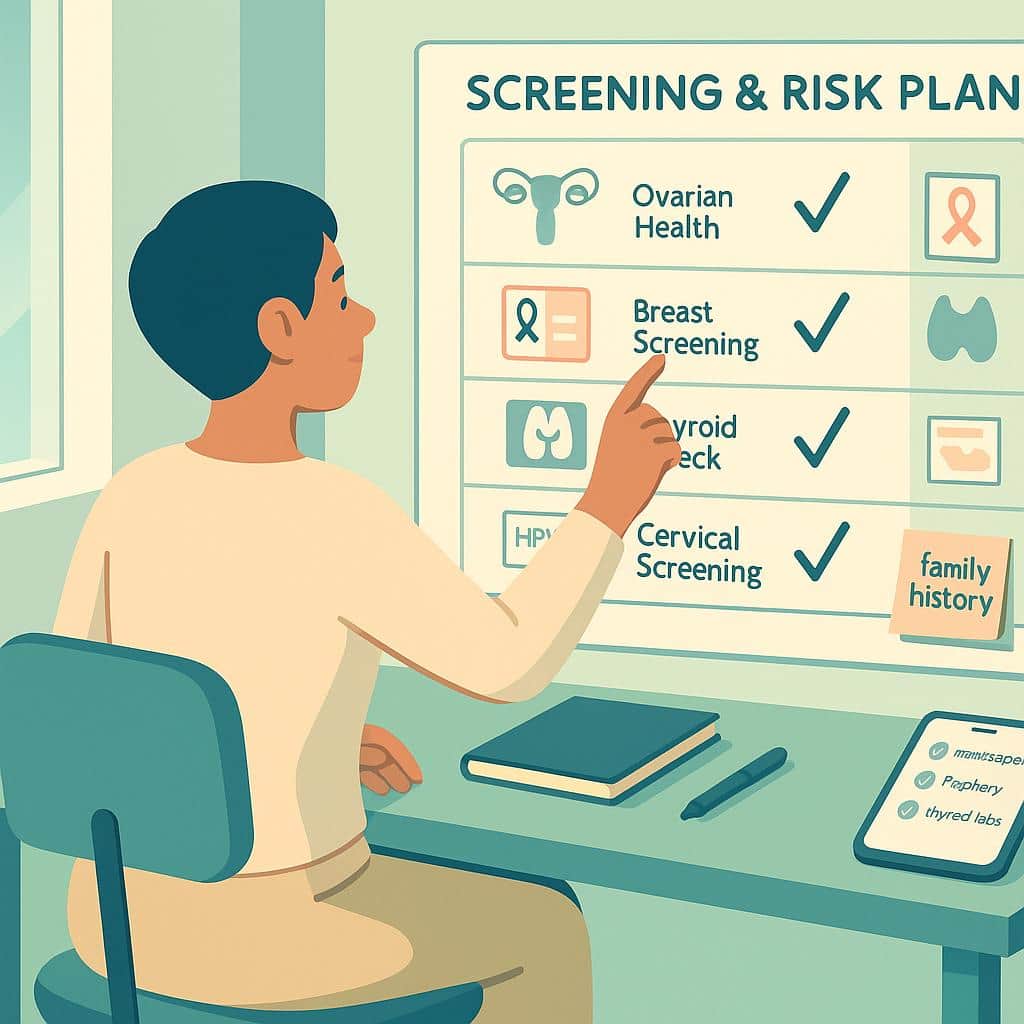
Individual risk assessment can include family history, whether genetic testing is appropriate, and evaluation of an ovarian mass, persistent one-sided pain, or new symptoms outside your usual pattern, none of which alone establishes cancer. If you’re concerned about your risk or imaging suggests an endometrioma or deep disease, you can contact our team for a consultation to review your history and imaging, clarify what applies to you, and discuss surgical options when needed.
Where to go from here
Understand it, compare it with what you're feeling, then talk it through with us.
Compare
Symptoms it can relate to
Speak with Us
Worried About Cancer Risk?
Endometriosis can increase your ovarian cancer risk, but specialists can assess your individual situation and guide you on next steps. We’re here to help you understand your risks and options with expert care.
Questions people ask next
All general questionsCan endometriosis become cancer?
Yes, endometriosis can rarely become cancer, but for the vast majority of people it does not. Endometriosis itself is not cancer, and the best-supported link is with certain ovarian cancers. The risk appears highest when the ovaries are involved.
Does endometrioma removal or excision surgery reduce cancer risk?
Removing an endometrioma or excising endometriosis can remove tissue where atypical changes could rarely develop, but surgery is not typically done primarily to prevent cancer. The link with cancer is complex, and the absolute risk for most patients remains low.
Does HRT raise cancer risk after endometriosis?
Research on whether HRT raises cancer risk after endometriosis is limited. Endometriosis is associated with a slightly higher lifetime risk of certain ovarian cancers, but the overall risk for most people remains low. HRT decisions are usually individualized.
Do I need extra cancer screening with endometriosis or adenomyosis?
No universal extra cancer-screening program is recommended solely for endometriosis or adenomyosis. Additional evaluation may be appropriate based on your personal risk, especially with a strong family history, genetic predisposition or new concerning symptoms.
Further reading
Evaluating Cancer Risk in Endometriosis
Understand how endometriosis affects ovarian, breast, thyroid, and cervical cancer risk, plus symptoms to watch, screening guidance, and ways to lower risk.
Can Endometriosis Cause Cancer?
Can endometriosis cause cancer? Learn why the ovarian cancer link rarely means transformation, and what changing symptoms or cyst findings may warrant review.
Postmenopausal Endometriosis: Risks and Key Insights
Learn about postmenopausal endometriosis: who is at risk, diagnosis and treatment basics, and why malignant transformation is rare but worth knowing.