
Surgery
What do endometriosis stages 1–4 mean?
The short answer
Endometriosis stages 1–4 describe surgical findings, from minimal to severe, based on lesions, ovarian endometriomas, and adhesions. Stage does not reliably predict pain or case complexity; disease type, location, and completeness of safe removal also guide care.
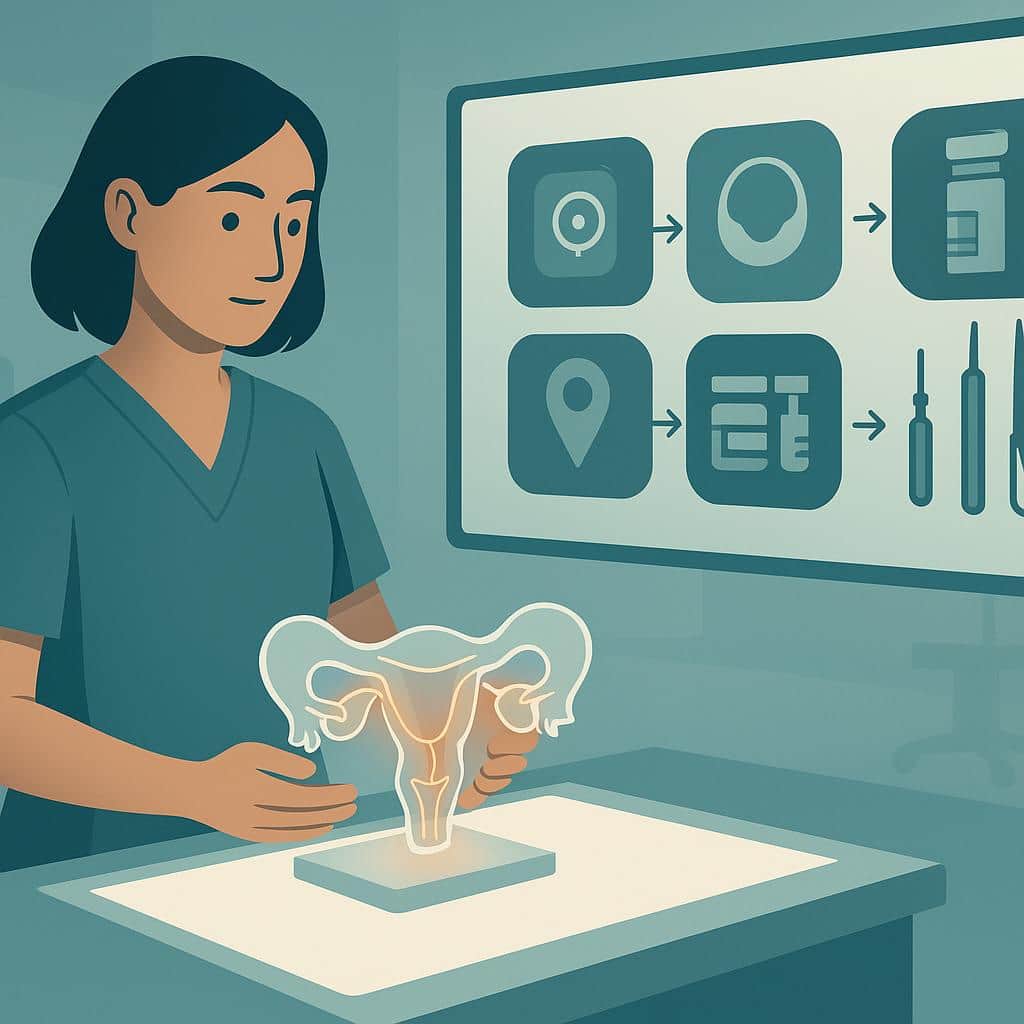
Endometriosis staging, most commonly the ASRM/rASRM system, scores findings seen at surgery, usually laparoscopy: lesion number, location, depth, and extent, ovarian endometriomas, and scar tissue called adhesions. Stage 1 or I is minimal, stage 2 or II mild, stage 3 or III moderate, often with ovarian involvement and more adhesions, and stage 4 or IV severe, with extensive disease or significant adhesions that can distort anatomy. There are four stages, not five, and this classification is useful shorthand for documentation and planning rather than a complete picture of the disease.
Stage does not reliably predict pain, impact on daily life, or case complexity: someone with stage 1 can have debilitating symptoms, while someone with stage 4 may have little pain, and a low stage does not make symptoms less real. Symptoms depend on disease behavior and subtype, including superficial disease, deep infiltrating endometriosis, and endometriomas, as well as exact locations such as the bowel, bladder, ureters, pelvic ligaments, and nerves, and coexisting conditions such as adenomyosis.
Because staging does not reliably capture nerve involvement, deep organ infiltration, or lesion inflammation, additional mapping systems such as ENZIAN and endometriosis-focused imaging, including ultrasound, can add important detail, although ultrasound alone does not establish a surgical stage. In our practice, we look beyond stage to the full symptom pattern and disease map, using operative findings, photos, and pathology when available to understand organ involvement and how completely disease could be safely excised, and to guide expectations for recovery, symptoms, and long-term goals involving pain relief, fertility, organ function, and recurrence risk.
If you’d like to explore evaluation or treatment options, you can schedule a consultation with our team to discuss how staging, disease subtypes, and your symptoms fit your goals.
Where to go from here
Understand it, compare it with what you're feeling, then talk it through with us.
Understand
Understand the condition
Compare
Symptoms it can relate to
Speak with Us
Understanding Your Endometriosis Stage
Knowing your endometriosis stage helps tailor your care post-surgery. Our specialists can guide you through pain management and next steps based on your unique situation.
Questions people ask next
All surgery questionsDoes pelvic pain severity match endometriosis stage?
Pelvic pain severity does not reliably match endometriosis stage. Minimal visible disease can cause severe pain, while advanced disease may cause mild or intermittent symptoms. Location, adhesions, inflammation, and pelvic floor and nerve sensitivity also influence pain.
What is the AAGL endometriosis classification system?
The AAGL endometriosis classification system is a standardized way surgeons describe where endometriosis is found at surgery, how extensive it is, and how complex it appears. It is meant to better capture deeper disease that may affect surgical planning.
Can endometriosis come back after excision surgery?
Yes, endometriosis can come back after excision surgery, even when it is performed well, though more often over years than weeks. Disease left behind is the biggest driver. Signs include familiar pelvic, period, bowel, or bladder pain returning after relief, but returning pain doesn’t always mean returning disease.
How do endometriosis stages affect fertility and treatment choices?
Endometriosis stage can influence fertility, but it doesn’t predict it perfectly, and treatment planning is individualized. Depending on age, symptoms, imaging and fertility goals, treatment may involve excision surgery, fertility treatment or both.
Further reading
Endometriosis Excision Surgery Worked, So Why Am I Still in Pain?
Still hurting months after endometriosis surgery? Explore recovery, persistent disease, scar tissue and other pain drivers, plus questions for your doctor.
How to Prevent Endometriosis Recurrence After Surgery
Learn how to prevent endometriosis after surgery with a long-term plan for follow-up, hormonal options, fertility goals, and monitoring for recurrence.
Deep Infiltrating Endometriosis Treatment Today and What May Change
Explore deep infiltrating endometriosis symptoms, imaging limits, medical support, excision surgery, and what future treatments may offer.