


Endometriosis Excision Surgery Worked, So Why Am I Still in Pain?
Why pain may persist or return, and how to work through the possible causes with your doctor

Why pain can continue after successful excision
Pain multiple months after endometriosis surgery can reflect persistent or recurrent disease, adhesions or fibrosis, a sensitized nervous system, or overlapping pain conditions. Your pain is real. It does not mean you imagined it, failed recovery, or underwent pointless surgery, even if you were told the operation was successful.
Surgery can be medically successful in several ways: lesions were removed safely, organs were protected, anatomy was restored, and no major complications occurred. But pain relief is not guaranteed to match what was seen or removed during surgery. Inflammation-related nerve sensitivity can remain after lesions are gone.
Continuing pain calls for a broader, stepwise reassessment, starting with pelvic causes and the details of the operation. More than one cause may need treatment.
Pain in the weeks and months after surgery
Early healing discomfort
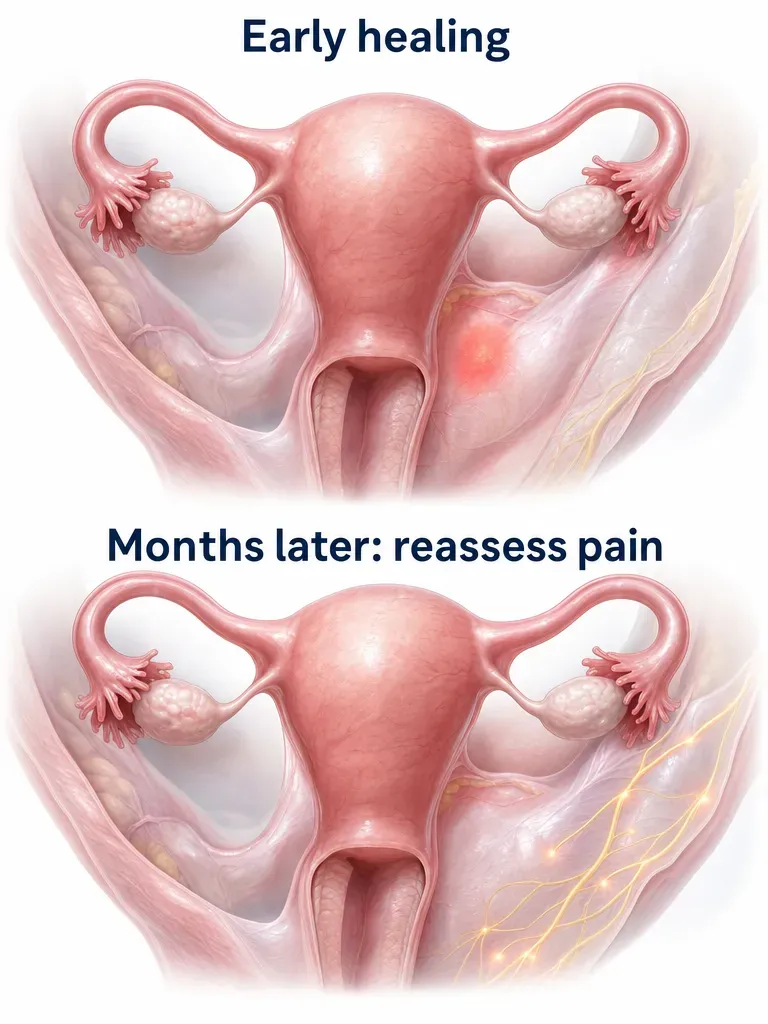
During the early weeks, postoperative soreness, cramping, and tissue-healing discomfort are common and should gradually improve. Pain at 2 or 3 weeks, or around 4 weeks to 1 month after laparoscopy, needs to be considered alongside the extent of surgery and how recovery is progressing. There is no single recovery deadline that fits everyone.
If pain is severe, worsening, or accompanied by other concerning postoperative symptoms, contact your own surgeon or care team promptly. Seek urgent care when symptoms are severe or need immediate assessment rather than waiting for a scheduled follow-up.
Pain that persists, returns, worsens, or changes months later
At 2 or 3 months, pain that is unchanged from before surgery, returned after initial improvement, or has a new pulling, burning, or nerve-like quality warrants reassessment. The same applies to pain at 4, 5, or 6 months. Simply waiting longer is not an adequate plan for persistent or worsening symptoms.
If endometriosis pain feels worse after laparoscopy, that does not automatically mean the disease itself has worsened. The operation, healing-related scar tissue, nerve sensitivity, and other pain conditions all need consideration.
Longer-term improvement can be slower when sensitization or overlapping conditions are involved. Treatment may require a multi-part plan that helps a reactive pain system settle, beyond allowing incisions to heal.
Persistent or recurrent disease deserves reassessment
Disease that could not be fully removed
One explanation for continuing pain is persistent disease: endometriosis remained because it could not all be safely removed, or it was burned or fulgurated rather than excised. Deep disease near the bowel, bladder, or ureters can make complete removal particularly difficult.
Ask what the operative report says about these locations and whether any disease was deliberately left behind to protect an organ. A conservative decision made for safety is different from an operation that was incomplete because the surgeon lacked the necessary expertise. Suboptimal surgery must remain part of an honest reassessment.
Recurrence and the limits of imaging or staging
Recurrence means new or returning lesions over time. Pain flares can happen after surgery, including after an initial period of relief, but symptoms alone cannot establish whether disease remained or returned.
Imaging may not readily show all endometriosis, and pain severity does not always match the stage or amount of visible disease. Inflammation-driven nerve changes can produce severe pain even when the lesion burden is small. Severe pain therefore does not prove widespread recurrence, but it does justify careful reassessment.
Adhesions and fibrosis can cause pain after excision
How scar tissue may hurt
Even after thorough excision, healing can produce adhesions, bands of scar tissue that tether organs. They can limit organ movement, create traction as you move, or irritate nearby nerves, especially in a pelvis that has already been inflamed. Extensive fibrosis can also produce molecular signals that encourage local nerve growth.
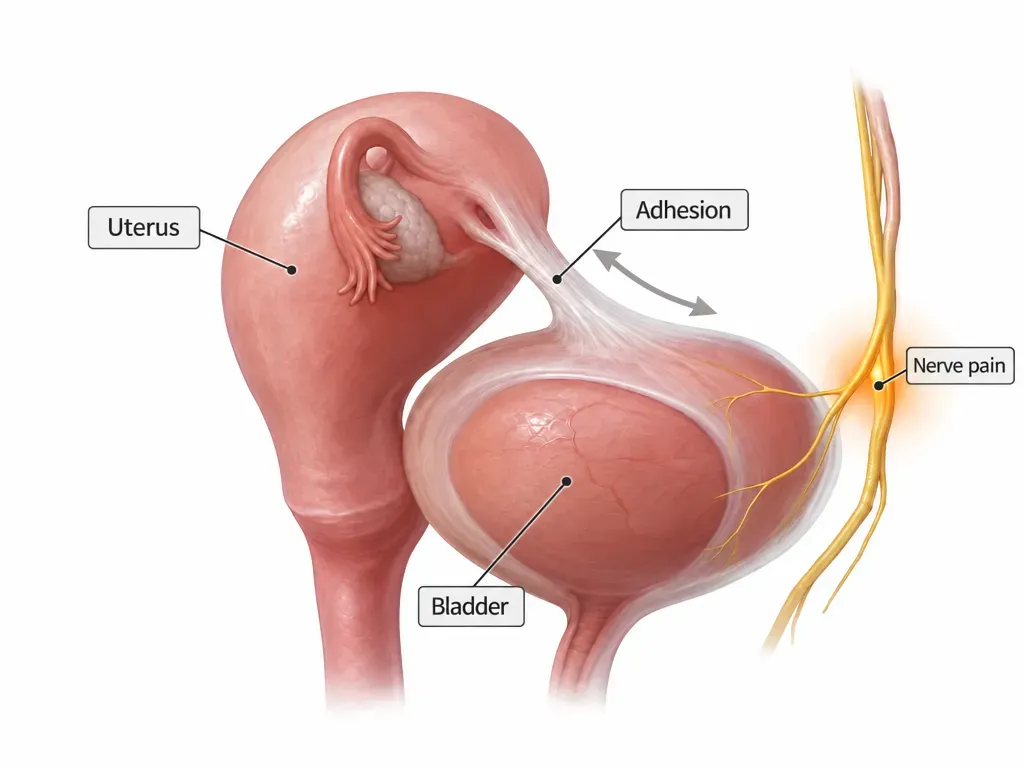
Careful tissue handling, sound dissection planes, and bleeding control matter, as does the extent of disease. Dr. Vasilev’s warning is blunt: sloppy, bloody, rip-and-tear blunt dissection causes more tissue damage, leading to more adhesions and fibrosis. A rushed operation can add injury that careful technique would avoid.
Clues that may help guide an assessment
Pulling pain, positional pain, or sharp pain with stretching, twisting, or particular movements may point toward adhesions as one contributor. These patterns are useful clues, not a diagnosis by themselves.
Adhesions often do not show up well on routine imaging. Your clinician may need to use your history, examination, and symptom pattern to guide the assessment rather than relying on a single scan.
Sensitization can keep the pain system on high alert
Long-standing inflammation and repeated pain signals can leave the nervous system more reactive. Peripheral sensitization means nerves in and around affected tissues become more sensitive. Central sensitization involves changes in how the spinal cord and brain process pain signals.
A 2025 review of endometriosis-related pain mechanisms described how chronic inflammation, immune signaling, and changes in nerve function can contribute to this heightened sensitivity. Removing lesions can reduce one source of pain without immediately or automatically resetting pathways that have been repeatedly activated.
Sensitization is biological, not imagined. It helps explain why pelvic pain may occur alongside fatigue, widespread body pain, and headaches, and why relief may require treatment beyond the pelvis.
The next post in the Why Do I Still Hurt? series, When Your Nervous System Won’t Stand Down, looks more closely at sensitization and the treatments commonly used for it.
Still in pain after surgery? Let's help.
Our specialists are here to help you understand your condition and explore your treatment options.
Schedule Your ConsultationOverlapping conditions can add to pain after surgery
Pelvic disease can improve while the overall pain burden remains high because other conditions are still active. Fibromyalgia, chronic fatigue syndrome, and temporomandibular disorder can overlap with endometriosis. Temporomandibular disorder can affect more than the jaw and face.
In a 2024 cross-sectional survey of 525 women with chronic pelvic-abdominal pain, respondents who reported endometriosis had greater pelvic pain severity and more interference with daily life than those without endometriosis. About one in four of the 133 respondents reporting endometriosis also reported at least three overlapping pain conditions. Fibromyalgia, chronic fatigue syndrome, and temporomandibular disorder were reported more often in that group.
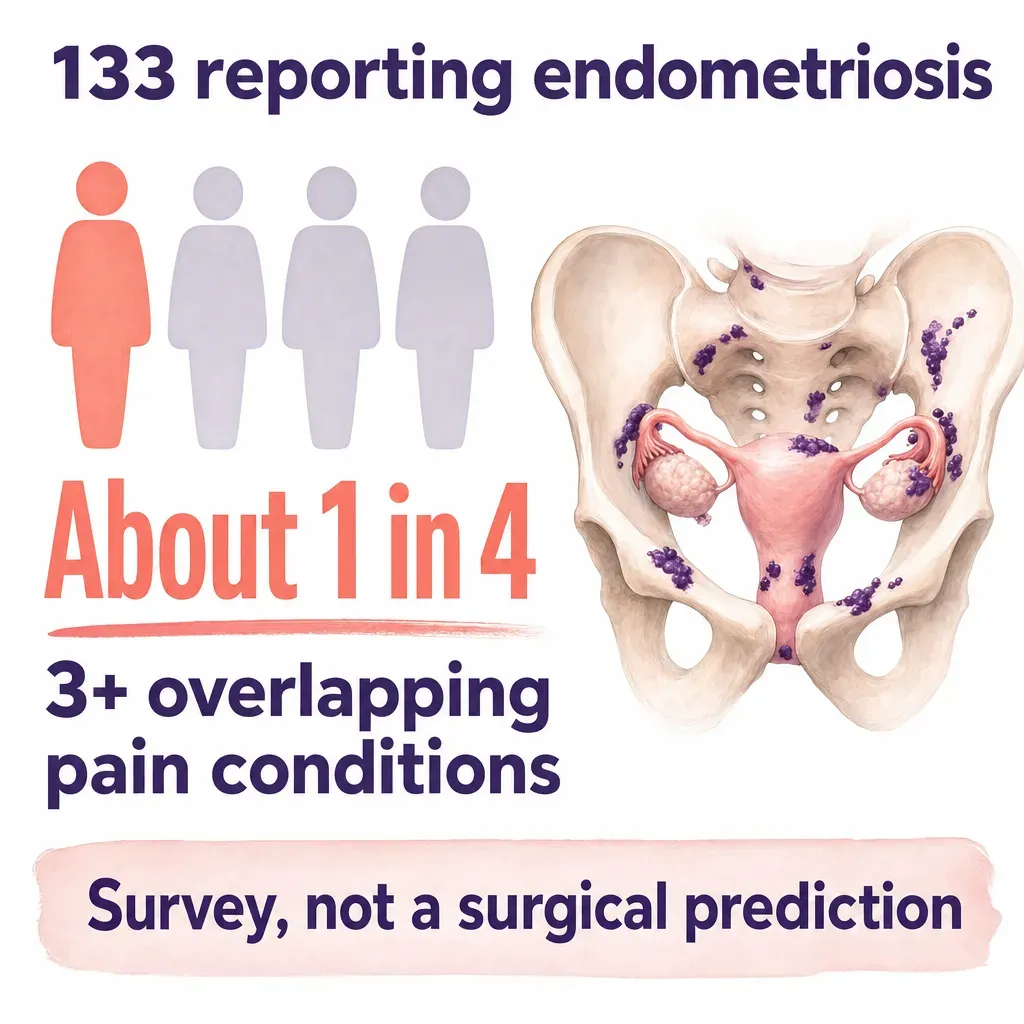
Across the full survey sample, a greater number of overlapping conditions was associated with greater pain severity and life impact, regardless of endometriosis status. This was a survey of pain experiences, not a prediction of any individual’s surgical outcome.
Screening for migraine, irritable bowel syndrome, painful bladder syndrome, and other overlapping conditions can help identify additional treatment targets. Treating these conditions alongside pelvic disease may be more effective than repeating surgery in search of a single pelvic cause.
Surgical technique and surgeon choice matter
Complete, safe excision in difficult locations depends heavily on the surgeon’s training, expertise, and care, not merely the choice of robotic or conventional laparoscopic instruments. Deep disease requires time and skill around sensitive anatomy. Sometimes a surgeon overestimates their ability, and the result is suboptimal surgery.
Dr. Vasilev’s view is that robotics is technologically far superior to conventional laparoscopy on many levels and allows substantially more finesse. The surgeon must, however, be expert on that platform to achieve the best results. Technology cannot substitute for judgment or careful dissection.
Even an expert can rush or become less meticulous when a packed surgical schedule falls behind. High surgical volume does not itself establish expertise, particularly when much of that volume consists of simple cases. Doing many straightforward operations does not establish the skills needed for complex endometriosis.
A 2024 review comparing robotic and conventional laparoscopic surgery in people undergoing endometriosis surgery found broadly similar major outcomes, sometimes longer robotic operating times, and cost and access limitations, without establishing whether a different platform would have prevented an individual’s persistent pain. Much of the comparative information was retrospective, and stronger long-term comparisons of durable pain relief and other patient-centered outcomes are still needed.
Seek a knowledgeable, experienced surgeon who has time to discuss your case in depth. That conversation should address what was done, what may remain, and how the surgeon’s experience fits the complexity of your disease.
Document your pain pattern before your appointment
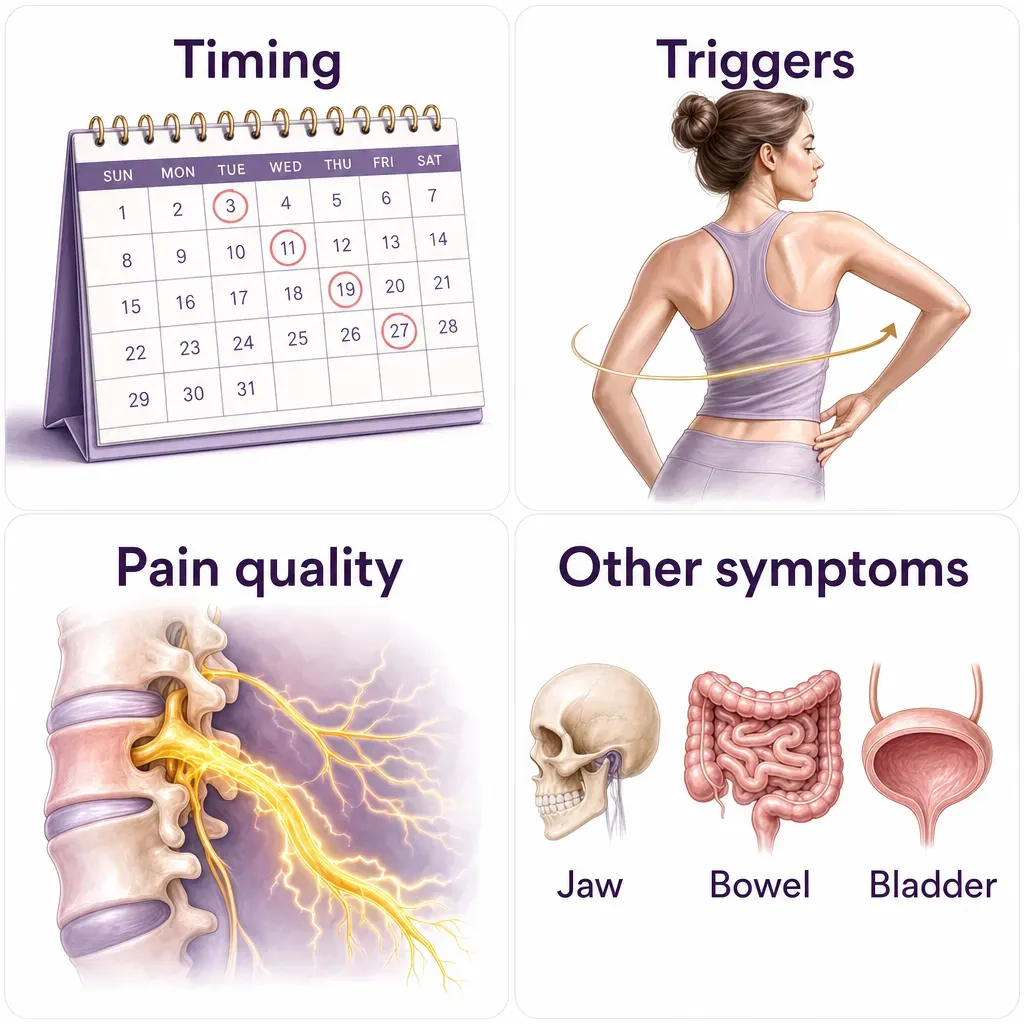
A few clear notes can make the assessment more useful. Start with the timeline: whether pain ever improved after surgery, when it returned, and whether its location, intensity, or character changed.
- Timing: Is pain cyclical, tied to your period or ovulation, or present daily?
- Triggers: Does it relate to position, stretching, twisting, bowel movements, or intercourse?
- Quality: Does it feel pulling, stabbing, aching, burning, or electric?
- Associated symptoms: Note bowel or bladder flares, headaches, jaw pain, widespread body pain, and fatigue.
These details help your clinician assess pelvic disease, adhesions, sensitization, and overlapping conditions. There is no perfect way to predict persistent pain from visible disease alone. Disease location, inflammation, nervous system sensitivity, and coexisting conditions all influence how much pain someone experiences.
Questions to take to your own doctor
Bring your symptoms, timeline, and goals into the conversation. You do not need to prove your pain. Describe it clearly and ask for a plan that addresses the possible causes.
- “Based on my surgical report, were there areas you could not safely excise, or suspected deep disease near the bowel, bladder, or ureters?”
- “Does my current pain pattern fit adhesions or scar tissue, pelvic floor spasm, nerve pain, or recurrence, and how would we tell the difference?”
- “Can we screen for overlapping pain conditions, such as migraine, irritable bowel syndrome, painful bladder syndrome, fibromyalgia, and temporomandibular joint disorders, that could be amplifying my symptoms?”
- “If imaging is normal, what next-step treatments do you recommend for persistent pain, including pelvic physical therapy, neuropathic pain options, anti-inflammatory strategies, and multidisciplinary pain care?”
- “What outcomes should we track, including pain days, function, bleeding, and bowel or bladder symptoms, so we can tell if the plan is working?”
After considering whether the operation itself was clearly inadequate or botched, move beyond arguing only about whether surgery worked. Ask your doctor: “What is driving my pain now, and what is the plan to treat each driver?”
References
Bartley, Alappattu, Manko et al.. Presence of endometriosis and chronic overlapping pain conditions negatively impacts the pain experience in women with chronic pelvic–abdominal pain: A cross-sectional survey. Women's Health. 2024. PMID: 38682290 PMCID: PMC11057341
Lee, Kim. Is It the Best Option? Robotic Surgery for Endometriosis. Life. 2024. PMID: 39202724 PMCID: PMC11355767
Chen, Li. Unveiling the Mechanisms of Pain in Endometriosis: Comprehensive Analysis of Inflammatory Sensitization and Therapeutic Potential. International Journal of Molecular Sciences. 2025. PMID: 40004233 PMCID: PMC11855056
Quick Answers
How is multi-organ endometriosis treated without organ removal?
In many multi-organ cases, conservative surgery removes endometriosis and frees organs from scar tissue while preserving the organs themselves. Robotic excision can improve precision, and treatment planning may include other surgical specialists.
Why does sex hurt more around my period?
Pain with sex that worsens around your period often points to inflammation and more reactive pelvic nerves before and during bleeding. Endometriosis can amplify pain signals, and adenomyosis can make the uterus unusually tender and crampy.
Why is my period pain so severe that it disrupts my daily life?
Severe period pain that disrupts daily life may signal endometriosis, adenomyosis, or another underlying cause. Worsening pain, poor relief with NSAIDs and heat, heavy bleeding, or pain between periods warrant evaluation, even when imaging looks normal.
What is pelvic dissection in endometriosis surgery?
Pelvic dissection means carefully separating tissue planes in the pelvis to see normal anatomy and remove endometriosis safely. It may include freeing organs joined by scarring and identifying and protecting the ureters, bowel, bladder and pelvic nerves.