



Cytoreduction for Advanced Endometriosis
Cytoreduction removes extensive endometriosis from several organs and layers of the pelvis and abdomen in one planned operation. Think of it as multi-level, multi-organ super-excision, with or without keeping fertility. It takes a cancer surgeon's skill and an endometriosis expert's judgment, and here it is done robotically.
- Who operates
- Gynecologic oncologist, endometriosis expert
- How
- Robotic, through small incisions
- Hospital stay
- Depends on what is removed
Medically reviewed by Dr. Steven Vasilev, MD
Board-Certified Gynecologic Oncologist & Integrative Medicine Diplomate, Advanced Robotic Endometriosis Excision Surgeon, Director of Lotus Endometriosis Institute · Updated Nov 2026
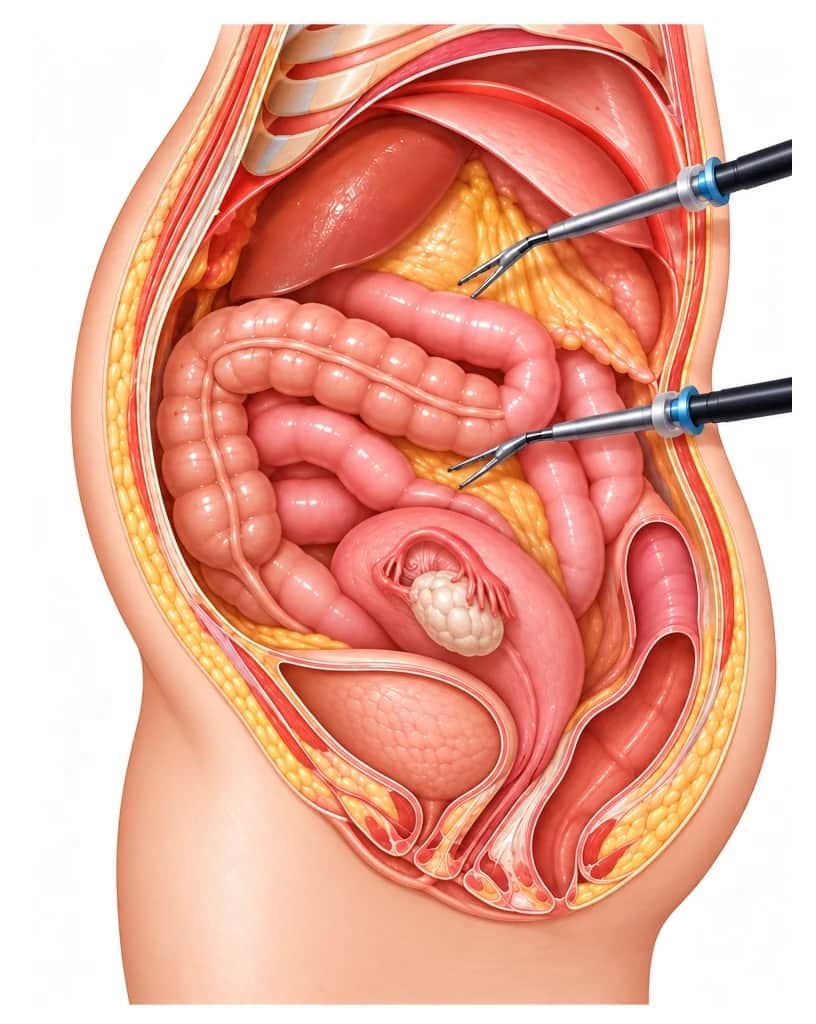
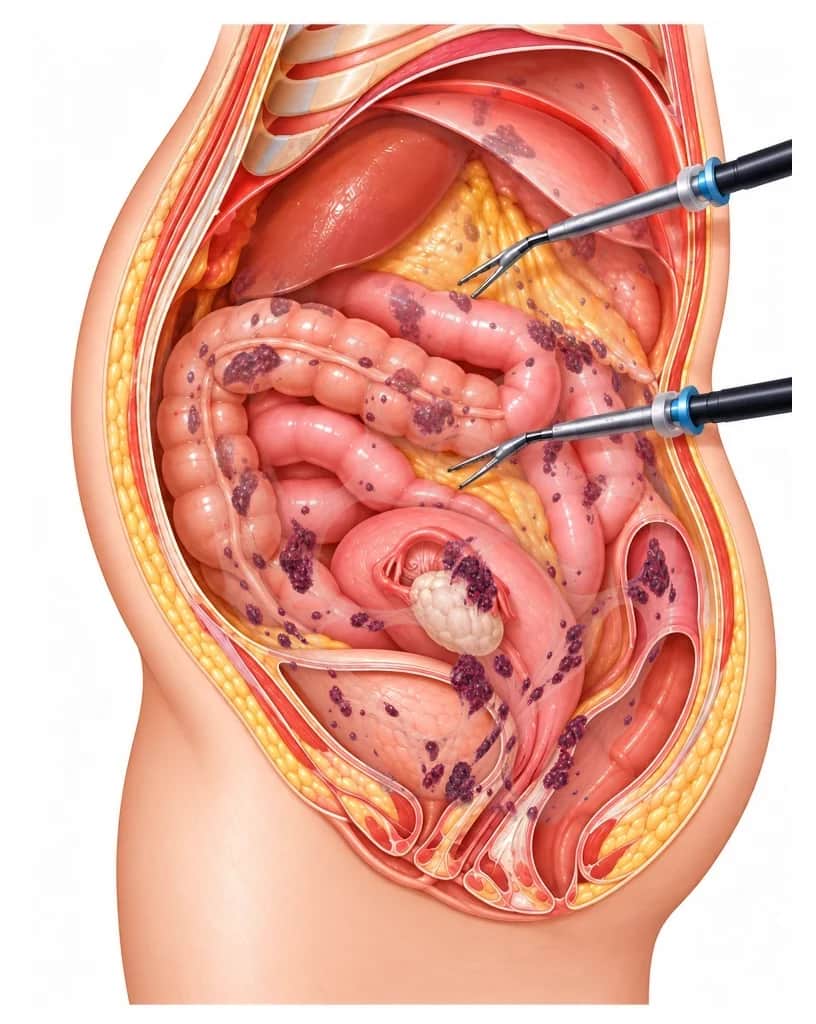
Before surgery: disease across the bowel and abdomen, with scar tissue pulling the organs together.
After surgery: the disease removed in one operation, the organs freed and kept.
Never heard of cytoreduction for endometriosis?
That's expected. Cytoreduction is a term from cancer surgery, and another doctor may tell you it's a cancer operation. That's where it comes from, and why we use it. Dr. Vasilev is a fellowship-trained gynecologic oncologist with four board certifications, who for the past 15 years has focused exclusively on endometriosis and adenomyosis. The word fits what this operation involves: how much disease is removed, from how many organs and layers, the skill that takes, and planning for all of it before surgery. Cytoreduction has traditionally meant a large open incision. Here it is done robotically.
Who it’s for
Is it right for me?
When imaging shows bulky disease across several areas, organs are stuck or blocked, earlier surgeries didn't solve it, or cancer is a concern.
Bulky disease can mean large, complex endometriomas, or endometriosis in several areas of the pelvis. Organs may be stuck or blocked, with dense scar tissue tethering the bowel, bladder or ureters. If earlier surgeries didn't solve it, what you need is one complete plan, not more "spot treatments".
Cancer risk can come into it through a family history, genetic findings, or imaging that worries your team. Change toward cancer is uncommon, but more likely after forty, so advanced disease over forty is a reason too. So is an operation that stopped at biopsies when the disease was found during another surgery: a planned one is needed.
Cytoreduction is rare. Most people with endometriosis need excision, not cytoreduction; a consultation tells you which.
Often improves
- Bulky disease across several organs, in one operation
- Organs freed from scar tissue
- A definite diagnosis, including whether cancer is present
- Fertility, for some patients, when the ovaries and tubes are freed
Won’t fix on its own
- A lifetime cure: endometriosis is a chronic disease
- Every pain driver, such as nerve sensitization or pelvic floor tension
That's why care continues after surgery with pain management and pelvic floor therapy, and with coordinated cancer care when it's needed.
Your options
How does it compare?
Planned ahead and done robotically, it's one operation through small incisions. Found by surprise, it often means biopsies and a second surgery, or a switch to a large open incision.
Who operates matters as much as the plan. Planned cytoreduction is led by a gynecologic oncologist who is also an endometriosis expert, for bulky or aggressive disease or suspected cancer, with the possibilities agreed in advance. When the same disease turns up unplanned, a surgeon is often called in during the operation.
A large open incision can mean up to ten days in hospital, sometimes with intensive care. Through small robotic incisions, recovery depends on what is removed. For endometriosis lesions, cysts and adhesions, standard excision is the right operation, and most people go home the same or next day.
| Compared | Planned cytoreduction | Found during surgery | Standard excision |
|---|---|---|---|
| What it's for | Bulky or aggressive disease, or suspected cancer | The same findings, unplanned | Endometriosis lesions, cysts and adhesions |
| What happens | One operation, with the possibilities agreed in advance | Often only biopsies, then a second surgery; or a switch to a large open incision | One operation |
| Who operates | A gynecologic oncologist who is also an endometriosis expert | Often a surgeon called in during the operation | An excision specialist |
| Incision | Small robotic incisions | Often a switch to a large open incision | Small incisions |
| Recovery | Depends on what is removed | With an open incision: up to ten days in hospital, sometimes intensive care | Usually home the same or next day |
Planned cytoreduction
- What it's for
- Bulky or aggressive disease, or suspected cancer
- What happens
- One operation, with the possibilities agreed in advance
- Who operates
- A gynecologic oncologist who is also an endometriosis expert
- Incision
- Small robotic incisions
- Recovery
- Depends on what is removed
Found during surgery
- What it's for
- The same findings, unplanned
- What happens
- Often only biopsies, then a second surgery; or a switch to a large open incision
- Who operates
- Often a surgeon called in during the operation
- Incision
- Often a switch to a large open incision
- Recovery
- With an open incision: up to ten days in hospital, sometimes intensive care
Standard excision
- What it's for
- Endometriosis lesions, cysts and adhesions
- What happens
- One operation
- Who operates
- An excision specialist
- Incision
- Small incisions
- Recovery
- Usually home the same or next day
From first visit to recovery
What happens, step by step?
A video consultation, testing that often goes beyond a standard workup, a plan for whatever is found, then one operation.
It starts with a video consultation about your imaging, operative and pathology reports, family history and goals. Testing often goes beyond a standard workup, with advanced imaging, and genetic testing when your family history points to it. If anything suggests cancer risk, the plan is raised to that level before surgery, not during it. Insurance and a fixed price are settled before anything is booked.
The operation is robotic, with other surgical specialists planned in from the start when needed. Tiredness and deep pelvic soreness last longer than after simpler surgery, so the return to work and exercise is staged. Afterwards, your pathology results set what comes next.
Before surgery
Planning consultation
By video, with your imaging, operative and pathology reports, family history and goals: pain relief, fertility, avoiding repeat surgery.
If anything points to cancer risk (family history, genetics, imaging), the plan is raised to that level before surgery, not during it.
Testing
Often beyond a standard endometriosis workup: advanced imaging, and genetic testing when your family history points to it.
Your plan
A plan for whatever is found, with consent for the possibilities agreed in advance, so the operation doesn't have to stop and be repeated. Insurance and a fixed price are settled before anything is booked.
Surgery day
The operation
Robotic. Extensive disease is removed across the pelvis and abdomen in one coordinated operation, sometimes with other surgical specialists planned in from the start, while protecting organ function.
If cancer is a concern, the plan includes a comprehensive pathology review.
Often in the same operation: endometriosis excision · bowel surgery · bladder and ureter surgery · diaphragm surgery
In the hospital
Most often it is still a same-day outpatient procedure. When it isn't, how long you stay depends on what was removed or repaired. Minimally invasive surgery usually means a shorter stay, and an easier recovery, than a large open incision.
Recovery
Early recovery
Weeks 1–2
Activity builds over 1–2 weeks, but tiredness and deep pelvic soreness last longer than after simpler surgery.
A staged return
The weeks after
A gradual return to work and exercise, with clear milestones from your team.
Traditional open cytoreduction can mean up to ten days in hospital, sometimes with intensive care, and a much longer recovery with more complications.
Follow-up
Results and next steps
Follow-up
Your pathology results, then a plan for what comes next. If cancer was found, that includes coordinating further treatment.
Your surgeon
Who should do it?
A fellowship-trained gynecologic oncologist who is also an endometriosis expert and operates robotically. A relative handful of surgeons worldwide are trained and capable of excision at this level.
Endometriosis this extensive can sit in many hard-to-reach places, and scans often show less than is really there. Leaving disease behind can mean symptoms that persist, or a lower chance of survival if cancer is present; going too far risks injuring organs. Operations of this extent have traditionally meant a large open incision. Dr. Vasilev does them robotically, which takes more technical skill and the patience to work through every area, and means smaller incisions and an easier recovery.
“The worst time to discover you need multi-organ, multi-level excision is in the middle of surgery. That's why proper investigation and planning before surgery are so crucial, and why your surgeon must be ready for whatever is found.”
Patients often ask
Why would endometriosis require a procedure like ovarian cancer surgery?
Endometriosis may require an oncology-level approach in select, highly complex cases to safely and completely remove aggressive disease when anatomy is distorted and surgical risks are higher. Most people with endometriosis will never need a cancer-style operation.
What type of surgeon performs gynecologic cytoreduction?
The lead surgeon for gynecologic cytoreduction is typically a gynecologic oncologist. Depending on what needs to be removed, the team may also include an expert minimally invasive gynecologic surgeon and specialists in general surgery or urology.
Will cytoreduction cure endometriosis?
No surgery, including cytoreduction, can promise a lifetime cure for endometriosis, a chronic inflammatory disease. The goal is to remove as much disease as safely possible, restore anatomy, improve function and reduce symptoms to improve quality of life.
Can cytoreduction improve fertility?
Cytoreduction can improve fertility for some patients by removing endometriosis, fibrosis, or adhesions that interfere with ovarian or tubal function. Outcomes depend on age, ovarian reserve, prior pelvic surgeries, and overall disease severity.
You’re on step 1 of 3
Next: Who should operate?What to look for in any surgeon, and Dr. Vasilev’s results.