




Chocolate Cyst Ultrasound Clues and When to Treat
What the scan can show, when to investigate further, and how fertility goals change the choice

Chocolate cyst ultrasound clues and treatment at a glance
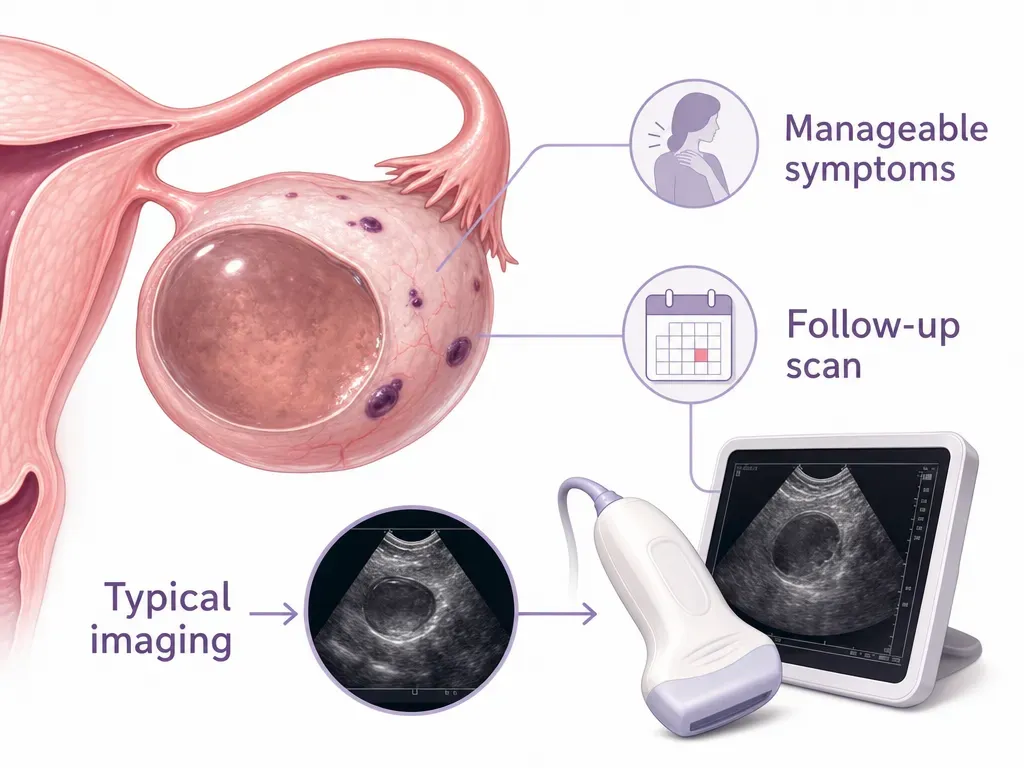
A chocolate cyst is an ovarian endometrioma containing old blood. Chocolate cyst ultrasound findings often include hazy, ground-glass echoes, but that appearance is not conclusive. Typical imaging and manageable symptoms may favor monitoring, while concerning features or difficult symptoms can change the plan.
Treatment depends on imaging, symptoms, and reproductive plans, not the endometrioma label alone. Fertility goals matter because surgery can reduce ovarian reserve.
Endometriomas can be linked with pelvic pain, painful periods, pain with sex, bowel or bladder symptoms, and infertility. Some people, however, have few or no symptoms.
Ultrasound findings that suggest an endometrioma
Ground-glass echoes and functional cyst look-alikes
A report describing “ground-glass echoes” means the cyst has a hazy internal appearance, often caused by old blood. This is a classic endometrioma ultrasound finding, but hemorrhagic functional cysts, which contain blood related to ovulation, can look similar.
Functional cysts, such as follicular or corpus luteum cysts, commonly change over weeks and may resolve on their own. An endometrioma usually represents endometriosis within or involving the ovary and tends to persist. Comparing scans over time can help clarify the interpretation.
A true chocolate cyst is related to endometriosis, but not every cyst that looks like an endometrioma is one, and not every endometrioma looks classic. The scan label is an interpretation, not a guarantee.
In a 2026 prospective comparison of ultrasound and MRI in 463 women undergoing surgery for suspected endometriosis, both tests performed very well for ovarian disease. Ultrasound followed the standardized International Deep Endometriosis Analysis protocol, known as IDEA. Some false-positive findings were hemorrhagic functional or corpus luteum cysts, showing why even expert imaging can be imperfect when blood products are involved.
Solid, papillary, or vascular findings that need closer evaluation
Most endometriomas are benign. However, ground-glass content together with solid nodules, papillary projections, or notable blood flow within those components needs closer assessment. Papillary projections are tissue growths extending into the cyst.
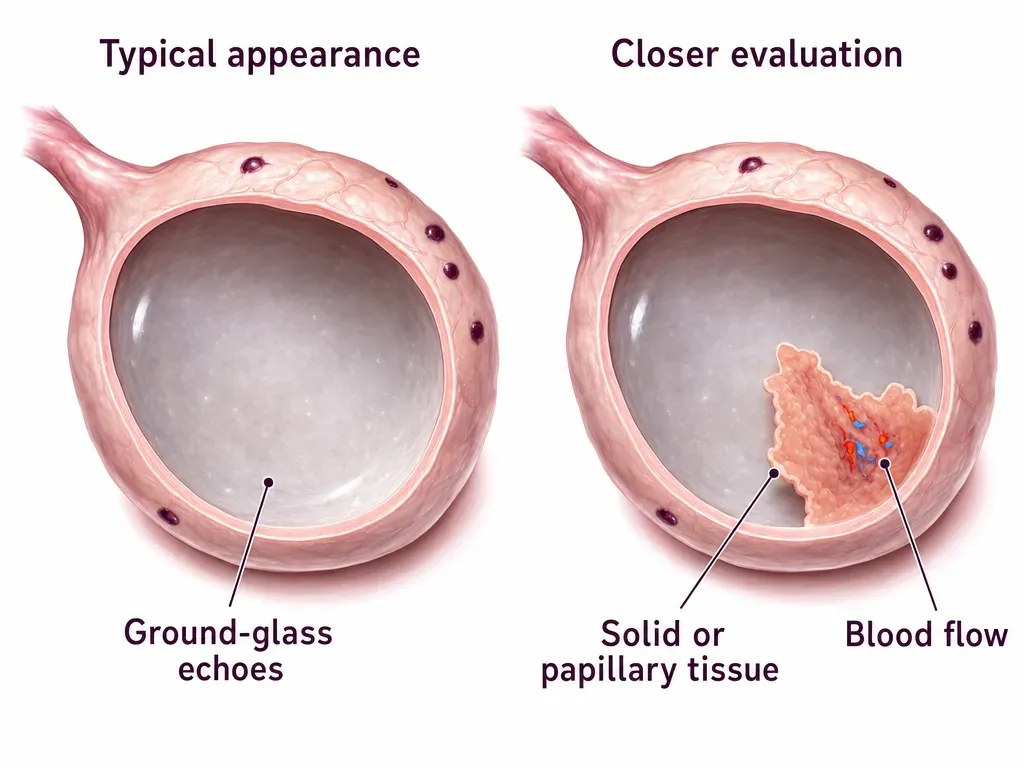
A 2026 retrospective ultrasound study of 146 women with borderline ovarian tumors found that seromucinous borderline tumors often had ground-glass content plus solid or papillary components with moderate blood flow. Endometriosis was present in 70% of women with that subtype. This was a group of women already diagnosed with borderline tumors, so that percentage does not describe the tumor risk for someone with a chocolate cyst.
These findings reinforce the need for careful imaging review and tailored surgical planning when a cyst looks atypical. The goal is not to fear every endometrioma, but to identify the minority that do not behave like typical endometriomas.
MRI and expert imaging when ultrasound is uncertain
When MRI adds useful information
MRI can help when ultrasound is limited by body habitus, bowel gas, or severe pain that prevents a thorough examination. It can also help map deep endometriosis before surgery.
MRI does not automatically provide a better answer than an expert ultrasound examination. In the 2026 head-to-head imaging comparison, the two tests performed similarly across many pelvic areas.
Why the experience of the imaging team matters
In that imaging comparison, IDEA-style ultrasound was more specific for adhesions involving the tubes and ovaries. In practical terms, MRI was somewhat more likely to suggest adhesions that were not confirmed at surgery.
The better question is whether you have access to an expert endometriosis ultrasound examination and a radiology team experienced in reading endometriosis MRIs, rather than which test is universally better. Accuracy depends on the examiner, the imaging protocol, the reader’s experience, and the complexity of the case. A typical-looking cyst and an atypical mass may need different diagnostic steps.
Whether a chocolate cyst can shrink or go away
Hormonal suppression and monitored follow-up
A chocolate cyst can sometimes shrink or stabilize, especially with hormonal suppression, but many persist. Hormonal treatment can reduce activity and sometimes size, although responses vary. Shrinkage does not necessarily mean permanent disappearance.
A 2026 case report described a 23-year-old woman who developed an ovarian cystic mass after two fertility-sparing operations and chemotherapy for ovarian cancer. Because another operation risked further ovarian damage, reassuring imaging and laboratory findings supported a closely monitored trial of a gonadotropin-releasing hormone agonist. The mass regressed markedly, supporting a clinical diagnosis consistent with an endometriotic cyst.
This was a carefully selected case under close oncology surveillance, not a routine strategy for an uncertain mass after cancer treatment. It illustrates that some endometrioma-like lesions can regress substantially under ovarian suppression, without establishing a universal treatment approach.
Many endometriomas do not disappear permanently without continued suppression or surgery. The practical goal is often symptom control, stability, and fertility planning, rather than making the cyst disappear.
Limits of nonhormonal approaches
N-acetylcysteine, or NAC, is a supplement being explored as a nonhormonal option. A 2026 systematic review of NAC in endometriosis included six clinical studies in women with endometriosis, alongside laboratory and animal work. Outside the postoperative setting, NAC was associated with pain improvement, reduced use of anti-inflammatory pain medicines, and possible endometrioma shrinkage or stabilization.
The review also described plausible effects on oxidative stress and inflammatory pathways in experimental models. Human findings, however, were mixed and often came from nonrandomized comparisons, so they cannot support a promise of predictable shrinkage or symptom control.
In the review’s only postoperative randomized comparison, adding NAC to continuous oral contraceptive treatment provided no additional benefit for recurrence or pain. NAC should therefore not be presented as a reliable way to prevent a cyst from returning after surgery.
Get Expert Help with Your Endometrioma
Our specialists are here to help you understand your condition and explore your treatment options.
Schedule Your VisitWhen observation or surgery makes sense
Observation and medical management
Observation, with or without hormonal suppression, is often reasonable when imaging looks typical, there are no suspicious solid vascular nodules, and symptoms are manageable. It can be particularly relevant when avoiding surgical injury to the ovary is a priority. Observation should include a plan for follow-up imaging.
Computer-based image analysis may eventually help with uncertain cases, but it is not standard care yet. A 2026 systematic review of nine investigations of AI and radiomics for ovarian endometriosis imaging reported high diagnostic performance in early work, with some models improving assessment when combined with clinical or biochemical information. The underlying investigations were mostly small, retrospective, and single-center, with limited external validation.
Reasons to consider surgery or tissue diagnosis
Surgery is more strongly considered when pain is severe and does not respond to medical treatment. Concern about torsion, which is twisting of the ovary, or cyst rupture can also change the balance, according to the clinical circumstances.
Rapid growth, suspicious solid projections or vascular nodules, and significant ascites, meaning fluid in the abdomen, need careful assessment. Surgery may be necessary to obtain tissue when malignancy cannot reasonably be excluded.
Depending on the findings, the next step may be repeat expert ultrasound, MRI, tumor-marker testing, surgical planning, or oncology input. The reason for treatment should be explicit: pain relief, concern about a complication, clarification of the diagnosis, or a combination of these.
Alarming findings can still have a benign cause
Endometriosis can occasionally mimic ovarian cancer. In a 2026 case report, a 32-year-old woman had an ovarian mass, bloody abdominal fluid, fluid around a lung, and markedly elevated CA-125 and CA 19-9. Despite concern for malignancy, the final pathology showed benign endometriosis.
CA-125 and CA 19-9 are not cancer-specific tests. Both can be elevated in endometriosis, and their results must be interpreted alongside imaging and the clinical picture.
At the same time, a combination of concerning imaging, ascites, and abnormal laboratory results cannot simply be dismissed as endometriosis. It may require surgery and careful tissue assessment during the operation, because a definitive answer sometimes requires pathology.
Fertility and the trade-offs of removing an endometrioma
AMH and ovarian reserve after cystectomy
If pregnancy is a goal now or later, counseling should address ovarian reserve and IVF strategy, not just cyst size. Cystectomy, the surgical removal of a cyst, can reduce ovarian reserve. Anti-Müllerian hormone, or AMH, is one marker used to assess that reserve.
In a 2026 retrospective cohort of 195 reproductive-aged women undergoing minimally invasive cystectomy for benign ovarian cysts, about 28% had a marked AMH decline of at least 50% around 3–4 months after surgery. Endometriosis and cysts on both ovaries independently increased the odds of this large decline.
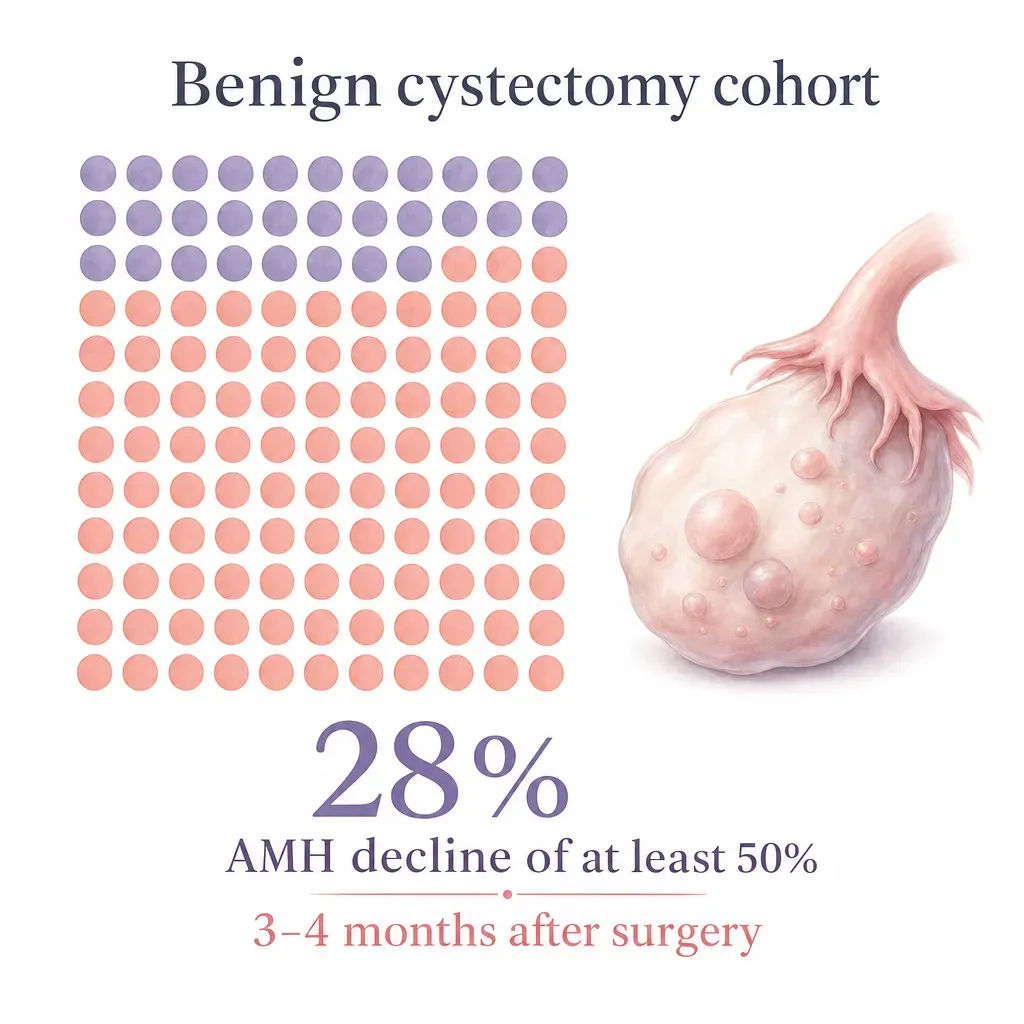
This does not mean every person’s fertility will be harmed. It does mean that the ovarian cost of surgery can be significant for a substantial minority, particularly when endometriomas affect both ovaries. Long-term AMH recovery and what a short-term decline means for an individual’s lifetime fertility remain uncertain.
IVF first versus cystectomy first
Avoiding cystectomy before IVF can be a reasonable choice when imaging is reassuring and symptoms are tolerable, especially if time is limited. A cyst measuring 4 cm or more should prompt a careful discussion, rather than a decision based on size alone.
A 2026 retrospective cohort of 394 infertile patients undergoing their first IVF cycle compared direct IVF with prior cystectomy, including a comparison among patients with endometriomas at least 4 cm in size. In that comparison, those who had surgery had lower AMH and fewer retrieved eggs, with a median of seven eggs versus 11 without surgery.
Cumulative live birth rates, counting fresh and frozen transfers from one retrieval, were not statistically different: 52.4% after surgery versus 59.6% without surgery. Surgery was associated with reduced IVF efficiency without a clear improvement in live birth per retrieval in that dataset. The comparison was not large enough to rule out clinically meaningful differences.
Retrospective treatment comparisons cannot prove cause and effect. Pain, prior operations, and clinician preferences may influence who undergoes surgery in the first place. If surgery is planned, discussing egg or embryo freezing beforehand may be appropriate.
Egg quality, ovarian reserve, and age
The endometrioma label alone does not tell you how your eggs will perform in IVF. In a smaller 2026 retrospective study of 92 ICSI cycles in 49 women with endometriomas, unexplained infertility, or diminished ovarian reserve, eggs from the endometrioma group had more visible abnormalities than those from the unexplained-infertility group.
The findings suggested that lower AMH and ovarian reserve, rather than the endometrioma diagnosis itself, might explain the difference. Fertilization rates were similar across all three groups.
If egg numbers or appearance are a concern, ovarian reserve and age often matter as much as, or more than, the cyst label. They should be part of the fertility discussion alongside symptoms, imaging, and the potential effects of an operation.
Questions to bring to your next appointment
Clarify the scan and follow-up plan
Ask your clinician to walk you through the scan in terms of risk. The description of the cyst and the plan to confirm stability should both be clear.
- Does the cyst look classic for an endometrioma?
- Are there solid or papillary parts, or vascular nodules?
- What is the plan to confirm stability?
Discuss ovarian reserve and fertility timing
If fertility matters to you, ask for explicit counseling before deciding on surgery. Include both your current ovarian reserve and your plans for pregnancy.
- What is my AMH?
- Is the cyst on one ovary or both?
- How might cystectomy affect my ovarian reserve?
- Should I consider egg or embryo freezing first?
Ask whether IVF needs to wait for surgery
If IVF is planned, ask what surgery would accomplish before treatment begins. Reassuring imaging and tolerable symptoms may allow a different sequence than a suspicious or severely painful cyst.
- Could we proceed directly to IVF?
- Under what circumstances would you recommend operating first?
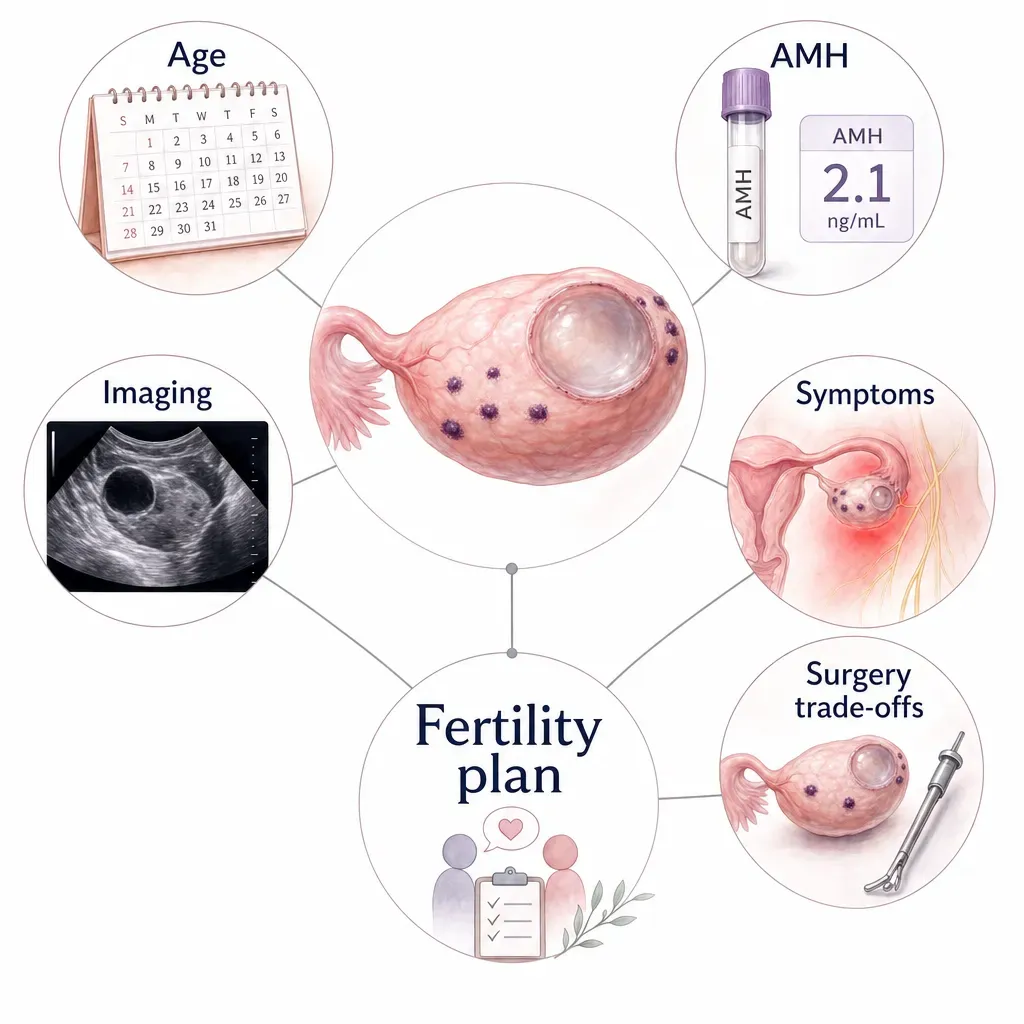
Ask your doctor to build the decision with you around four specific factors: imaging risk, symptom burden, your fertility timeline and AMH, and the real trade-offs of surgery versus observation. Agree on which changes in symptoms or follow-up imaging would lead you to reconsider the plan.
References
Dong, Deng, Hou et al.. Endometriotic cyst mimicking recurrence after treatment for ovarian immature teratoma: a case report. Frontiers in Oncology. 2026. PMID: 42344689 PMCID: PMC13287004
Wang, Liu, Zhao et al.. Accessory cavitated uterine mass: A case report of eight patients. The Journal of International Medical Research. 2026. PMID: 42316956 PMCID: PMC13305246
. Seromucinous borderline ovarian tumors: Clinical and ultrasound characteristics and association with endometriosis. Acta Obstetricia et Gynecologica Scandinavica. 2026. PMID: 42186794 PMCID: PMC13395054
Watrowski, Kostov, Tozzi et al.. N-Acetylcysteine in Endometriosis: A Systematic Review of Biological Rationale and Clinical Evidence. Antioxidants. 2026. PMID: 42510611 PMCID: PMC13405467
Feng, Yang, Chen et al.. Direct IVF versus prior laparoscopic cystectomy for ovarian endometrioma ≥4 cm: cumulative live birth rate and implications for fertility preservation — a retrospective cohort study. Frontiers in Endocrinology. 2026. PMID: 42601902 PMCID: PMC13472831
Rosso, Morales Ortigoza, Duque Jimenez et al.. Endometrioma With Hemorrhagic Ascites Mimicking Ovarian Malignancy: A Case Report. Cureus. 2026. PMID: 42639524 PMCID: PMC13502148
Telecan, Capraș, Poenar et al.. Radiomics and Artificial Intelligence in Ovarian Endometriosis Imaging: A Systematic Review and Critical Appraisal of Emerging Evidence. Bioengineering. 2026. PMID: 42649745 PMCID: PMC13509516
Jang, Kook, Lee et al.. Risk factors for a marked decline in anti-Müllerian hormone after minimally invasive ovarian cystectomy. Medicine. 2026. PMID: 42675751 PMCID: PMC13529114
. Head‐to‐head prospective comparison of diagnostic accuracy of preoperative ultrasonography and MRI in patients undergoing surgery for deep endometriosis using # Enzian classification. Ultrasound in Obstetrics & Gynecology. 2026. PMID: 42561188 PMCID: PMC13532160
Park, Kim, Jee. Average oocyte quality index as a method for scoring dysmorphic oocytes in women with ovarian endometrioma undergoing in vitro fertilization and its correlation with ovarian reserve. Clinical and Experimental Reproductive Medicine. 2026. PMID: 41560389 PMCID: PMC13541403
Quick Answers
Why does ovarian cyst pain keep coming back?
Ovarian cyst pain can return because new cysts form with ovulation, a cyst persists or comes back, or nearby endometriosis or scar-like bands cause pain. An endometrioma, a cyst caused by endometriosis, may be associated with deeper pelvic disease.
Can endometriosis cause infertility and pelvic pain in your 20s?
Yes, endometriosis can cause chronic pelvic pain and fertility challenges in your late 20s. Pain can include severe period cramps, pain with sex, and bowel or bladder pain, though symptom severity doesn’t always match how much disease is present.
Can a ruptured ovarian cyst cause severe pelvic pain?
Yes, a ruptured ovarian cyst can cause sudden, severe pelvic pain, often sharp and one-sided. The pain may feel especially intense if there is internal bleeding or irritation of the pelvic lining, while others have a milder ache that fades over hours to days.
Are ruptured ovarian cysts linked to endometriosis?
Yes, sometimes: people with endometriosis can develop ovarian endometriomas, which can leak or rupture and cause sudden, intense pelvic pain. A ruptured cyst does not automatically mean endometriosis, as functional cysts can happen in anyone.