




Pelvic Floor Physical Therapy After Endometriosis Surgery
When it may help lingering symptoms, what treatment involves, and how to time it safely

Pelvic floor PT can help when symptoms outlast surgical healing
Pelvic floor physical therapy after endometriosis surgery can help with muscle guarding, poor relaxation, coordination problems, and sensitized pain that excision does not directly rehabilitate. Not everyone needs PT after surgery. Persistent or new pain with sex, urinary or bowel difficulties, and muscle-like pelvic pain are reasons to discuss an assessment, especially when symptoms outlast expected healing. Timing depends on your recovery and your treating surgeon’s guidance.
If you’d like a specialist’s second opinion on persistent symptoms or a recommended treatment, our team can review your options. Questions about postoperative problems and clearance to begin therapy should go to the surgeon or care team who treated you.
Why symptoms can persist after successful excision
Excision can be life-changing, but pain after thorough surgery is not necessarily about remaining lesions. Endometriosis-related pain can involve tissue irritation, nerve involvement, and changes in how the nervous system processes pain signals at the same time. Doctors call these nociceptive, neuropathic, and nociplastic pain, respectively.
When the nervous system stays on high alert, pelvic floor muscles commonly respond by guarding: staying tense, shortening, and losing coordination. Over time, that protective response can become its own source of pain. It can contribute to pain with penetration, urinary symptoms, and difficulty emptying the bowel even when surgery removed disease thoroughly.
A 2024 scoping review of 30 publications involving people with endometriosis-related pain described this mixed-mechanism pain and found no single standardized test for central sensitization. Clinicians use questionnaires, sensory testing, and examination findings to assess whether increased nervous system sensitivity may be contributing.
In a 2026 cross-sectional study of 142 women with endometriosis or adenomyosis at a specialist referral clinic, 52.1% screened positive on the Central Sensitization Inventory, using a score of 40 or higher. Positive screens were associated with moderate-to-severe pain with sex, vulvodynia, and overlapping conditions such as fibromyalgia, chronic fatigue syndrome, anxiety, and depression.
A positive sensitization screen does not mean pain is imagined. It suggests that treatment may need to address the pain system and pelvic floor alongside any treatment directed at lesions.
Symptoms that make a pelvic floor assessment worth discussing
Symptoms involving difficulty coordinating or releasing muscles, rather than simple weakness, are particularly good reasons to consider pelvic floor PT. An assessment can identify a treatable contributor without replacing evaluation for other causes.
Persistent or new pain with sex
Surgery often improves deep pain with sex, but some people have persistent pain or develop it after surgery. Burning vulvar pain, pain at penetration, and aching after sex also warrant discussion.
In a 2026 retrospective observational study of 195 women undergoing nerve-sparing excision of deep endometriosis, deep pain with sex improved overall at one year, especially among those with severe pain before surgery. However, 17.4% had an unfavorable response, including persistent pain or insufficient improvement. Among those without deep pain with sex before surgery, 14.9% developed new pain rated at least 3 out of 10 by one year.
Sexual pain can involve muscles and connective tissue, nerves, psychological factors, inflammation, and hormones. PT can address muscle overactivity, trigger points, scar mobility, breathing mechanics, and a gradual return to pain-free penetration. Surgery alone does not directly rehabilitate these functions.
Urinary hesitancy, straining, or urgency
Difficulty starting urination, straining, a weak or interrupted stream, incomplete emptying, and persistent urgency or frequency can point to poor pelvic floor relaxation. This is particularly worth considering when there is no clear infection, but urinary retention or severe symptoms need medical assessment rather than an assumption that muscles are responsible.
A 2025 clinical review of patients with non-relaxing pelvic floor dysfunction described how the muscles can tighten instead of relaxing during urination. This can interfere with urine flow even without an anatomical blockage. The condition is underrecognized and overlaps with pelvic pain disorders.
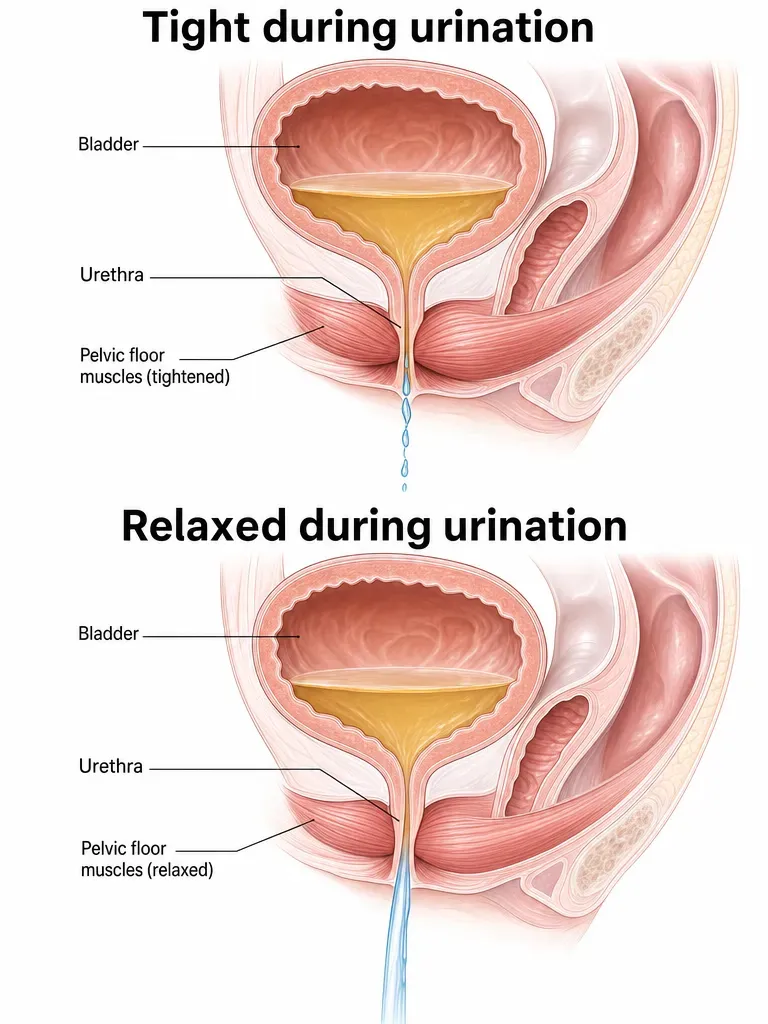
That review identifies pelvic floor PT as first-line treatment for non-relaxing pelvic floor dysfunction, often using relaxation training, muscle coordination retraining, and biofeedback. A focused examination, and sometimes bladder testing, helps distinguish it from other causes.
Bowel urgency, constipation, or incomplete emptying
Bowel urgency, repeated bowel movements close together, constipation with difficulty passing stool, and incomplete emptying can persist or begin after surgery. Pelvic floor dyssynergia means the muscles do not coordinate properly to let stool pass, and PT is a reasonable part of treatment when this or muscle-related pain contributes.
A 2026 structured narrative review of bowel dysfunction in women after endometriosis surgery described symptoms even without obvious complications or recurrence. Patterns can resemble irritable bowel syndrome, low anterior resection syndrome, or pelvic floor dyssynergia. Low anterior resection syndrome describes a pattern that can include urgency, frequent clustered bowel movements, and difficulty controlling or postponing them.
The extent of bowel removal does not explain all postoperative bowel problems. Heightened sensitivity within the bowel, effects on pelvic autonomic nerves, fibrosis, changes in how the rectum stretches and holds stool, and pelvic floor coordination can all contribute. PT should therefore be paired with gastrointestinal or colorectal care matched to the symptom pattern.
Still Hurting After Endometriosis Surgery?
Our specialists are here to help you understand your condition and explore your treatment options.
Schedule a ConsultationWidespread pain or a change to muscle-like pain
Pain that remains widespread, long-lasting, or greater than examination findings would suggest may have a sensitized pain component. The 2024 scoping review described associations between higher sensitization screening scores and worse pain, poorer quality of life, or treatment failure. The 2026 sensitization study also found that symptoms lasting more than five years were associated with positive screening results, consistent with pain pathways becoming more sensitive over time.
Pelvic pain that spikes with stress, sitting, or after sex can also suggest guarding. An initial improvement followed by a plateau, or a change toward muscle-like aching, burning, or tight-band pain, is another reason to discuss PT.
In this setting, therapy can address a different part of the problem than hormones or repeat surgery. Education, gradual exposure to movement and sex, and physical strategies to reduce protective muscle tension can form part of a broader plan to calm an overactive pain response.
When to start PT and when internal work should wait
Early education and gentle movement
A referral can happen before surgery or soon afterward. Early sessions may focus on education, breathing, gentle mobility, bladder and bowel strategies, and reducing fear-driven guarding, often without internal work.
A later referral is also appropriate when pain with sex, pelvic floor tenderness or tightness, urinary dysfunction, or bowel emptying problems persist beyond expected recovery. There is no single start date that fits every operation; your treating surgeon should guide timing.
Internal techniques after surgical clearance
Internal vaginal or rectal techniques, dilator work, and aggressive manual therapy should generally wait until your surgeon confirms adequate healing. This is especially relevant after vaginal cuff work, bowel shaving, disc or segmental bowel resection, bladder or ureter surgery, or extensive suturing.
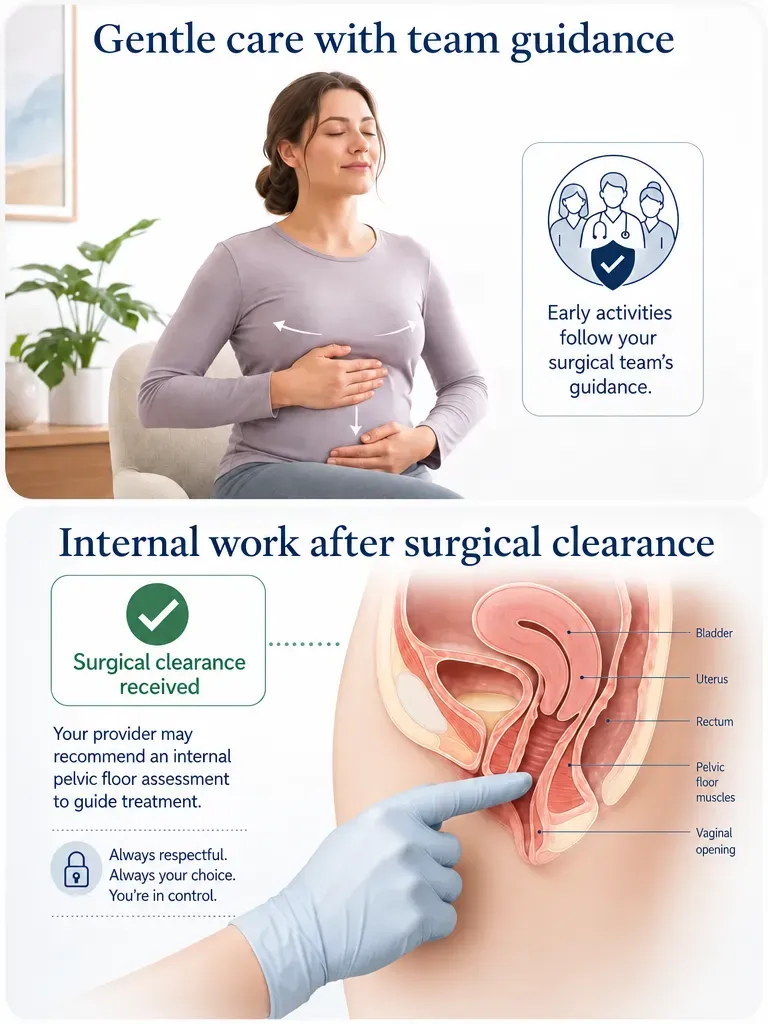
Your therapist can begin external, gentle, and educational components earlier if the surgical team agrees. Clearance should reflect what was done during your operation and how you are healing, rather than a standard calendar alone.
What a tailored pelvic floor PT program involves
Assessment and a realistic home plan
Visits usually begin with a detailed review of pain, bladder and bowel symptoms, and sexual function. Assessment may include posture, breathing, hip and back mobility, and pelvic floor muscle function when appropriate and with your consent.
The findings should guide treatment rather than a fixed exercise routine. Good care also includes a manageable home plan, not an overwhelming list of exercises.
Relaxation, retraining, and gradual return to activity
After endometriosis surgery, PT often emphasizes down-training, or reducing muscle overactivity, rather than strengthening, at least initially. Forceful Kegels are not the automatic answer when muscles are already guarding or struggling to relax.
A tailored program may include:
- Pain and pelvic floor education: understanding tissue pain, nerve sensitivity, and protective muscle responses.
- Breathing and relaxation: diaphragmatic breathing, pelvic floor release, and coordination rather than forceful contractions.
- Manual and scar work: external techniques and, once cleared, internal treatment for trigger points, overactive muscles, scar mobility, and connective tissue restrictions.
- Biofeedback or EMG-guided retraining: feedback about muscle activity to help you learn relaxation and coordination, particularly during urination.
- Dilators or gradual exposure to penetration: paced treatment for painful penetration or involuntary tightening, once medically cleared.
- Graded return to activity: rebuilding tolerance for movement without repeatedly flaring sensitized symptoms.
Coordinate PT with the clinicians evaluating your symptoms
Bladder and bowel symptoms may need further testing
Pelvic floor PT works best within a coordinated plan involving your gynecologist and, when needed, urology, urogynecology, gastroenterology, or colorectal specialists. Severe voiding trouble, urinary retention, and significant bowel dysfunction need assessment for causes beyond muscle tension.
For urinary symptoms, a post-void residual measures how much urine remains after you urinate, while uroflow testing measures the flow of urine. Sometimes urodynamics with pelvic floor electromyography, or EMG, helps assess bladder function and muscle activity together. These tests can clarify non-relaxing pelvic floor dysfunction versus other causes.
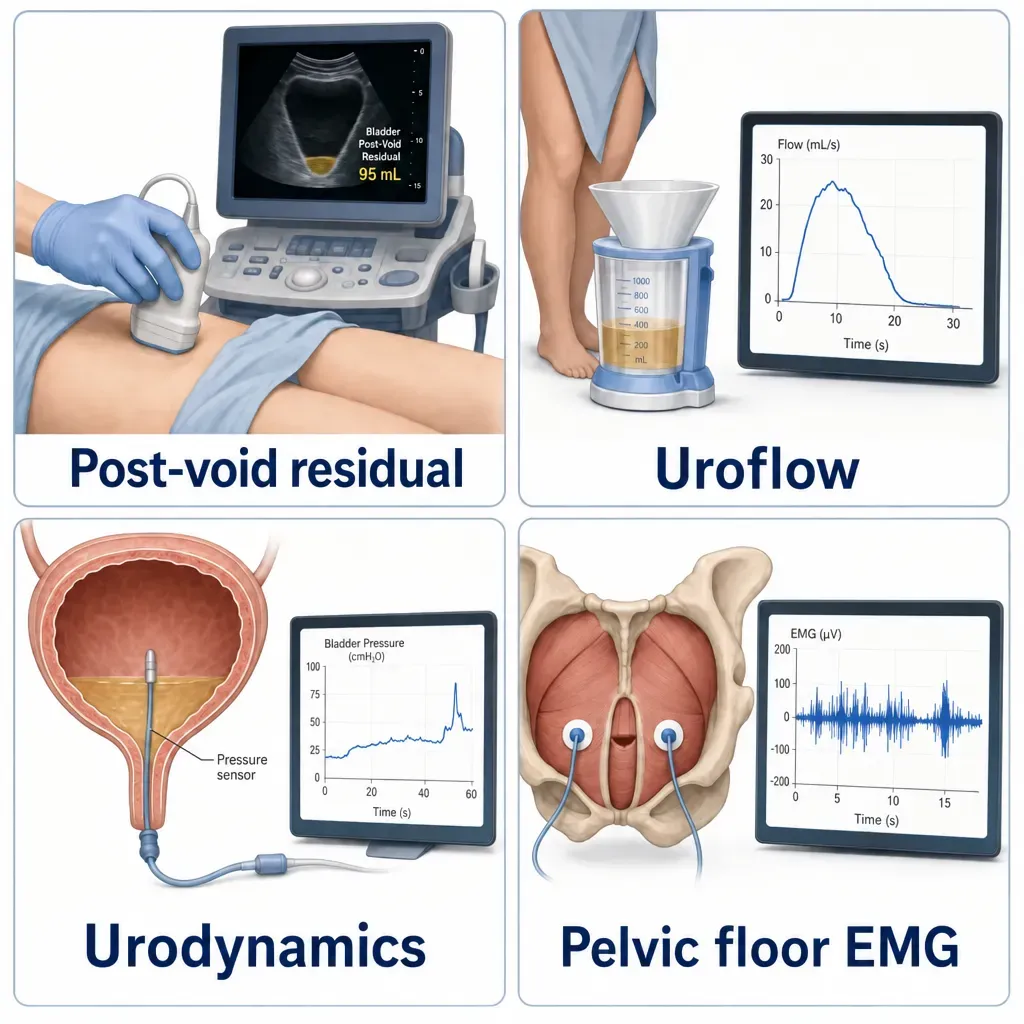
For bowel symptoms, the pattern helps guide evaluation and treatment. IBS-like sensitivity, urgency and clustered bowel movements, and difficulty coordinating evacuation may need different approaches rather than PT alone.
Report new or worsening postoperative problems to your treating surgeon or care team, or seek urgent care if they are unavailable. If you cannot urinate, go to the nearest emergency department rather than waiting for a PT appointment.
Persistent pain may call for combined care
Sensitization questionnaires such as the Central Sensitization Inventory can help guide expectations and identify reasons to combine treatments. Depending on your symptoms, pelvic floor PT may work alongside pain psychology, cognitive behavioral therapy, or other treatments that reduce pain sensitivity.
These approaches address real pain-processing and protective responses. They do not replace assessment for ongoing tissue, nerve, bladder, or bowel problems.
Questions to take to your doctor
- “Based on my symptoms, do you suspect pelvic floor dysfunction after endometriosis excision, such as overactivity or poor relaxation?”
- “When am I medically cleared for internal pelvic floor assessment or dilator work, if needed?”
- “Could my urinary symptoms fit a non-relaxing pelvic floor pattern, and would testing like post-void residual or pelvic floor EMG be useful?”
- “If my pain with sex persists, can we address pelvic floor and sexual function rehabilitation rather than considering only more imaging or surgery?”
- “What would success look like over 8–12 weeks of PT: changes in pain scores, sexual function, bladder function, or bowel function?”
What PT can and cannot promise
Pelvic floor PT is not a guarantee or a standalone fix. When symptoms point to overactivity, poor relaxation, coordination difficulty, or sensitized pain, it is a targeted, relatively low-risk next step within a coordinated treatment plan.
Predicting an individual response remains difficult. Sensitization assessment is not standardized, and the 2026 sexual pain study could not reliably predict who would develop persistent or new deep pain with sex. Endometriosis-specific bowel rehabilitation outcomes also remain limited and mixed, so treatment needs to follow your symptom pattern and measurable progress.
References
Gentles, Goodwin, Bedaiwy et al.. Nociplastic Pain in Endometriosis: A Scoping Review. Journal of Clinical Medicine. 2024. PMID: 39768444 PMCID: PMC11727753
Afyouni, Khanmammadova, Bozorgi et al.. Urologic Manifestations of Nonrelaxing Pelvic Floor Dysfunction: Insights on Clinical Workup and Management. Current Urology Reports. 2025. PMID: 41094314 PMCID: PMC12528306
Biasioli, Previtera, Mazzera et al.. Central sensitization in women with endometriosis: a cross-sectional study. BMC Women's Health. 2026. PMID: 41703551 PMCID: PMC13015096
de Nadai Filho, Crispi, Santos de Oliveira et al.. Deep Dyspareunia One Year After Nerve-Sparing Endometriosis Surgery: An Observational Study Highlighting Undesirable Outcomes. Journal of Personalized Medicine. 2026. PMID: 42346618 PMCID: PMC13301343
Martellucci, Orlandi. Management of bowel dysfunction after pelvic surgery for endometriosis. International Journal of Colorectal Disease. 2026. PMID: 42234025 PMCID: PMC13447488
Quick Answers
When is hysterectomy recommended for adenomyosis?
Hysterectomy is typically considered for adenomyosis when severe symptoms come from the uterus and you’re not planning future pregnancy. It is usually weighed most strongly when conservative treatments haven’t provided acceptable relief, aren’t tolerated, or don’t fit your goals.
How do I choose an adenomyosis specialist or surgeon?
Choose a specialist who matches treatment to your goals and explains how uncertainty in a diagnosis based on imaging and symptoms affects your options. If surgery is being considered, look for a surgeon who routinely performs complex minimally invasive pelvic surgery.
What is pelvic dissection in endometriosis surgery?
Pelvic dissection means carefully separating tissue planes in the pelvis to see normal anatomy and remove endometriosis safely. It may include freeing organs joined by scarring and identifying and protecting the ureters, bowel, bladder and pelvic nerves.
What does a frozen pelvis mean with endometriosis?
A frozen pelvis means the uterus is essentially stuck in place by dense scarring caused by endometriosis-related inflammation. It may be tethered to the bowel, bladder, ovaries or pelvic sidewall, and this finding often suggests more advanced disease.