




Diffuse Adenomyosis Diagnosis and Treatment That Fit Your Goals
Understand your imaging, weigh treatment options, and plan next steps around symptoms and fertility goals.

If you were told you have diffuse adenomyosis
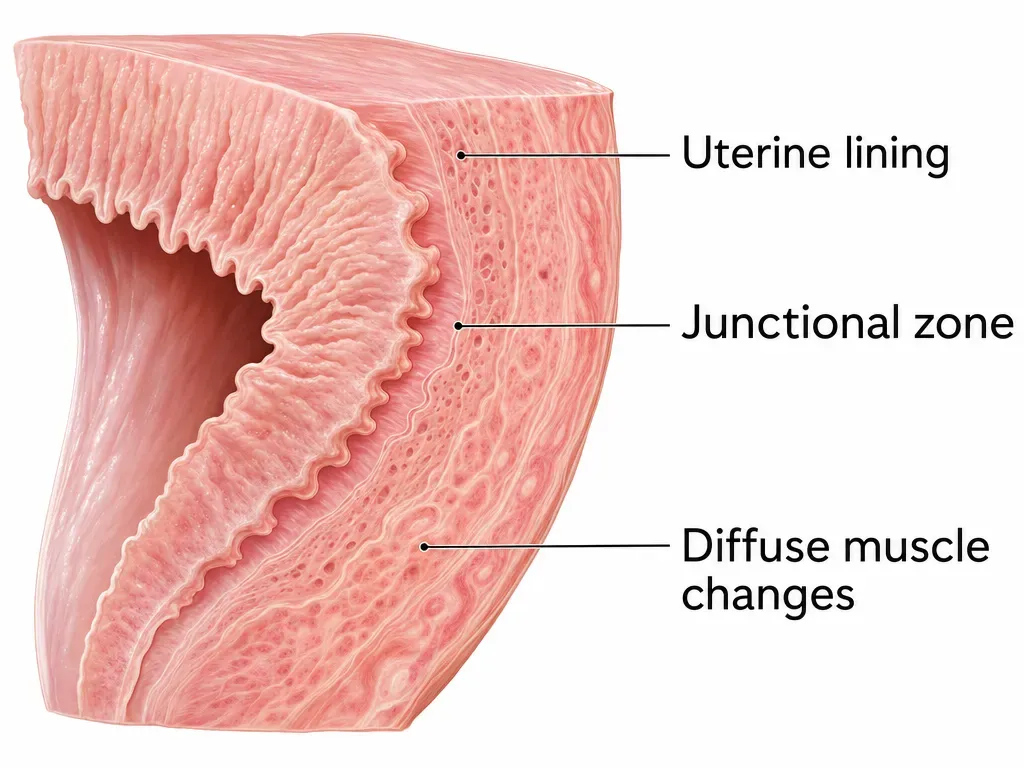
Diffuse adenomyosis describes widespread changes in the uterine muscle rather than a single removable mass. That pattern explains why treatment often focuses on long-term control rather than targeted removal. The right plan depends on your bleeding, pain, and fertility goals, not the imaging label alone.
Heavy bleeding, painful periods, pelvic pressure, fatigue, or fertility stress can disrupt daily life. These concerns should guide assessment and treatment, even when the diagnosis is described with uncertainty.
What the diffuse pattern means for treatment
With diffuse involvement, bleeding can be heavier and more persistent, and pain may be more continuous or difficult to suppress. Local surgical removal is usually not feasible. Imaging details also carry more weight in fertility discussions because the location and extent of changes may affect planning.
Diffuse disease may coexist with a focal lesion such as an adenomyoma, fibroids, or endometriosis. These overlapping conditions can influence symptoms and treatment response, so a plan needs to account for more than the diffuse pattern alone.
The wording “diffused adenomyosis” refers to the same condition. Diffuse adenomyosis is the standard term.
Symptoms and imaging do not always line up
Symptom severity does not consistently match imaging appearance. Some people have severe pain or bleeding with relatively subtle changes, while others have extensive findings with fluctuating symptoms. Diffuse adenomyosis can seriously affect daily life, but the imaging label alone does not establish how serious its effects are for you.
A 2023 review of diagnostic and classification methods in patients with adenomyosis described associations between deeper or more extensive disease and higher rates of painful periods. Imaging alone, however, cannot predict how someone will feel. Symptoms should not be dismissed because imaging changes look subtle or the report sounds uncertain.
How diffuse adenomyosis is diagnosed
Transvaginal ultrasound is usually the starting point
Modern transvaginal ultrasound can identify patterns suggestive of adenomyosis, especially when standardized reporting frameworks are used. Direct signs include small cysts within the uterine muscle and characteristic bright areas, lines, or buds. Indirect signs include a rounded uterus, uneven muscle-wall thickness, and changes in the junctional zone, the inner muscle layer next to the uterine lining.
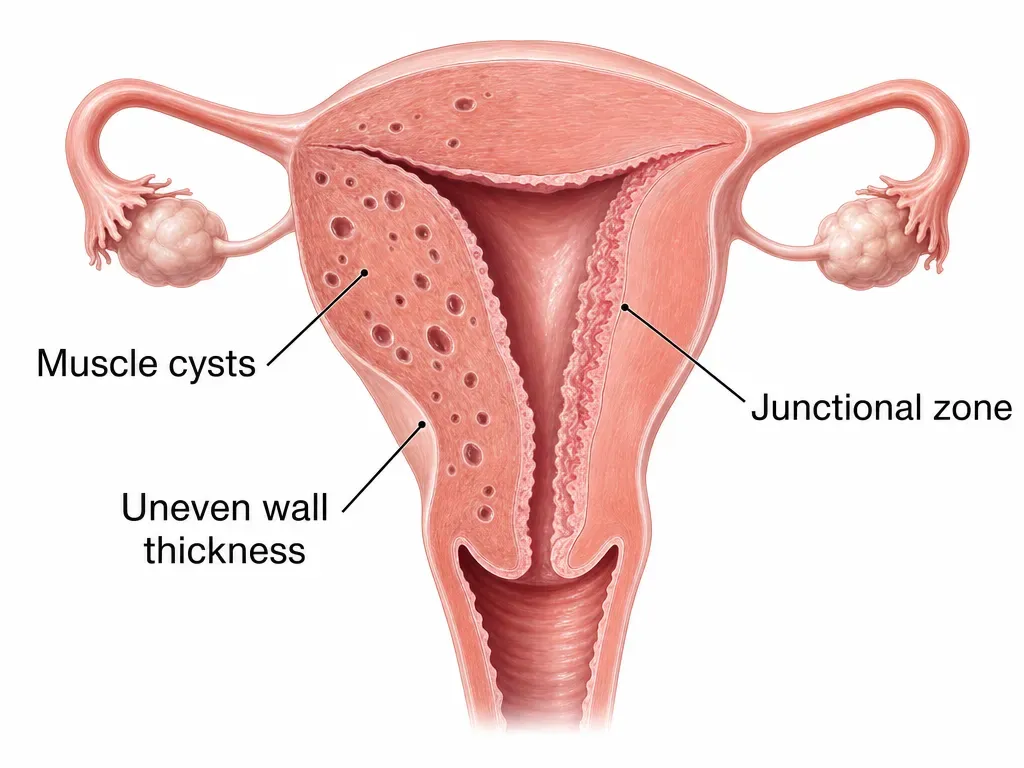
There is a recognized gray zone when only indirect signs are present. A report saying “suggestive of diffuse adenomyosis” therefore needs to be interpreted alongside the specific findings and your symptoms. If your report feels vague, that uncertainty reflects current diagnostic limits, not a failure on your part.
MRI when clarification could change the plan
MRI is often used when ultrasound findings are unclear, symptoms are severe or escalating, or fertility planning is a priority. It can also help when surgical or procedural decisions are being considered.
MRI tends to be highly specific for adenomyosis, meaning it is relatively good at distinguishing it from other findings. It can better characterize disease extent, including junctional-zone involvement that may matter in reproductive planning. The practical question is whether that added detail would change your treatment.
Making sense of your imaging report
There is no universally adopted staging system for adenomyosis. If your report uses terms such as “mild diffuse adenomyosis,” “moderate diffuse adenomyosis,” or “severe diffuse adenomyosis,” ask what those labels describe. They should not override your symptoms or replace details that guide decisions.
Useful questions about the report include:
- Does the disease appear diffuse, focal, or mixed?
- How confident is the diagnosis, and is it based on direct signs, indirect signs, or both?
- Is the junctional zone thickened or irregular?
- Are fibroids, endometriosis, or ovarian endometriomas present?
These details help tailor treatment rather than assign a potentially misleading stage.
Take Control of Your Adenomyosis Today
Our specialists are here to help you understand your condition and explore your treatment options.
Schedule Your ConsultationDefine the treatment goal first
Treatment for diffuse adenomyosis is most effective when guided by a clear primary goal. The best option for heavy bleeding may differ from the best option for fertility or long-term pain control.
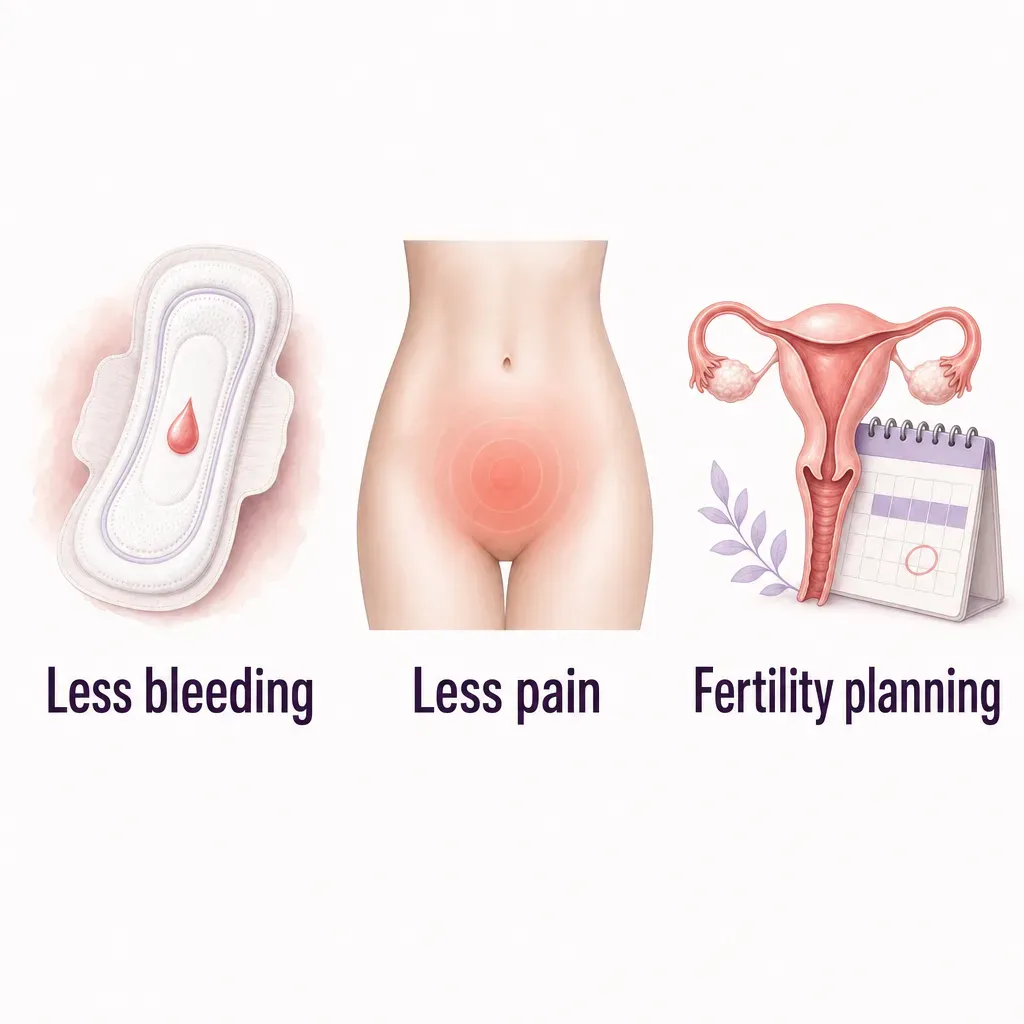
Your priorities may include reducing heavy menstrual bleeding, improving pain and quality of life, or preserving or optimizing fertility. Avoiding major surgery and seeking definitive symptom resolution are also valid goals.
Medical management is the backbone of care
The 52 mg levonorgestrel hormonal IUD
For many patients with diffuse adenomyosis, the 52 mg levonorgestrel IUD is a cornerstone treatment. It can significantly reduce bleeding and improve pain while preserving the uterus.
Irregular bleeding and cramping are common in the first months. A several-month trial is usually needed to assess benefit, so early symptoms do not necessarily mean the treatment will not help.
Other hormonal options
Combined oral contraceptives may be used continuously to suppress bleeding and pain. Progestin therapies can be effective, particularly for pain, but their side effects need to be weighed against symptom relief.
GnRH agonists or antagonists may be used short-term for severe symptoms, as a bridge to surgery, or in certain fertility protocols. They are not long-term solutions for most patients.
Fertility considerations
Diffuse adenomyosis can factor into infertility and miscarriage discussions, although findings vary across studies. Greater disease extent or junctional-zone involvement may influence reproductive outcomes, making the imaging details relevant to an individual fertility plan.
If you are pursuing IVF, discuss whether suppression of adenomyosis before embryo transfer fits your plan. These decisions are individualized and should be made with a fertility specialist familiar with adenomyosis.
Procedural and surgical options
Uterus-sparing procedures
Uterine artery embolization and energy-based therapies are potential options, but suitability varies widely. Preserving the uterus does not mean a procedure is suitable for someone planning pregnancy. These approaches are generally not recommended when future fertility is a strong goal.
Hysterectomy
Hysterectomy is the only definitive cure for adenomyosis. For some people with diffuse disease and persistent, life-altering symptoms, it offers meaningful relief.
It is a valid choice among several, not a failure of other treatments. Planning should include evaluation for coexisting endometriosis and other pain sources, since removing the uterus does not address every possible cause of pelvic pain.
When symptoms warrant faster follow-up
Contact your own care team for prompt reassessment if you experience:
- Heavy bleeding with dizziness, fainting, or signs of anemia.
- Rapidly worsening pain.
- Symptoms that do not fit a benign explanation.
- Lack of response to an appropriately tried medical treatment.
Seek urgent care for heavy bleeding with fainting or significant dizziness, or for severe, rapidly worsening pain. These symptoms should not wait for a routine follow-up appointment.
Questions to bring to your clinician
- Does my imaging suggest diffuse, focal, or mixed disease?
- How confident is the diagnosis based on direct versus indirect signs?
- Would MRI meaningfully change my management?
- What is the stepwise plan over the next six months?
- If fertility is a priority, how does disease extent affect our strategy?
A final perspective
There is no single right treatment for everyone with this chronic condition. At your next appointment, agree on which symptoms and goals will guide care, how you will measure response over time, and when to consider the next treatment step. You do not need to wait for a perfect label or imaging report before making that plan.
References
Moawad G, Fruscalzo A, Youssef Y, et al. Adenomyosis: An Updated Review on Diagnosis and Classification. Journal of Clinical Medicine. 2023. () DOI: 10.3390/jcm12144828
Selntigia A, Molinaro P, Tartaglia S, Pellicer A, Galliano D, Cozzolino M. Adenomyosis: An Update Concerning Diagnosis, Treatment, and Fertility. Journal of Clinical Medicine. 2024. () DOI: 10.3390/jcm13175224
Ottolina J, Villanacci R, D’Alessandro S, et al. Endometriosis and Adenomyosis: Modern Concepts of Their Clinical Outcomes, Treatment, and Management. Journal of Clinical Medicine. 2024. () DOI: 10.3390/jcm13143996
Quick Answers
When is hysterectomy recommended for adenomyosis?
Hysterectomy is typically considered for adenomyosis when severe symptoms come from the uterus and you’re not planning future pregnancy. It is usually weighed most strongly when conservative treatments haven’t provided acceptable relief, aren’t tolerated, or don’t fit your goals.
Is uterine artery embolization (UAE) right for adenomyosis?
UAE can be a good fit for adenomyosis when your goal is symptom relief while preserving the uterus, especially for heavy bleeding. Whether it’s right depends on your symptoms, fertility goals and whether endometriosis is also contributing.
How does estrogen affect the endometrium?
Estrogen signals the endometrium (the uterine lining) to thicken and rebuild after a period, preparing the uterus for a possible pregnancy. It also affects the uterus’s immune and inflammatory environment, so hormonal shifts can change bleeding patterns and pain.
What does advanced adenomyosis mean?
Advanced adenomyosis usually means more extensive disease within the uterine muscle, often affecting a larger area or reaching deeper into the wall. There is no universally accepted staging system, and adenomyosis does not spread outside the uterus.