


IVF With Endometriosis and Your Real Chances of Success
How other fertility factors, age, and multiple cycles shape your chances of a live birth
IVF chances with endometriosis depend on more than the diagnosis
IVF success rates with endometriosis depend on more than the diagnosis alone. In a 2025 retrospective registry study of 79,318 women starting fertility treatment with their own eggs in Australia and New Zealand, endometriosis alone did not mean worse cumulative live birth outcomes. Additional fertility factors were associated with tougher outcomes, while age and results across multiple cycles also mattered.
The conflicting messages you may hear about endometriosis and IVF can add to the hope, grief, pressure, and exhaustion of treatment. Separating endometriosis as the only recorded fertility issue from endometriosis alongside another fertility factor helps make the numbers more useful for planning.
Cumulative live birth rates show the chance across cycles
Most clinics quote success per embryo transfer or per cycle. Those figures can be misleading if you interpret them as your chance of having a baby over an entire course of treatment, because many people need more than one attempt.
Cumulative live birth rate (CLBR) describes the proportion of people who have had a live birth after several complete IVF cycles. A complete cycle includes one ovarian stimulation and all fresh and frozen embryo transfers arising from it. Six complete cycles therefore does not mean six embryo transfers.
The 2025 study followed women for up to six complete cycles. This longer view is closer to how IVF often unfolds with endometriosis: you may need time to find the right protocol, manage pain flares, and account for surgery history or ovarian cysts.
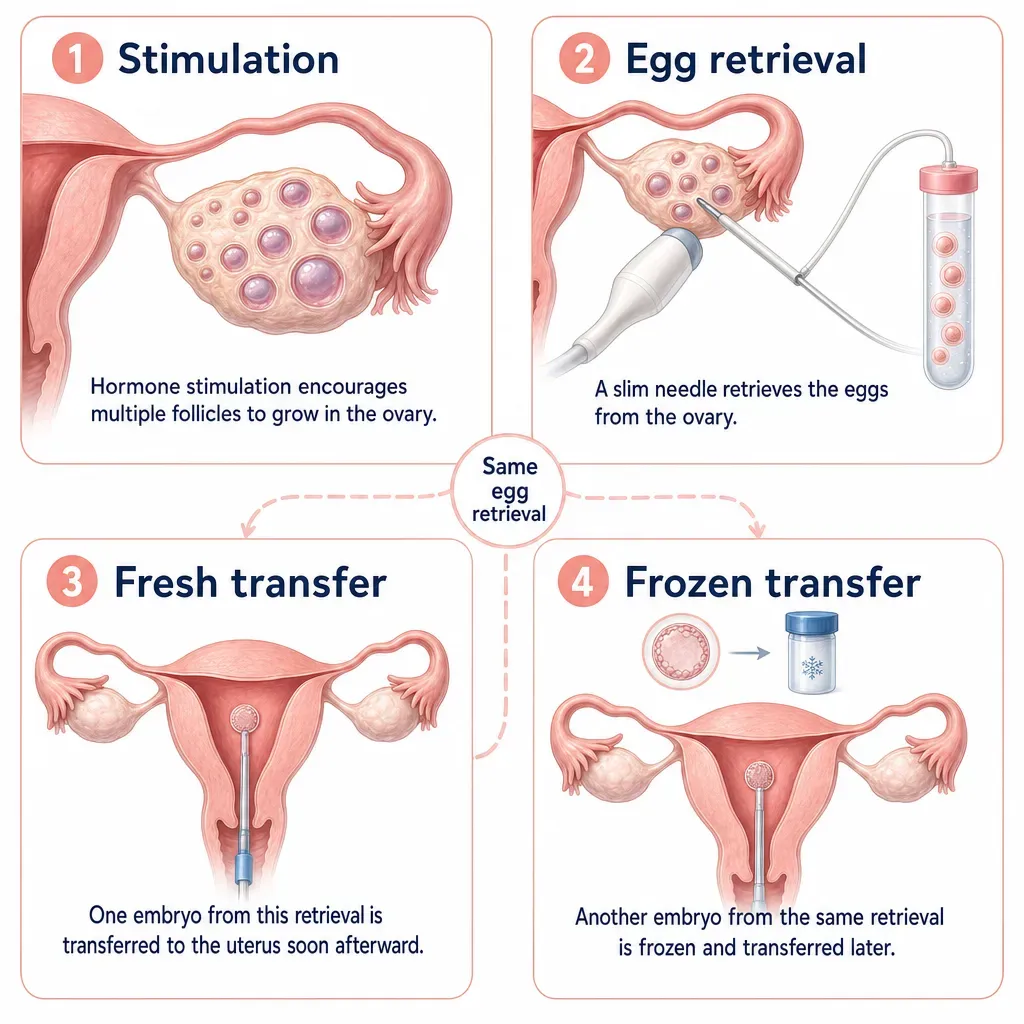
The results appear as a range because some people stop treatment for financial, emotional, medical, or logistical reasons. The conservative estimate assumes that those who stopped would have no chance of a live birth if they continued; the optimal estimate assumes they would have the same chance as those who continued. Real-world chances often fall between these estimates, but the range is not a personal prediction.
Endometriosis-only had the highest cumulative rate in this dataset
When endometriosis was the only recorded infertility diagnosis, cumulative live birth rates were highest among the groups compared. By six complete cycles, the conservative-to-optimal range was 64%–83% for endometriosis-only.
For endometriosis-plus, meaning endometriosis with at least one other infertility diagnosis, the range was 54.3%–68.7%. For other infertility diagnoses without endometriosis, it was 57.3%–76.5%.
If your chart lists endometriosis and nothing else, these results suggest that you are not automatically at a disadvantage compared with other people undergoing IVF. Endometriosis alone is not a reason to consider IVF futile.
Higher rates do not mean endometriosis helps fertility
These results do not mean endometriosis helps fertility or IVF outcomes. The pattern likely reflects, in part, a comparison group containing diagnoses that can be harder to treat, along with registry categories that cannot capture every detail affecting prognosis. Disease severity and ovarian reserve are examples of details that may help explain an individual’s outlook.
Additional fertility factors can change the outlook
Outcomes were meaningfully tougher for women with endometriosis and at least one additional fertility factor. In the 2025 study, this group had about a 5% lower relative likelihood of live birth than the other-infertility group, after adjustment for age, previous births, and treatment year.
Compared with the endometriosis-only group, the endometriosis-plus group had about a 46% higher relative risk of pregnancy loss. These are relative comparisons between groups, not percentage-point changes or personal risks. A 46% higher relative risk does not mean that 46% of pregnancies were lost.
If IVF has not worked, or if endometriosis has been treated as the only issue, ask your fertility team whether you have had a thorough evaluation for additional factors that can be treated or optimized. Male factor infertility, tubal problems, ovulatory issues, diminished ovarian reserve, and uterine factors can all change the plan.
Most cumulative gains came in the first few cycles
You may feel pressure to decide in advance how many cycles you will do. In practice, that decision often evolves with your response to stimulation, embryo development, and how your body tolerates treatment.
In the 2025 dataset, the largest gains in cumulative live birth chances tended to occur during the first 2–3 complete cycles, with smaller incremental gains afterward. Later cycles absolutely can succeed. The pattern supports planning in phases, such as reassessing after one or two cycles and again after three.
If you are not getting embryos, it is time to review the strategy rather than continuing on autopilot. The same applies if you are using preimplantation genetic testing for aneuploidy (PGT-A) and are not getting euploid embryos, meaning embryos with the expected number of chromosomes. Review stimulation response, embryo development, and treatment tolerance with your fertility team.
Understand Your IVF Success Rates Now
Our specialists are here to help you understand your condition and explore your treatment options.
Schedule Your ConsultationAge remains central to IVF planning
Age remains the strongest predictor, regardless of diagnosis. Live birth rates declined with increasing age in every group in the 2025 dataset, and outcomes above age 44 were described as negligible. These findings concern treatment using the woman’s own eggs, not donor eggs.
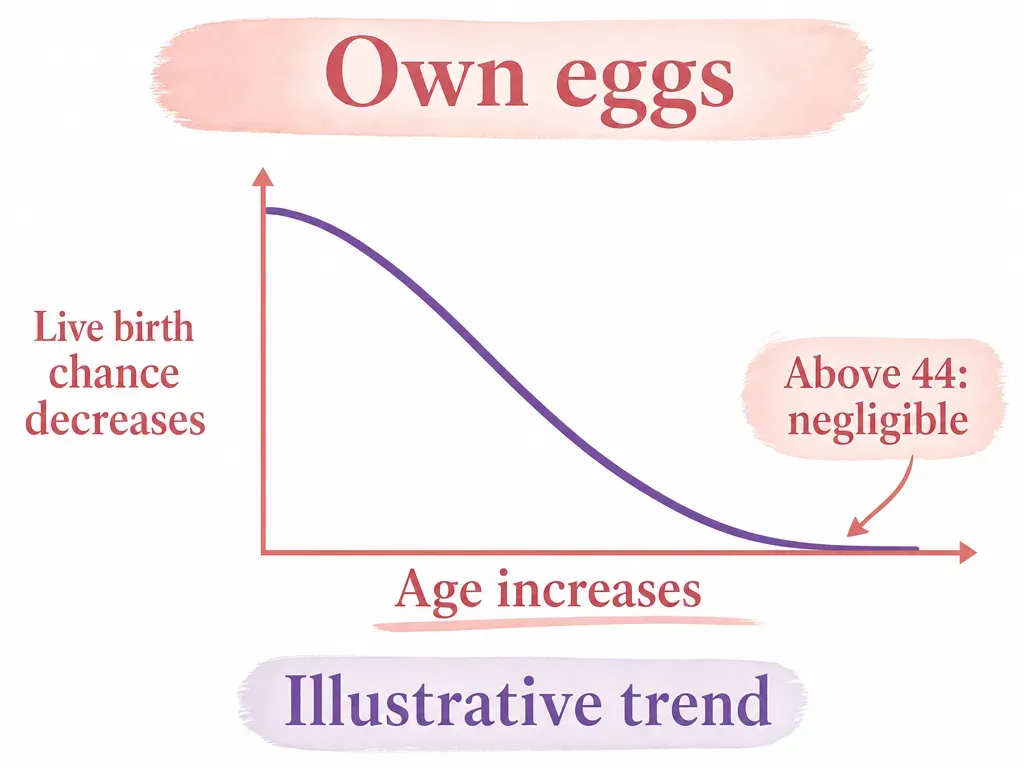
That can be painful to read, especially if you already feel anxious about time. If you are 38–42, it is worth having a more urgent, concrete conversation about continuing with your own eggs, embryo banking, and whether donor eggs should be considered now or later. Agreeing on stopping points can help protect your mental health and finances.
Endometriomas and severe disease need an individual assessment
The registry could not separate outcomes by endometriosis stage or by disease type, including endometriomas, deep disease, and superficial disease. Its figures are population-level guidance rather than a personalized prediction for someone with severe disease or ovarian endometriomas.
For someone with endometriomas, practical questions that affect IVF include:
- Has surgery reduced ovarian reserve?
- Are the ovaries accessible for egg retrieval?
- Are inflammation or pain making cycles harder to tolerate?
- Is adenomyosis also present, even if it has not yet been diagnosed?
These details can shift your individual odds even when the endometriosis-only category looks reassuring.
Questions to take to your fertility team
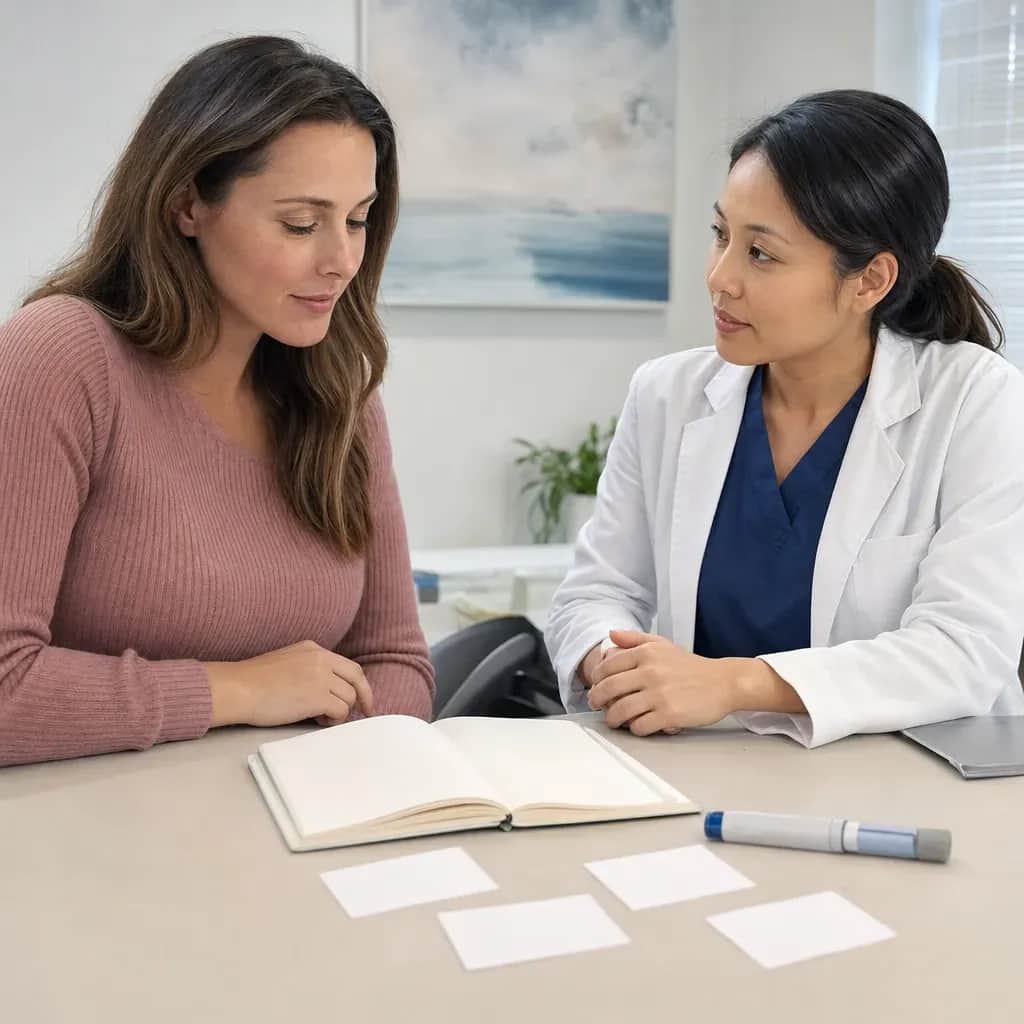
Your consultation should clarify all the factors affecting fertility and establish when the treatment plan will be reviewed. The following questions can help distinguish endometriosis-only from endometriosis-plus and turn general success rates into a practical plan.
Clarify every fertility factor
- Besides endometriosis, what other infertility factors have we formally ruled in or ruled out? Ask specifically about male factor infertility, tubal factors, ovulatory issues, diminished ovarian reserve, and uterine factors such as adenomyosis.
- What is your plan to address pregnancy loss risk in my situation? This is especially important with endometriosis-plus, recurrent miscarriage, or suspected uterine factors.
Agree on reassessment points and next steps
- Based on my age and history, how many complete cycles do you recommend before we reassess strategy? Ask what would trigger a change: poor response to stimulation, low fertilization, a low rate of embryos reaching the blastocyst stage, repeated transfer failure, or pregnancy loss.
- If we do not have success after 2–3 cycles, what are the next-step options? Discuss protocol changes, surgical considerations, embryo banking, and laboratory strategies such as intracytoplasmic sperm injection (ICSI). Depending on the situation, options may also include donor eggs or sperm, or a gestational carrier in select cases.
Get your results across cycles in writing
Keep notes and ask for your results in writing. These should include anti-Müllerian hormone (AMH), AFC for antral follicle count, eggs retrieved, mature eggs, fertilization rate, blastocyst development rate, embryo grades, and transfer details.
Your pattern across cycles is often more informative than any single average success rate. Having those details available gives you and your doctors a clearer basis for deciding what to change.
Population rates cannot predict your personal outcome
These cumulative percentages are averages across a large registry, not your personal odds or a promise. Use them to set expectations, plan decision points, and request a full fertility work-up, especially if something is not adding up.
Treatment discontinuation is not random. Some people stop because of poor prognosis, alongside financial, emotional, medical, or logistical pressures, which can pull real-world outcomes toward the conservative estimate.
The registry also leaves specific questions unanswered: whether excision surgery before IVF helps or harms outcomes in particular subgroups, how adenomyosis changes the picture, and how outcomes vary by endometriosis stage or disease type. Ask your fertility and surgical teams how those unanswered questions apply to your own history before deciding on the next step.
References
Paul R, Deans R, Henry A, Ng C, Rowlands I, Mishra G, Abbott J, Chambers GM. Cumulative live birth rates in women with endometriosis undergoing ART treatment. Human Reproduction (Oxford, England). 2025.. DOI: 10.1093/humrep/deaf191
Quick Answers
Can endometriosis cause infertility and pelvic pain in your 20s?
Yes, endometriosis can cause chronic pelvic pain and fertility challenges in your late 20s. Pain can include severe period cramps, pain with sex, and bowel or bladder pain, though symptom severity doesn’t always match how much disease is present.
What does advanced adenomyosis mean?
Advanced adenomyosis usually means more extensive disease within the uterine muscle, often affecting a larger area or reaching deeper into the wall. There is no universally accepted staging system, and adenomyosis does not spread outside the uterus.
Why do endometriosis doctors focus so much on fertility?
Many doctors focus on fertility because endometriosis can affect it, and fertility is time-sensitive. But fertility should never be the only focus: pain, bowel and bladder symptoms, fatigue, and quality of life matter whether or not pregnancy is a goal.
Is endometriosis surgery only for fertility?
No, endometriosis surgery is not only for fertility. Excision surgery is often performed to relieve pain and other symptoms, restore normal anatomy, or address endometriosis affecting organs like the bowel or bladder. Surgery can also help confirm the diagnosis.