




Low Dose Naltrexone for Endometriosis Pain
Where it may help, what remains uncertain, and how to plan a monitored trial

Low dose naltrexone is an unproven add-on for endometriosis pain
Low dose naltrexone for endometriosis remains an experimental, off-label option aimed at symptoms. It may help some people with centralized or overlapping chronic pain, but it has not been proven to treat endometriosis or adenomyosis pain, or the disease itself. If considered, it belongs in a monitored trial with individualized dosing, clear goals, and a broader pain plan.
Pain can flare without warning, persist after surgery because of coexisting conditions, and come with fatigue, disrupted sleep, bowel or bladder discomfort, and a nervous system that feels on high alert. These problems help explain why people seek options beyond hormones, NSAIDs, or further procedures.
If you’d like a specialist’s second opinion on a broader endometriosis treatment recommendation, our team at Lotus Endometriosis Institute can review your options.
What low dose naltrexone may do for pain
How low doses differ from standard treatment
Naltrexone at standard doses, often 50 mg, is used for long-term treatment of opioid and alcohol use disorders. It is related to naloxone, also known as Narcan, which is used for emergency reversal of opioid overdose. They have different uses and are not interchangeable.
Low dose naltrexone, usually shortened to LDN, uses much smaller amounts, commonly around 0.5–4.5 mg daily, although some reports use higher doses. Its use for chronic pain is off-label, meaning it is being prescribed for a purpose outside its approved indications.
Why central sensitization is relevant
Central sensitization means that the brain and spinal cord amplify pain signals. Sensitivity can become so heightened that even light touch feels painful. LDN is hypothesized to influence this process through effects on microglia, immune cells in the central nervous system, and a receptor called toll-like receptor 4, or TLR4.
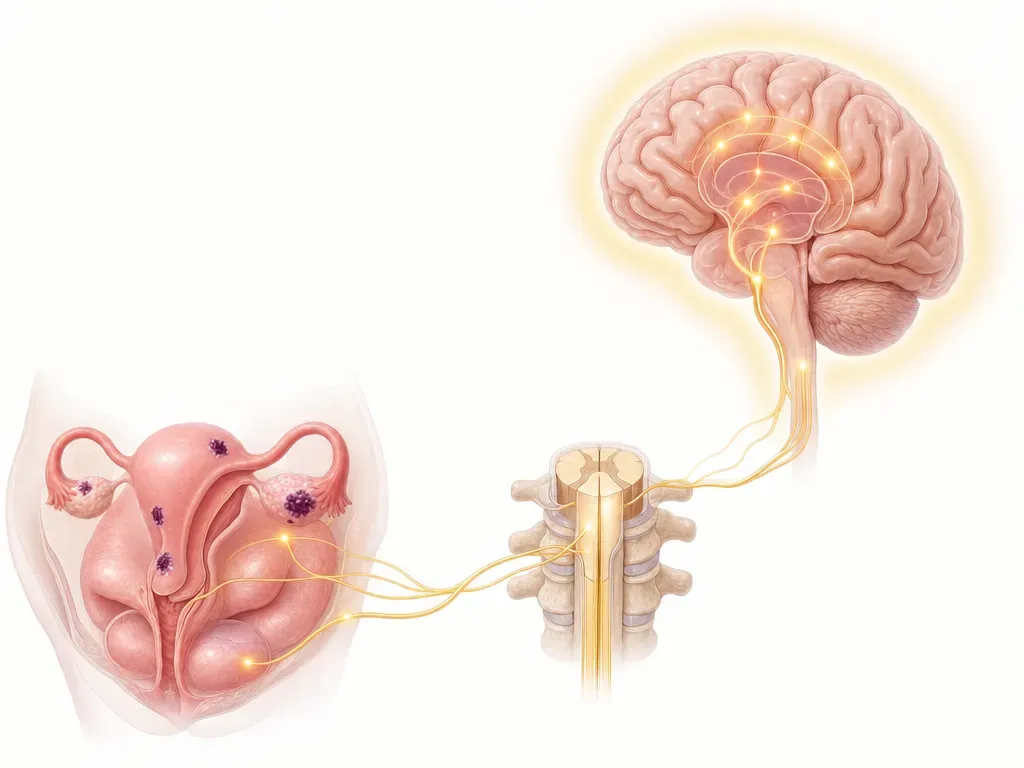
Microglia can release inflammatory signals that increase pain sensitivity. The idea is that LDN may reduce this activity and alter pain signaling, but the mechanism is not fully established. Possible effects on the body’s own opioid signaling and other immune-cell functions are also being explored.
In a 2021 laboratory study involving nine people with ME/CFS taking LDN and nine healthy comparison participants, investigators reported restored activity of an ion channel called TRPM3 in natural killer immune cells. This is interesting laboratory biology, not proof that LDN improves endometriosis symptoms.
These proposed mechanisms do not establish an effect on endometriosis lesions, pelvic inflammation, bleeding, fertility, or disease progression.
What the pain evidence can and cannot tell us
No direct endometriosis or adenomyosis trials
There are no direct clinical trials establishing LDN as a treatment for endometriosis or adenomyosis pain. The available findings discussed below come from other chronic pain conditions and overlapping symptom patterns.
Some people with endometriosis have two layers of pain. Lesions, inflammation, and bleeding can generate pain directly and stimulate painful pelvic floor muscle responses. A sensitized nervous system can then continue amplifying pain even after the original trigger has been reduced.
If LDN helps, that second layer may be the more plausible target. This remains a hypothesis, not an established indication.
Indirect evidence from centralized pain
A 2023 scoping review of 47 publications concerning people with non-cancer centralized pain conditions, including fibromyalgia, complex regional pain syndrome, and diabetic neuropathy, found reports of improved pain. Some also described better sleep, physical function, or quality of life. Much of the material consisted of small case reports, case series, and reviews, with only a few randomized trials.
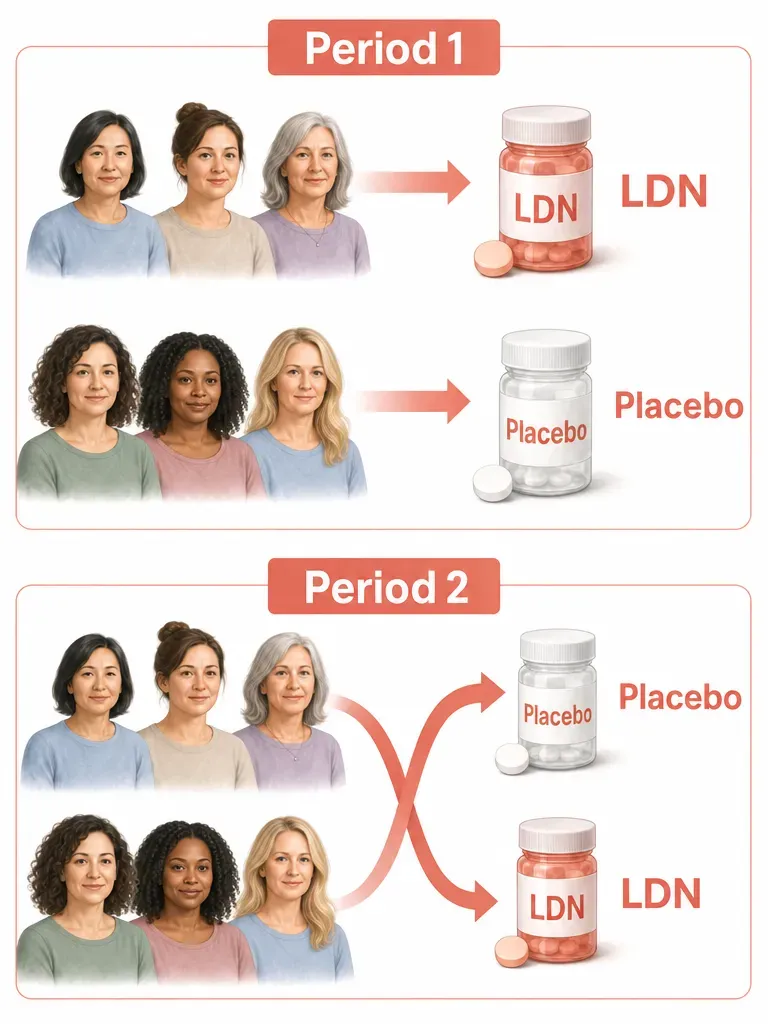
Small placebo-controlled crossover trials in fibromyalgia provide some support for a pain-relieving effect. In a 2009 trial of 10 women with fibromyalgia, LDN reduced symptoms more than placebo. In a 2013 randomized, double-blind crossover trial involving 31 women with fibromyalgia, pain reduction was also greater with LDN than with placebo.
In crossover trials, participants receive both treatments during different periods. These results suggest that LDN can change the pain experience for some people with centralized pain, but the small samples and limited replication leave uncertainty about how consistently it works. Doses and response times also varied across the 2023 review.
The small pelvic pain overlap evidence
In a 2025 case series of three postmenopausal women with vulvodynia that had not responded adequately to standard treatment, all reported subjective improvement after adding LDN to existing care. No side effects were reported. One woman’s numerical pain score did not change despite her reported improvement, illustrating why pain scores and day-to-day experience both matter.
Vulvodynia is not endometriosis, but vulvar pain, bladder pain, pelvic floor myalgia, and fibromyalgia-like symptoms can overlap with endometriosis-related pain. The case series shows that some pelvic pain specialists are trying LDN as an adjunct when standard options have not provided enough relief. It gives a reason to study this approach, not proof of efficacy; trials are needed to assess benefits and risks.
Fatigue and autonomic symptoms have mixed results
Some people with endometriosis also experience fatigue, brain fog, difficulty tolerating standing, rapid heart rate, temperature dysregulation, or problems with gastrointestinal movement. Some meet criteria for dysautonomia or postural orthostatic tachycardia syndrome, known as POTS.
In a 2023 case series of six people with tilt-table-confirmed POTS, three reported some symptom improvement with LDN, while two stopped because they did not perceive enough benefit. Questionnaire results varied, and no side effects were recorded. Endometriosis appeared as a coexisting condition in only one patient; it was not the condition being treated.
In a 2025 chart review of 29 people with dysautonomia, seven had documented pain improvement, nine reported no change, four reported worsening, and nine had no documented pain outcome. Average scores on COMPASS-31, a questionnaire measuring autonomic symptom burden, did not significantly improve. Five people reported mild side effects, including insomnia, nausea, migraines, brain fog, nightmares, or nighttime urination.
If fatigue or autonomic symptoms are the main reason for considering LDN, expectations should reflect these inconsistent results. Some individuals may benefit, but LDN should not be treated as a reliable POTS treatment.
Considering low dose naltrexone for endometriosis pain?
Our specialists are here to help you understand your condition and explore your treatment options.
Schedule a ConsultationDose and timing need an individual plan
Why a standard dose may not be your best dose
Effective dosing appears highly individual. In a 2024 observational study analyzing 41 people with chronic musculoskeletal pain who completed dose-finding and outcome assessments, the reported maximally effective doses ranged from 0.1 mg to about 5.6 mg daily. Many participants’ best reported dose was 2 mg or less.
The pattern suggested that a person might improve at one dose and feel worse at a higher dose. Feeling worse at 4.5 mg does not, by itself, settle whether another dose might help. However, this uncontrolled study could not exclude placebo effects or nocebo effects, in which expectations contribute to improvement or worsening.
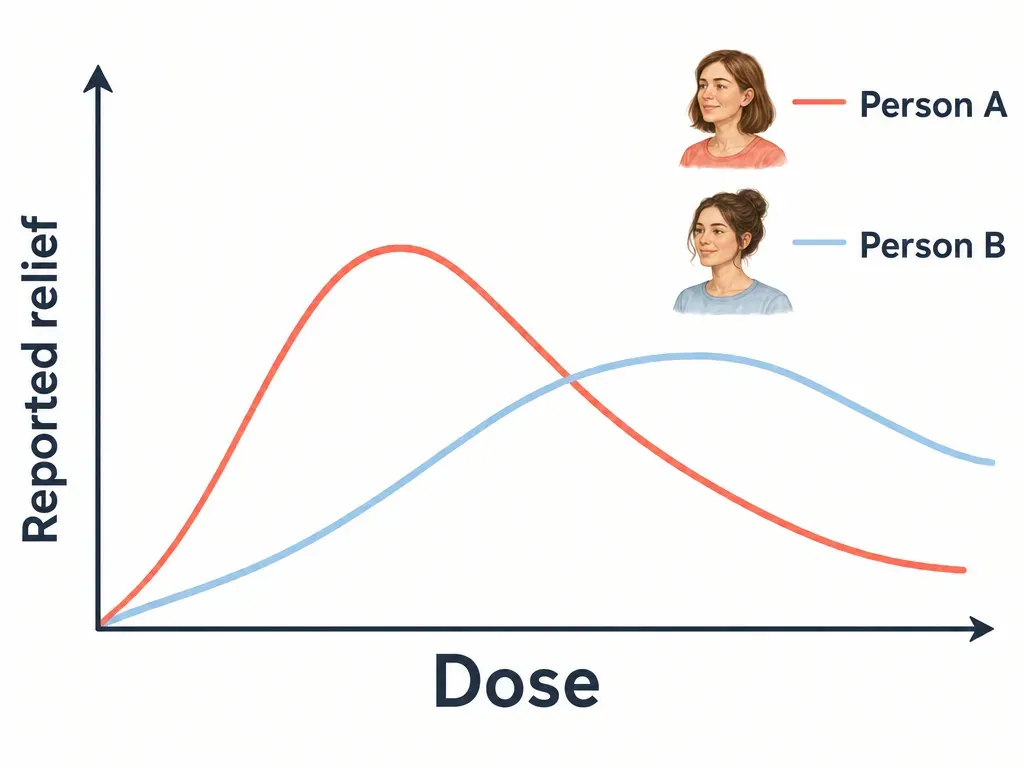
The practical preference is slow upward titration and individualized dosing, rather than assuming that 4.5 mg suits everyone. Discuss the starting dose, adjustment schedule, and reasons to pause or reduce the dose with the prescribing clinician. These findings are not a self-dosing protocol.
When to assess whether it is helping
LDN is not an instant painkiller. A 2014 clinical review of LDN use in people with chronic pain conditions, including fibromyalgia, described difficulty separating medication benefit from placebo early in treatment. Several weeks, sometimes around two months, may be a useful assessment window, but there is no fixed deadline that applies to everyone.
The 2025 dysautonomia review assessed follow-up visits 3–9 months after starting LDN. Those intervals describe when records were collected, not a recommended trial length, and the incomplete documentation makes them a poor guide to when benefit should appear.
Agree on a structured trial long enough to assess change, often weeks to a couple of months, with symptom tracking and a scheduled dose review. A trial should have a plan for adjusting or stopping treatment rather than continuing indefinitely without clear benefit.
Side effects and opioid use need particular attention
Effects to watch for
Reported side effects are often mild, but this does not establish long-term safety or make LDN risk-free. The 2023 centralized-pain review described effects including vivid dreams, insomnia, headache, nausea, and diarrhea. The 2025 dysautonomia review also recorded nightmares and brain fog.
The absence of reported side effects in the small POTS and vulvodynia case series cannot rule out uncommon problems. Larger trials assessing safety at different doses are needed, along with better information about long-term use.
Opioid medications require clinician-led planning
Any opioid use, even intermittent use, requires explicit planning with the prescribing clinician before taking LDN. Naltrexone blocks opioid receptors, so combining it with opioids can interfere with pain relief or precipitate withdrawal, depending on the circumstances.
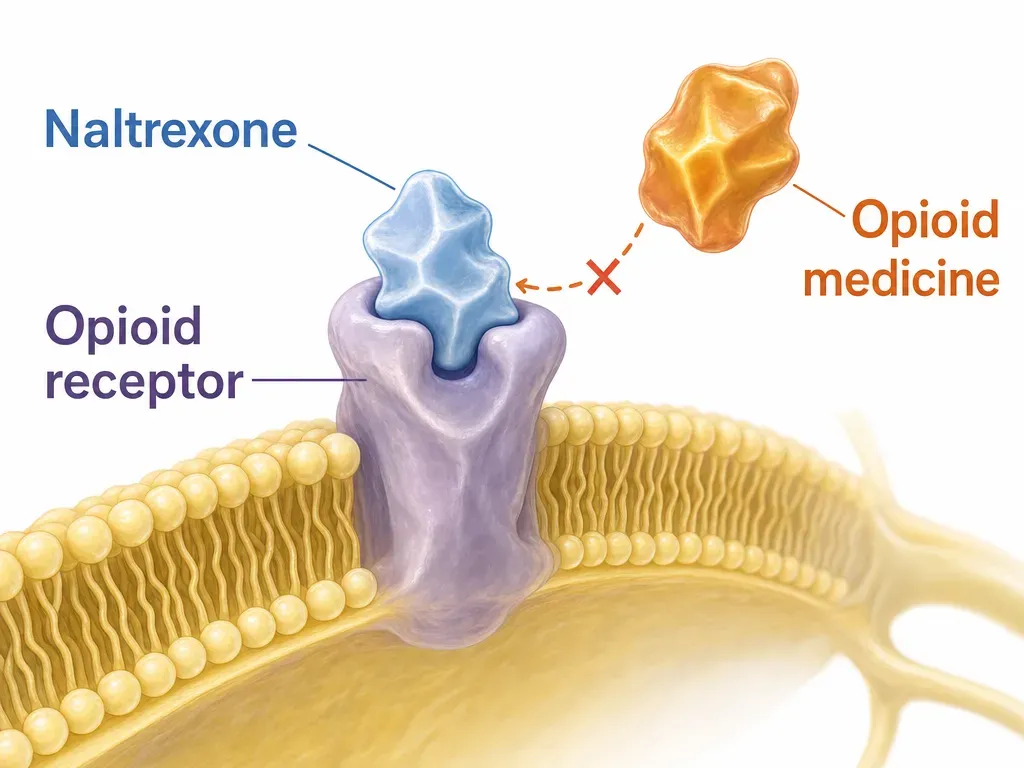
LDN trials commonly exclude people taking opioid pain medicines, and safe co-administration at low doses remains uncertain. Do not assume that a small dose eliminates the interaction. If a procedure may require opioid pain relief, the prescriber and treating surgical team need to coordinate the medication plan.
Where it might fit in a broader pain plan
There are no reliable rules for identifying who with endometriosis will benefit from LDN. It may be worth discussing after insufficient relief from standard care when pain is widespread or strongly amplified, sensitivity is heightened, sleep is poor, or fibromyalgia-like symptoms are present. Overlapping pelvic floor muscle pain, bladder pain, or vulvar pain may also prompt that discussion.
LDN is an adjunct, not a cure. It is not supported as a primary strategy for shrinking or excising lesions, improving fertility, or controlling heavy bleeding.
A possible trial must not replace attention to those goals or to other pain contributors. Pelvic floor therapy, targeted hormonal care when appropriate, and treatment of bladder or vulvar pain remain part of a comprehensive plan.
Questions to take to your clinician
Bring a medication list, including medicines used only during flares, and a brief record of the symptoms you most want to improve. These questions can help turn an open-ended trial into a clear plan:
- What symptom are we targeting, and how will we measure it? Daily pelvic pain, flares, sleep, fatigue, and vulvar pain are different targets. Consider baseline and follow-up measures of pain interference, sleep quality, missed days, or flare frequency.
- What dosing strategy will we use? Ask about the starting dose and slow titration rather than assuming that 4.5 mg is the right dose.
- What is our stop rule? Agree on what would count as meaningful improvement, when to assess it, and which side effects would prompt stopping.
- Is LDN compatible with my current medicines, especially opioids? Include intermittent medicines and any anticipated need for pain control around a procedure.
- What else should we treat at the same time? Ask about pelvic floor therapy, appropriate hormonal management, and bladder or vulvar contributors rather than relying on LDN alone.
Contact the prescribing clinician about medication problems. For issues following a procedure, contact the surgeon or care team who treated you, or seek urgent care.
What remains unknown
Small, often uncontrolled studies in other conditions cannot predict who with endometriosis will feel better, notice no change, or feel worse. Important unanswered questions include:
- Does LDN improve endometriosis or adenomyosis pain more than placebo?
- Does it help particular groups, such as people with deep disease, persistent pain after surgery, or adenomyosis with heavy bleeding?
- What is the optimal dose for pelvic pain, and might some people benefit from higher doses?
- How safe is long-term use, and does any benefit persist?
- When symptoms improve, is that due to reduced nervous-system inflammation, altered pain processing, placebo effects, natural fluctuation back toward usual symptom levels, or other treatments being used at the same time?
If you and your clinician choose a trial, set the symptom target, dose-review date, and stop rule before starting. Keep treatment of the other drivers of pelvic pain moving forward during that trial.
References
Stallkamp Tidd, Cantrell, Greene et al.. Low-Dose Naltrexone Use in Postural Orthostatic Tachycardia Syndrome: A Case Series. Cureus. 2023. PMID: 37706146 PMCID: PMC10497067
Rupp, Young, Chadwick. Low-dose naltrexone’s utility for non-cancer centralized pain conditions: a scoping review. Pain Medicine: The Official Journal of the American Academy of Pain Medicine. 2023. PMID: 37302106 PMCID: PMC10628981
Marcus, Robbins, Araki et al.. Effective Doses of Low-Dose Naltrexone for Chronic Pain – An Observational Study. Journal of Pain Research. 2024. PMID: 38532991 PMCID: PMC10964028
Sullender, Silverstein, Goodwin et al.. Low-dose naltrexone as a treatment for vulvodynia: A case series. Case Reports in Women's Health. 2025. PMID: 39802731 PMCID: PMC11719202
Zapata, Georgiadi, Cantrell et al.. Low-Dose Naltrexone for Managing Pain and Autonomic Symptoms in Patients With Dysautonomia. Cureus. 2025. PMID: 40698237 PMCID: PMC12282647
Younger, Parkitny, McLain. The use of low-dose naltrexone (LDN) as a novel anti-inflammatory treatment for chronic pain. Clinical Rheumatology. 2014. PMID: 24526250 PMCID: PMC3962576
Cabanas, Muraki, Eaton-Fitch et al.. Potential Therapeutic Benefit of Low Dose Naltrexone in Myalgic Encephalomyelitis/Chronic Fatigue Syndrome: Role of Transient Receptor Potential Melastatin 3 Ion Channels in Pathophysiology and Treatment. Frontiers in Immunology. 2021. PMID: 34326841 PMCID: PMC8313851
Quick Answers
When is hysterectomy recommended for adenomyosis?
Hysterectomy is typically considered for adenomyosis when severe symptoms come from the uterus and you’re not planning future pregnancy. It is usually weighed most strongly when conservative treatments haven’t provided acceptable relief, aren’t tolerated, or don’t fit your goals.
Why does ovarian cyst pain keep coming back?
Ovarian cyst pain can return because new cysts form with ovulation, a cyst persists or comes back, or nearby endometriosis or scar-like bands cause pain. An endometrioma, a cyst caused by endometriosis, may be associated with deeper pelvic disease.
Why do I have chronic fatigue and pelvic pain?
Chronic fatigue and pelvic pain can come from endometriosis, adenomyosis, or more than one condition. Inflammation, disrupted sleep, heavy bleeding and ongoing pain can drive fatigue, while the nervous system can become more pain-sensitive over time.
Why is my period pain so severe that it disrupts my daily life?
Severe period pain that disrupts daily life may signal endometriosis, adenomyosis, or another underlying cause. Worsening pain, poor relief with NSAIDs and heat, heavy bleeding, or pain between periods warrant evaluation, even when imaging looks normal.