


Endometriosis or Inflammatory Bowel Disease? The Key Differences
How to tell them apart, where they overlap, and what the evidence says about a connection
Distinguishing the Differences
Exploring the complex world of health and medical conditions can sometimes feel like navigating a labyrinth. The similarities between certain conditions often blur the lines, making it challenging for individuals and even healthcare professionals to differentiate between them. This is notably true when comparing endometriosis and inflammatory bowel disease (IBD), two disorders that share several overlapping symptoms and characteristics. With ongoing conversations about endometriosis and its impact on the bowel, this article aims to clarify the differences, similarities, and diagnostic challenges associated with these conditions.
Symptoms of Endometriosis
The signs and symptoms of endometriosis can vary greatly, making it a complex disease to diagnose. Common symptoms include dysmenorrhea (painful periods), dyspareunia (painful intercourse), chronic pelvic pain, and gastrointestinal symptoms such as diarrhea, constipation, and abdominal pain. Because endometriosis symptoms often overlap with gastrointestinal complaints, getting a diagnosis can be tricky—especially when the bowels may be involved, which is estimated in about 5–12% of cases. Approximately 90% of those with endometriosis experience gastrointestinal symptoms. In many cases, these symptoms are mistaken for other conditions, leading to delays in diagnosis.
Inflammatory Bowel Disease: An Overview
Inflammatory bowel disease (IBD) is an umbrella term for two chronic autoimmune disorders: ulcerative colitis (UC) and Crohn’s disease (CD). These conditions are characterized by chronic inflammation of the gastrointestinal tract and can cause a wide range of symptoms, including abdominal pain, diarrhea, weight loss, and fatigue.
The prevalence of IBD is highest in Europe, with reported cases reaching up to 505 per 100,000 for UC in Norway and 322 per 100,000 for CD in Italy. Like endometriosis, IBD can significantly impact quality of life and often requires long-term management strategies to control symptoms and prevent complications.
The Overlap: Endometriosis and IBD
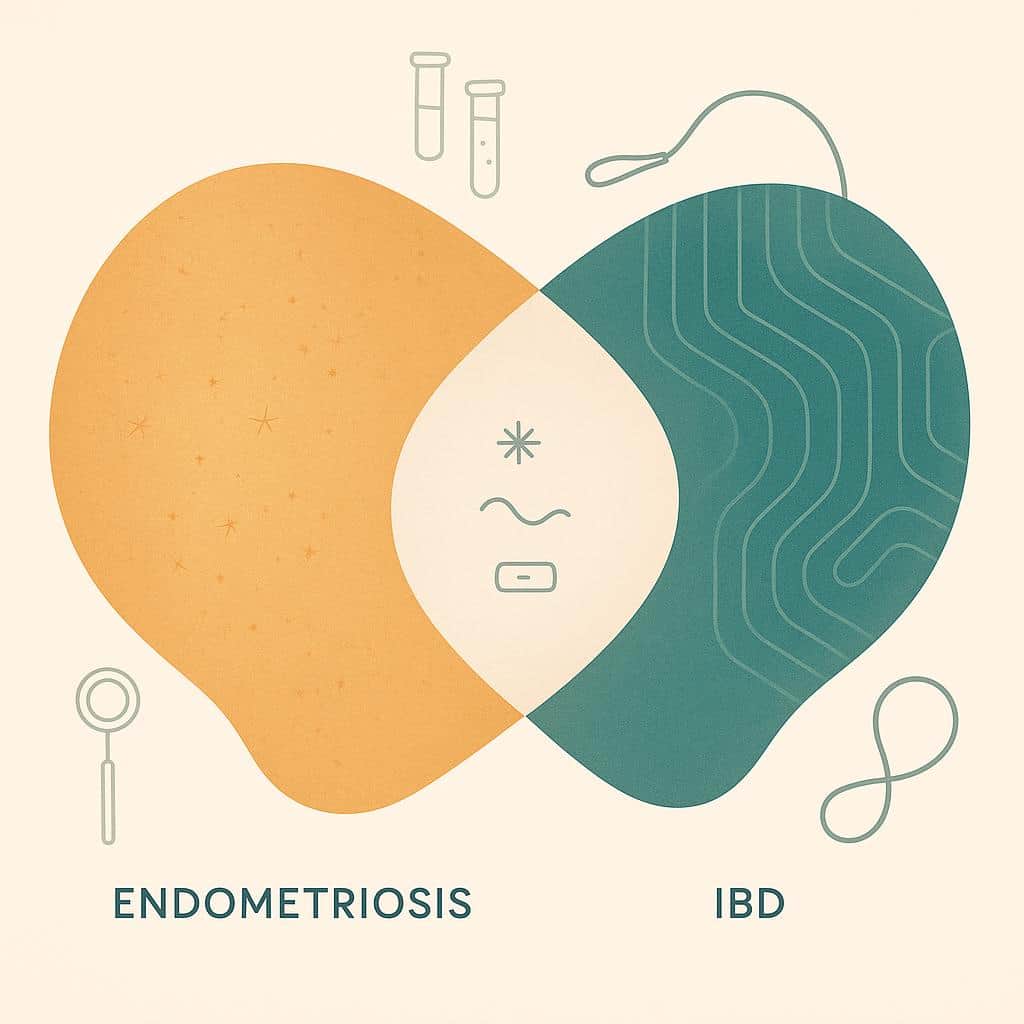
Endometriosis and IBD share several common traits, including immune dysregulation and overlapping clinical manifestations such as abdominal pain and bowel-related symptoms. This overlap poses a significant diagnostic challenge because endometriosis can mimic IBD and vice versa, leading to delays or indeterminate diagnoses.
Endometriosis is often described as having “IBD-like” features due to similarities in symptoms and aspects of underlying pathophysiology. This has prompted substantial interest in a potential link between the conditions, with multiple studies investigating their co-occurrence.
Investigating the Link: Endometriosis and IBD
To better understand the potential connection between endometriosis and IBD, numerous studies have explored the topic, ranging from case reports and clinical series to epidemiological investigations. Findings vary, underscoring the complexity of these conditions and the difficulties inherent in diagnosis and management.
Case Reports and Clinical Series
Multiple case reports highlight the diagnostic challenges associated with endometriosis and IBD. Several cases initially diagnosed as Crohn’s disease were later revised to intestinal endometriosis upon histopathological examination. Other reports have documented instances where an initial diagnosis of ulcerative colitis was later confirmed to be appendiceal endometriosis.
Conversely, there have been cases where an initial diagnosis of endometriosis was later revised to Crohn’s disease on histopathology. Additional reports describe patients diagnosed with both Crohn’s disease and endometriosis.
Struggling to Differentiate Symptoms?
Our specialists are here to help you understand your condition and explore your treatment options.
Schedule Your ConsultationEpidemiological Studies
Beyond case-based literature, epidemiological studies have examined the co-occurrence of endometriosis and IBD. A nationwide Danish cohort study reported a 50% increase in the risk of IBD among women with endometriosis compared to the general population. This elevated risk persisted more than 20 years after an endometriosis diagnosis, suggesting a genuine association.
A retrospective cross-sectional study in Israel found that 2.5% of patients with endometriosis also had IBD, compared to 1% in the general population. A recent Italian case-control study reported that among 148 women with endometriosis, five had IBD, although this finding did not reach statistical significance.
The Challenge of Temporality
A key issue in evaluating the association between endometriosis and IBD is temporality—the order in which diagnoses occur. Many studies do not report whether endometriosis or IBD came first, making it difficult to assess causality.
Complicating matters further, endometriosis is frequently diagnosed after significant delays. On average, there is a seven-year gap between symptom onset and definitive diagnosis. This delay makes it even harder to determine the temporal relationship between endometriosis and IBD.
Distinguishing Between Endometriosis and IBD
Given the overlapping symptoms and shared characteristics, distinguishing between endometriosis and IBD can be challenging. Both conditions can produce abdominal pain and bowel-related symptoms, contributing to misdiagnosis or delayed diagnosis.
When endometriosis and IBD coexist, symptoms may be atypical and cyclic. Fibrosis resulting from chronic inflammation can lead to obstruction of the intestinal lumen. For these reasons, healthcare professionals should consider both conditions when evaluating patients with relevant symptoms.
In cases of intestinal endometriosis, endoscopic biopsies may reveal IBD-like lesions. However, these lesions may be an epiphenomenon of endometriosis rather than true IBD. Patients with concurrent IBD and endometriosis should be followed over time to reassess the IBD diagnosis as needed.
The Role of Treatment in the Risk of IBD
Treatment for endometriosis could potentially influence the risk of developing IBD. Oral contraceptives are commonly used for endometriosis management, and a meta-analysis of 14 studies suggested an increased risk of IBD among oral contraceptive users. Non-steroidal anti-inflammatory drugs (NSAIDs), often used for pain relief in endometriosis, have also been reported to increase IBD risk.
The Need for Further Research
Existing research has illuminated aspects of the association between endometriosis and IBD, but significant questions remain. Further studies are needed to clarify the temporal relationship when both conditions occur together and to identify predictors that could guide evaluation and management.
A deeper understanding of these conditions and their potential links can improve diagnostic accuracy, inform treatment strategies, and enhance quality of life for those affected. While distinguishing between endometriosis and IBD can be challenging due to overlapping features, recognizing the nuances and emerging evidence offers a path toward better outcomes as research progresses.
References
Parazzini F, Luchini L, Vezzoli F, Mezzanotte C, Vercellini P. Gruppo italiano perlo studio dell’endometriosi. Prevalence and anatomical distribution of endometriosisin women with selected gynaecological conditions: results from amulticentric Italian study. Hum Reprod 1994;9:1158–62. https://pubmed.ncbi.nlm.nih.gov/7962393/
Bulun SE. Endometriosis. N Engl J Med 2009;360:268–79. DOI: 10.1016/j.euros.2025.10.003
Weed JC, Ray JE. Endometriosis of the bowel. Obstet Gynecol 1987;69:727–30. DOI: 10.1016/j.ejrad.2023.110730
Molodecky NA, Soon IS, Rabi DM, Ghali WA, Ferris M, Chernoff G. Increasing incidence and prevalence of the inflammatory bowel diseases with time, based on systematic review. Gastroenterology 2012;142:46–54. DOI: 10.1053/j.gastro.2021.12.282
Nielsen NM, Jorgensen KT, Pedersen BV, Rostgaard K, Frisch M. The co-occurrence of endometriosis with multiple sclerosis, systemic lupus erythematosus and Sjogren syndrome. Hum Reprod 2011;26:1555–9. DOI: 10.1093/humrep/der105
Quick Answers
Why do I have painful urination and pelvic cramping between periods?
Painful urination with pelvic cramping between periods can happen when the bladder, ureters, uterus, pelvic floor, or nerves are being irritated—sometimes in a way that still follows a subtle cycle pattern even if you’re not actively bleeding. Endometriosis can contribute by affecting the bladder wall or tissues around the bladder and ureters, and symptoms don’t have to include visible blood in the urine. Importantly, urinary tract endometriosis isn’t always “obviously urinary,” and ureter involvement can be quiet while still significant, which is why we take these symptoms seriously.
These symptoms can also come from conditions that overlap with (or mimic) endometriosis, such as bladder pain syndrome/interstitial cystitis, pelvic floor overactivity, adenomyosis-related uterine cramping, or other pelvic pain drivers. In our evaluation process, we focus on your full flare pattern—what triggers it, how it relates to your cycle, and whether urine tests have been repeatedly negative—then use targeted exam and the right imaging (often expertly interpreted ultrasound and/or MRI) to map what’s actually going on.
If you’re noticing recurring burning with urination, pressure, cramping, or symptoms that predictably flare mid-cycle or before your period, that pattern is useful diagnostic information—not something to dismiss. You can explore our urinary symptom and diagnostic evaluation resources to see how we approach “UTI-like” symptoms with negative cultures, and you’re welcome to reach out to schedule a consultation so our team can help you sort out whether this is bladder/ureter endometriosis, a look-alike condition, or a combination.
Why do I look pregnant from bloating with constant pelvic pressure?
Feeling so bloated you “look pregnant” along with constant pelvic pressure usually points to more than simple gas—often it’s a pelvic condition creating inflammation, swelling, or a sense of bulk. Endometriosis can irritate the bowel and pelvic lining, trigger scarring that tethers organs, and create the classic “endo belly” sensation that comes and goes (sometimes not perfectly cyclical). Pelvic pressure can also happen when endometriosis involves deeper tissues or nearby organs like the bladder, ureters, or rectum.
Just as important: these symptoms can be driven by endometriosis neighbors or coexisting conditions, especially adenomyosis and fibroids, which can make the uterus feel heavy, full, or “bulky” and add pressure on the bladder and bowel. Ovarian cysts and other benign pelvic findings can contribute, and IBS-like bowel sensitivity can overlap so closely that symptoms alone don’t reliably sort out what’s causing what. Our team focuses on mapping the full picture—uterus, ovaries, bowel, bladder, and pelvic support structures—so treatment targets the true driver(s), not just the most obvious diagnosis.
If this pressure/bloating is persistent, worsening, or changing your ability to eat, move your bowels, or urinate comfortably, it’s a strong reason to pursue a deeper evaluation rather than being told it’s “normal.” You can explore our educational content on bowel symptoms, bladder symptoms, and overlapping conditions, and reach out to schedule a consultation so we can review your history, imaging, and symptom pattern and outline a plan aimed at lasting relief.
Why do I get low back and leg pain during my period?
Low back and leg pain that predictably flares with your period can happen when pelvic inflammation irritates pain pathways that “refer” into the back, hips, buttocks, and down the leg. In some patients, endometriosis can be part of that story—either indirectly (pelvic inflammation and scarring increasing pressure and sensitivity around nearby nerves) or more directly if disease is affecting areas close to major nerves.
When period-related leg pain resembles sciatica—deep buttock pain, tingling, burning, or pain radiating down the back of the thigh—it raises the possibility of endometriosis-related sciatic irritation or pelvic floor involvement (often described as piriformis-type pressure on the nerve). These symptoms may start before bleeding, peak during the period, and linger afterward, and in more significant cases can be associated with weakness or changes in walking.
Because back and leg pain can also come from the spine, hips, or muscles, the key is the pattern and the full symptom “constellation,” including pelvic pain, bowel/bladder symptoms, or pain with sex. Our team can help you sort out whether your pain fits an endometriosis/adenomyosis pattern and, if needed, plan next-step evaluation such as targeted imaging and a strategy focused on lasting relief rather than temporary suppression.
Can endometriosis cause infertility and pelvic pain in your 20s?
Yes. Endometriosis can absolutely show up in your late 20s and it can be a driver of both chronic pelvic pain and fertility challenges. Pain can include severe or worsening period cramps, pain with sex, bowel or bladder pain, and “flare” patterns that track with your cycle—although symptom severity doesn’t always match how much disease is present.
Endometriosis can affect fertility in several ways, including adhesions that distort tubo‑ovarian anatomy, inflammation and immune signaling that interferes with fertilization or embryo development, and ovarian factors—especially when endometriomas are involved. For some patients, the uterine environment also matters, particularly when adenomyosis is present alongside endometriosis. In our practice, we focus on listening to your full symptom and fertility story and then building an evaluation that looks for endometriosis while also checking for common look‑alikes or coexisting issues, so we can tailor a plan to your goals—whether that’s pain relief, preserving fertility, or both.
Why are bowel movements painful and bloating worse during my period?
Painful bowel movements and bloating that flare during your cycle are common in endometriosis—especially when disease is deep in the pelvis near the rectum/rectosigmoid, or when inflammation and scarring tether the bowel to nearby structures. Even without endometriosis growing “inside” the bowel, pelvic lesions can irritate surrounding tissue and nerves, creating cramping, pressure, and the deep, sharp pain some people feel with passing stool. Hormonal cycling can amplify inflammation and swelling, which is why symptoms often peak around bleeding and then ease. Many patients also notice alternating constipation/diarrhea or an “endo belly” pattern that tracks with their period.
These symptoms are often confusing because standard GI workups (including colonoscopy) can be normal—bowel endometriosis frequently affects the outside of the bowel wall or deeper layers rather than the inner lining that a colonoscopy evaluates. What matters most is mapping where symptoms point anatomically and whether there are red flags like cyclical rectal bleeding, escalating severity, or signs of narrowing/obstruction. Our team focuses on a whole-pelvis evaluation and, when appropriate, targeted imaging and surgical planning to confirm what’s driving your bowel pain and bloating and treat it effectively. If you’d like, you can reach out to schedule a consultation so we can review your symptom pattern and discuss next steps.