


When Will There Be a Blood Test for Endometriosis?
What new teen-focused microRNA research means for your diagnosis today
If you’re a teen or young adult living with chronic pelvic pain, it can feel like the system is set up to doubt you. You may have been told it’s “normal cramps,” anxiety, IBS, or stress—while you’re missing school, sports, work, sleep, and your sense of control over your body.
A big reason endometriosis gets dismissed (especially in younger patients) is that there’s still no widely accepted, reliable noninvasive diagnostic test—no simple blood draw, saliva test, or ultrasound finding that definitively confirms it in most people. That leaves many patients stuck in a frustrating limbo: you “might” have endometriosis, but you’re also told surgery is the only way to be sure.
Recent evidence in adolescents and young adults is pushing toward a future where a blood test could help identify endometriosis earlier. One promising direction involves tiny molecules in blood called microRNAs—and while this research doesn’t change what you should do tomorrow, it can help you understand what’s coming, what’s real, and how to advocate for care right now.
What is a microRNA blood test (in plain language)?
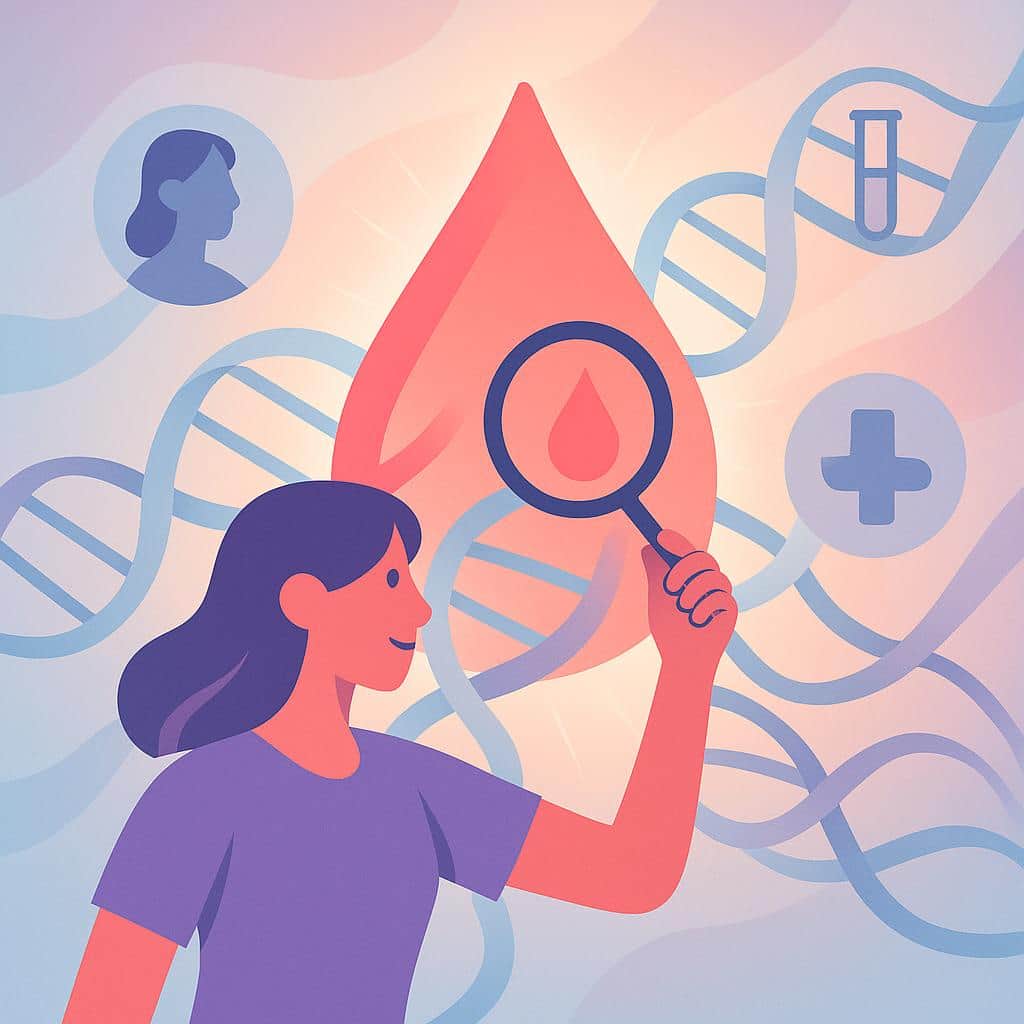
MicroRNAs are small pieces of genetic material your body releases into the bloodstream. Think of them as “signals” that can shift with inflammation, tissue changes, hormone exposure, and disease processes. The hope is that endometriosis might have a pattern of microRNAs that shows up in blood—like a fingerprint.
If that fingerprint were consistent and accurate across many different groups of people, then a clinician could potentially use a blood test to say: “This pattern looks like endometriosis,” and move you toward treatment sooner—possibly reducing years of delay.
How close are we to a real test for teens and young adults?
This is the important, honest answer: we’re not there yet, but the work is active and increasingly teen-specific.
In a recent prospective study of patients aged 13–26 who were already undergoing gynecologic surgery for pelvic pain, researchers found that many microRNAs in blood differed between those who were found to have endometriosis at surgery and those who weren’t. In that dataset, four microRNAs were higher in the endometriosis group (with fold-changes around 1.4 to 1.8), and eighteen were lower.
What that means for you: scientists are narrowing down which blood signals might someday become a panel test (usually a combination of markers, not just one). What it does not mean: that your doctor can order this test today and get a dependable answer.
Why this kind of research matters—especially if you’re “early stage”
A detail that should matter to you as a patient: many adolescents diagnosed with endometriosis are classified as rASRM stage I (minimal disease). That doesn’t mean your pain is minimal—it means the staging system doesn’t capture symptoms well. But it does matter for test development, because a useful blood test must ideally detect endometriosis even when disease burden is low.
This teen/young-adult work is encouraging because it’s aiming at exactly the group most often overlooked: people with severe symptoms who may not yet have “advanced” disease on paper.
The reality check: why an accurate biomarker test is hard to develop
If you’ve ever wondered, “Why can’t they just make a blood test already?”—you’re not alone. Here’s why it’s genuinely difficult in real life:
Many teens and young adults with pelvic pain are already using hormonal treatments (birth control pills, progestins, hormonal IUDs). Hormones can change bleeding patterns and may also affect blood-based markers, including microRNAs. Cycle timing can matter too—and in real-world care, cycle phase is often unknown or irregular.
Also, “controls” (the normal comparison group) in surgery-based studies aren’t always pain-free healthy people; they’re often people with pelvic pain who simply didn’t have visible endometriosis at surgery. Some may have other conditions (or microscopic endometriosis that wasn’t recognized). All of that can blur the lines and make a test look better in one group than it will in the general population.
So if you’re thinking: “Will a blood test work for someone like me—on hormones, with irregular cycles, with overlapping bladder/bowel symptoms?” That’s exactly what future validation studies must answer before any test deserves your trust.
Get Diagnosed with Confidence Today
Our specialists are here to help you understand your condition and explore your treatment options.
Schedule Your AppointmentWhat this means for your care right now
Until there’s a validated test, the best approach is still the one that gets you symptom relief and function back, without making you “prove” your pain.
You do not need to wait for a blood test to:
- start evidence-based symptom treatment,
- be evaluated for other contributors to pelvic pain (like adenomyosis, pelvic floor dysfunction, bladder pain syndrome),
- ask for referral to an endometriosis-informed clinician,
- discuss whether surgery is likely to change management for you.
A potential future blood test could be most helpful in situations like these:
- You have classic endometriosis symptoms, but you’re being told you’re “too young.”
- You want to avoid surgery purely to “confirm” a diagnosis.
- You need stronger documentation to justify accommodations, referrals, or insurance approvals.
- You’re trying to decide how aggressively to pursue specialty care.
But for now, surgery and clinical assessment still drive diagnosis—and your symptoms and quality of life should drive treatment decisions.
Who might benefit most from keeping an eye on biomarker testing?
You may want to track developments (and ask your clinician about clinical trials) if:
- your pain started soon after your first periods and is worsening,
- you’re missing school/work or needing frequent ER visits,
- first-line hormonal suppression hasn’t helped (or side effects are unbearable),
- you’re being told “nothing is wrong” despite significant symptoms.
This research focus on adolescents is a validating message: your pain is being taken seriously enough to design tests specifically for your age group.
Practical takeaways for your next appointment
Bring the conversation back to what you need: relief, a plan, and a timeline.
Here are a few questions you can ask (and you can literally read these off your phone):
- “Given my symptoms, what’s our working diagnosis and why—and what are we treating first?”
- "If we don't do surgery, how do we know what we're treating and isn't excision surgery part of the treatment plan anyway?"
- “If we don’t do surgery now, what’s the step-by-step plan for the next 3–6 months?”
- “How will hormonal treatment affect my pain, bleeding, mood, and daily functioning—and when do we call it a failure?”
- “Do you suspect adenomyosis too? If yes, what imaging or treatment changes would that prompt?”
- “If a blood test for endometriosis becomes available later, would it change anything about my care plan?”
Timeline expectations: how to protect yourself from endless waiting
A common trap is “try this for a while” with no endpoint. You deserve a clear checkpoint.
In many real-world care plans, it’s reasonable to ask for:
- a follow-up window (often 8–12 weeks) to judge whether a medication is helping,
- a plan B if it isn’t,
- and criteria for when referral to a specialist or surgical evaluation becomes appropriate (for example: persistent severe pain, escalating missed school/work, or breakthrough pain despite suppression).
Red flags that deserve faster escalation
If any of these apply, push for timely evaluation rather than “wait and see”: rapidly worsening pain, fainting/near-fainting with periods, uncontrolled vomiting with periods, new severe pain with fever, significant anemia symptoms, or pain that is interfering with basic daily activities despite treatment.
Reality check: hope, without hype
MicroRNA testing in blood is a promising path toward earlier, less invasive endometriosis diagnosis—especially for teens and young adults who have been dismissed for years. But right now it’s still early, hypothesis-generating evidence, not a clinically proven test you can rely on for decisions.
The most important thing you can do today is insist on a care plan that treats your symptoms seriously, sets time-bound goals, and doesn’t require you to suffer until someone “catches” the disease on the right day.
References
Vash-Margita, Mamillapalli R, Pyneni J, Morgenstern B, Taylor HS. Identifying serum microRNAs as biomarkers for endometriosis in adolescents and young adults. Reproductive Biology and Endocrinology (RB&E). 2025.. DOI: 10.1186/s12958-025-01502-z
Quick Answers
Why do I have painful urination and pelvic cramping between periods?
Painful urination with pelvic cramping between periods can happen when the bladder, ureters, uterus, pelvic floor, or nerves are being irritated—sometimes in a way that still follows a subtle cycle pattern even if you’re not actively bleeding. Endometriosis can contribute by affecting the bladder wall or tissues around the bladder and ureters, and symptoms don’t have to include visible blood in the urine. Importantly, urinary tract endometriosis isn’t always “obviously urinary,” and ureter involvement can be quiet while still significant, which is why we take these symptoms seriously.
These symptoms can also come from conditions that overlap with (or mimic) endometriosis, such as bladder pain syndrome/interstitial cystitis, pelvic floor overactivity, adenomyosis-related uterine cramping, or other pelvic pain drivers. In our evaluation process, we focus on your full flare pattern—what triggers it, how it relates to your cycle, and whether urine tests have been repeatedly negative—then use targeted exam and the right imaging (often expertly interpreted ultrasound and/or MRI) to map what’s actually going on.
If you’re noticing recurring burning with urination, pressure, cramping, or symptoms that predictably flare mid-cycle or before your period, that pattern is useful diagnostic information—not something to dismiss. You can explore our urinary symptom and diagnostic evaluation resources to see how we approach “UTI-like” symptoms with negative cultures, and you’re welcome to reach out to schedule a consultation so our team can help you sort out whether this is bladder/ureter endometriosis, a look-alike condition, or a combination.
Why do I get low back and leg pain during my period?
Low back and leg pain that predictably flares with your period can happen when pelvic inflammation irritates pain pathways that “refer” into the back, hips, buttocks, and down the leg. In some patients, endometriosis can be part of that story—either indirectly (pelvic inflammation and scarring increasing pressure and sensitivity around nearby nerves) or more directly if disease is affecting areas close to major nerves.
When period-related leg pain resembles sciatica—deep buttock pain, tingling, burning, or pain radiating down the back of the thigh—it raises the possibility of endometriosis-related sciatic irritation or pelvic floor involvement (often described as piriformis-type pressure on the nerve). These symptoms may start before bleeding, peak during the period, and linger afterward, and in more significant cases can be associated with weakness or changes in walking.
Because back and leg pain can also come from the spine, hips, or muscles, the key is the pattern and the full symptom “constellation,” including pelvic pain, bowel/bladder symptoms, or pain with sex. Our team can help you sort out whether your pain fits an endometriosis/adenomyosis pattern and, if needed, plan next-step evaluation such as targeted imaging and a strategy focused on lasting relief rather than temporary suppression.
Can endometriosis cause infertility and pelvic pain in your 20s?
Yes. Endometriosis can absolutely show up in your late 20s and it can be a driver of both chronic pelvic pain and fertility challenges. Pain can include severe or worsening period cramps, pain with sex, bowel or bladder pain, and “flare” patterns that track with your cycle—although symptom severity doesn’t always match how much disease is present.
Endometriosis can affect fertility in several ways, including adhesions that distort tubo‑ovarian anatomy, inflammation and immune signaling that interferes with fertilization or embryo development, and ovarian factors—especially when endometriomas are involved. For some patients, the uterine environment also matters, particularly when adenomyosis is present alongside endometriosis. In our practice, we focus on listening to your full symptom and fertility story and then building an evaluation that looks for endometriosis while also checking for common look‑alikes or coexisting issues, so we can tailor a plan to your goals—whether that’s pain relief, preserving fertility, or both.
Why is my period pain so severe it disrupts my daily life?
Severe, life-disrupting period pain isn’t “normal cramps,” and it often points to an underlying driver that deserves a real explanation—not just symptom masking. One common cause is endometriosis, where tissue similar to the uterine lining grows outside the uterus and can irritate pelvic structures, trigger inflammatory chemicals, and sometimes involve organs like the bowel or bladder. Another key point is that pain severity doesn’t reliably match “stage,” so someone can have intense pain even if imaging looks normal or disease appears limited.
When period pain is severe, worsening over time, starts years after your first period, or comes with heavy bleeding, painful sex, bowel pain with periods, urinary pain, or fatigue, we think in patterns—because endometriosis and related conditions can overlap with pelvic floor dysfunction, nerve pain/central sensitization, GI dysbiosis, vascular issues, or adenomyosis. Our approach is to take your full timeline and flare pattern seriously and then tailor evaluation with careful exam and expertly interpreted imaging when helpful. If your pain is disrupting school, work, relationships, or daily functioning, reach out to schedule a consultation—our team can help you identify what’s driving it and map out a plan aimed at lasting relief.
How rare is endosalpingiosis?
Endosalpingiosis is generally considered uncommon, but “how rare” it is depends heavily on who’s being studied and how it’s found. Many cases are discovered incidentally on pathology—meaning tissue is identified under the microscope after surgery done for other reasons—so it’s likely underrecognized in the general population. In other settings (like surgical cohorts), it may appear more often simply because more tissue is being sampled and examined carefully.
What matters most for patients is that endosalpingiosis can be confused with endometriosis on imaging or even at surgery, yet it doesn’t always behave the same way clinically. If you’ve been told you have endosalpingiosis and you also have pelvic pain, bowel/bladder symptoms, or fertility concerns, our team can help interpret what that finding means in the context of your symptoms and operative/pathology reports. You’re welcome to explore our educational content on related endometriosis and uterine conditions, and reach out to schedule a consultation if you want a personalized plan.