

Endometriosis and Bladder Pain - Why Your Pelvic Pain Persists
Understanding the endometriosis and IC/BPS overlap, signs your bladder is involved, and what to do when treatment hasn’t helped.
When treatment “should” help—but you still hurt
If you’ve been diagnosed with endometriosis (or suspected to have it) and you’ve done the “right” things—hormonal suppression, surgery, pelvic floor therapy, anti-inflammatories—yet your pelvic pain keeps coming back, it can feel defeating and confusing. Many people start to wonder: Is this all in my head? Did my surgery fail? Is my endometriosis “back” already?
One very real possibility is that more than one pain condition is happening at the same time. Chronic pelvic pain is often multi-factorial, meaning your pain system can have multiple drivers—gynecologic, bladder, bowel, musculoskeletal, and nervous system sensitization. That’s not a moral failing or “stress.” It’s biology and lived reality because it is important to remember that while endometriosis can cause a lot of symptoms, it can't cause ALL symptoms in most cases.
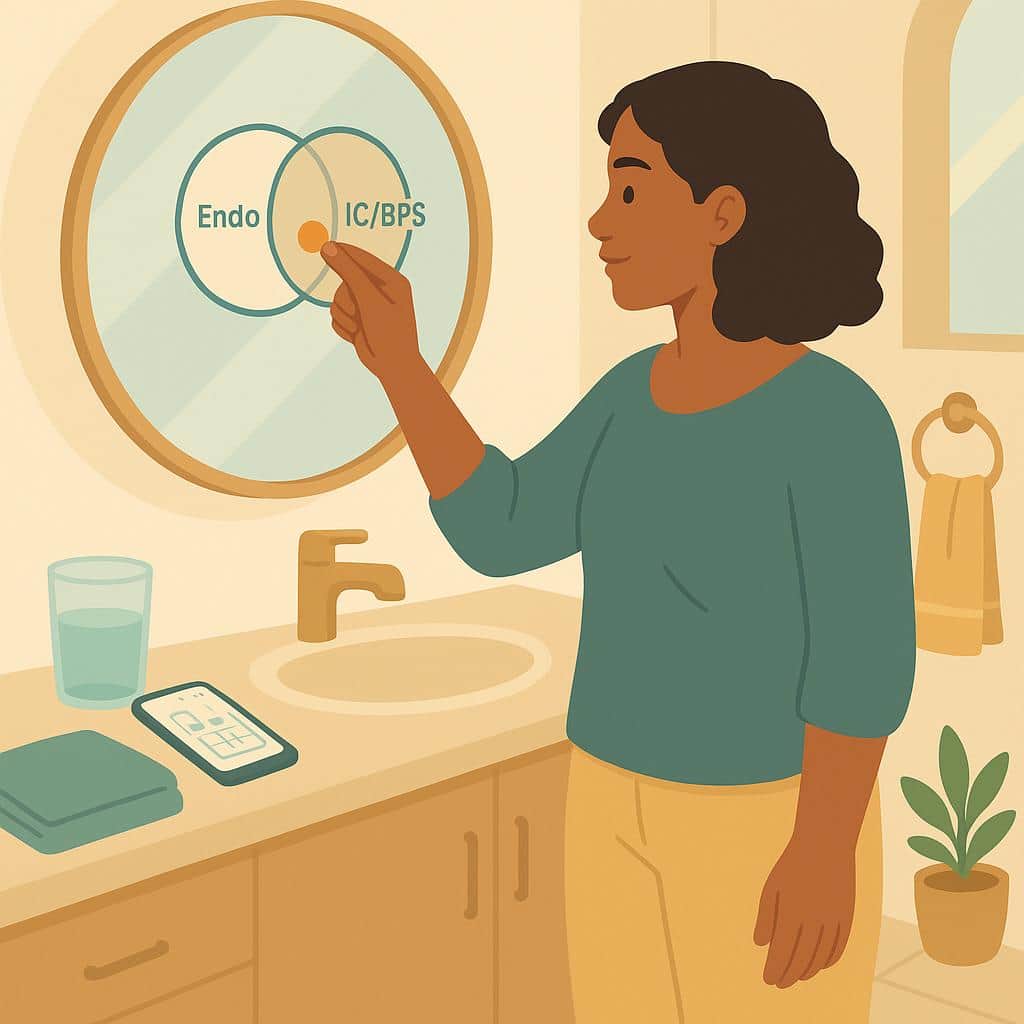
Recent evidence pulls one overlap into the spotlight: endometriosis and interstitial cystitis/bladder pain syndrome (IC/BPS) can co-exist more often than many patients are ever told. If your symptoms include urinary urgency, frequency, or bladder pain—especially if endometriosis treatment hasn’t helped—this is worth bringing to your clinician now.
Chronic pelvic pain can have multiple causes (even with confirmed endometriosis)
Chronic pelvic pain is commonly defined as pelvic pain lasting 6 months or longer, sometimes worsening with periods, sex, bowel movements, or bladder filling. It’s also common—affecting an estimated 6–25% of women worldwide—and it can drain your energy, relationships, work, and mental health.
The frustrating part is that chronic pelvic pain can be hard to “solve” with one diagnosis. Even after years of follow-up, a substantial portion of patients still don’t receive a single clear explanation that accounts for everything. That’s why a plan that only focuses on one organ system can leave you stuck: you may treat one pain contributor while another remains active.
Endometriosis is a major driver—but symptoms don’t always match disease “severity”
Endometriosis can absolutely cause chronic pelvic pain (some estimates suggest it contributes in a large share of cases), and it can cause painful periods, pain with sex, bowel pain, fatigue, and more. But one key reality is this: how you feel doesn’t reliably match how extensive endometriosis looks. Someone can have severe pain with “minimal” visible disease, and someone else can have extensive disease with less pain. This may be related to neuronal upregulation or downregulation, peripheral sensitization or central nervous system sensitization.
It’s also common for endometriosis symptoms to overlap with urinary symptoms like burning, frequency, or urgency. That overlap can lead to a dangerous assumption: “It’s just my endometriosis.” Sometimes it is. But sometimes it isn’t the whole story.
This matters because if the bladder is also a pain generator, repeating surgeries or escalating endometriosis-directed treatment may not give you the relief you deserve.
What is IC/BPS (bladder pain syndrome) in plain language?
Interstitial cystitis/bladder pain syndrome (IC/BPS) is typically described as:
- Pain, pressure, or discomfort that feels related to the bladder, often worse as the bladder fills and sometimes relieved by urinating
- Lower urinary tract symptoms such as urgency and frequency
- Symptoms lasting more than 6 weeks, without another clear cause (like a UTI)
IC/BPS is primarily a clinical diagnosis, meaning it’s based on your symptom pattern and on ruling out other conditions. Some people may have a cystoscopy (a camera exam of the bladder), especially if symptoms are severe, don’t respond to initial treatment, or if a clinician is looking for specific findings such as Hunner lesions. But many patients can start an evaluation and initial management without invasive procedures.
If you’ve ever been told “your urine culture is negative, so you’re fine,” you already know how dismissive this can feel. IC/BPS is one reason negative cultures don’t automatically equal “no problem.”
How common is the overlap with endometriosis?
Here’s the patient-relevant bottom line: coexistence appears common in some chronic pelvic pain populations, but the exact rate is uncertain.
Across studies of women with chronic pelvic pain, reported coexistence of endometriosis + IC/BPS ranged from about 15.5% to 78.3%. That is a huge range, and it’s not your job to make it make sense. The big takeaway is simply that it’s not rare for both to be present, and it’s reasonable to screen for bladder pain syndrome when symptoms fit—especially if endometriosis-focused treatment hasn’t worked.
A separate population-based dataset found IC/BPS diagnoses were still uncommon overall (0.20% in people with endometriosis vs 0.05% without over three years), but the relative risk was higher (adjusted hazard ratio 3.74). Translation: depending on the setting and how IC/BPS is diagnosed, the absolute numbers can look small, but the association still signals that clinicians should not ignore bladder symptoms in endometriosis patients.
Struggling with Pelvic Pain? Get Expert Help
Our specialists are here to help you understand your condition and explore your treatment options.
Schedule Your AppointmentSigns your bladder may be part of your pelvic pain picture
You don’t need to self-diagnose IC/BPS, but you can notice patterns that help your clinician take you seriously. Bladder involvement is more likely when you recognize symptoms like:
- Pain that gets worse with bladder filling and eases after peeing
- Urgency or frequency that doesn’t match infection testing
- Pain flares triggered by certain drinks/foods (often acidic, caffeinated, carbonated, alcohol—though triggers vary)
- Pelvic pain that remains even after endometriosis surgery or suppression
- Pain with sex that feels “deep” and may be paired with urinary symptoms
You can have bladder pain syndrome without all of these. And you can have urinary symptoms from other causes too—which is why proper evaluation matters.
What to do if endometriosis treatment hasn’t helped
If you’ve had little or no improvement after a reasonable trial of endometriosis treatment (medical and/or surgical), it’s appropriate to shift the question from “What’s the next endometriosis treatment?” to:
“What else is contributing to my chronic pelvic pain—and how do we test and treat those contributors?”
This isn’t about doubting your endometriosis diagnosis. It’s about not letting that diagnosis overshadow everything else. Again, endo and adeno most likely cannot cause ALL of your symptoms. Many people with persistent pain benefit from a broader plan that can include bladder-focused evaluation, pelvic floor assessment, bowel evaluation when relevant, and pain-sensitization strategies. Depending on your symptoms, this might involve collaboration between gynecology, urology/urogynecology, pelvic floor physical therapy, and pain-informed care.
Practical takeaways you can use at your next appointment
Bring a short symptom diary (even 1–2 weeks helps): urination frequency, urgency episodes, pain level before/after urinating, period timing, sex-related pain, and any food/drink triggers.
Questions to ask your clinician (choose what fits your situation):
- If my endometriosis treatment hasn’t relieved my pelvic pain, could IC/BPS or another bladder condition be contributing?
- What is your process to rule out other causes (UTI, STI, stones, overactive bladder, pelvic floor dysfunction, etc.) before diagnosing IC/BPS?
- Given my symptoms, would you recommend a urology/urogynecology referral or initial bladder-focused treatment first?
- If cystoscopy is suggested, what specific question are we trying to answer (for example, Hunner lesions), and how would it change my treatment plan?
Red flags that deserve prompt medical attention include visible blood in urine, fevers/chills, severe flank pain, new urinary retention, or unexplained weight loss—these aren’t typical IC/BPS features and warrant urgent evaluation.
Reality check: why the numbers vary—and why that doesn’t invalidate your symptoms
That wide coexistence range (15.5% to 78.3%) doesn’t mean “almost everyone with endometriosis has IC/BPS.” It means estimates vary a lot depending on who was studied (general population vs specialty clinics), how IC/BPS was defined, and how aggressively people were evaluated.
Also, overlap doesn’t prove one condition causes the other. What it does prove is something much more useful for your daily life: if one treatment path isn’t helping, it’s reasonable—and evidence-supported—to look for additional pain drivers rather than repeating the same steps.
You deserve a plan that matches your full symptom pattern, not just the first diagnosis that landed in your chart.
References
“The Evil Twins of Chronic Pelvic Pain Syndrome: A Systematic Review and Meta-Analysis on Interstitial Cystitis/Painful Bladder Syndrome and Endometriosis.” [Systematic Review and Meta-Analysis]. DOI: 10.3390/healthcare12232403
Quick Answers
Why do I have painful urination and pelvic cramping between periods?
Painful urination with pelvic cramping between periods can happen when the bladder, ureters, uterus, pelvic floor, or nerves are being irritated—sometimes in a way that still follows a subtle cycle pattern even if you’re not actively bleeding. Endometriosis can contribute by affecting the bladder wall or tissues around the bladder and ureters, and symptoms don’t have to include visible blood in the urine. Importantly, urinary tract endometriosis isn’t always “obviously urinary,” and ureter involvement can be quiet while still significant, which is why we take these symptoms seriously.
These symptoms can also come from conditions that overlap with (or mimic) endometriosis, such as bladder pain syndrome/interstitial cystitis, pelvic floor overactivity, adenomyosis-related uterine cramping, or other pelvic pain drivers. In our evaluation process, we focus on your full flare pattern—what triggers it, how it relates to your cycle, and whether urine tests have been repeatedly negative—then use targeted exam and the right imaging (often expertly interpreted ultrasound and/or MRI) to map what’s actually going on.
If you’re noticing recurring burning with urination, pressure, cramping, or symptoms that predictably flare mid-cycle or before your period, that pattern is useful diagnostic information—not something to dismiss. You can explore our urinary symptom and diagnostic evaluation resources to see how we approach “UTI-like” symptoms with negative cultures, and you’re welcome to reach out to schedule a consultation so our team can help you sort out whether this is bladder/ureter endometriosis, a look-alike condition, or a combination.
Why does ovarian cyst pain keep coming back?
Ovarian cyst pain can feel “recurrent” for a few different reasons. Some cysts are functional (they form with ovulation and then resolve), so the pain returns in a similar spot month after month even though it’s not the exact same cyst. In other cases, the cyst itself can come back or persist—especially if it’s an endometrioma (an ovarian cyst caused by endometriosis), which can behave differently than a simple cyst and may be associated with deeper pelvic disease.
Another common reason is that the cyst isn’t the whole story: endometriosis on the pelvic sidewall, uterosacral ligaments, bowel, bladder, or around the ovary can irritate the same nerves and tissues and make it feel like “my cyst is back” when the driver is actually inflammatory disease nearby. Adhesions (scar-like bands) can also tether the ovary and cause recurring pulling or sharp pain, even when imaging doesn’t show a large cyst. If your pain cycles, escalates, returns quickly after a “normal” ultrasound, or keeps recurring despite prior treatment, our team can help you map the pattern, interpret imaging with an endometriosis lens, and decide whether targeted evaluation and—when appropriate—excision surgery is the next best step.
Why do I get low back and leg pain during my period?
Low back and leg pain that predictably flares with your period can happen when pelvic inflammation irritates pain pathways that “refer” into the back, hips, buttocks, and down the leg. In some patients, endometriosis can be part of that story—either indirectly (pelvic inflammation and scarring increasing pressure and sensitivity around nearby nerves) or more directly if disease is affecting areas close to major nerves.
When period-related leg pain resembles sciatica—deep buttock pain, tingling, burning, or pain radiating down the back of the thigh—it raises the possibility of endometriosis-related sciatic irritation or pelvic floor involvement (often described as piriformis-type pressure on the nerve). These symptoms may start before bleeding, peak during the period, and linger afterward, and in more significant cases can be associated with weakness or changes in walking.
Because back and leg pain can also come from the spine, hips, or muscles, the key is the pattern and the full symptom “constellation,” including pelvic pain, bowel/bladder symptoms, or pain with sex. Our team can help you sort out whether your pain fits an endometriosis/adenomyosis pattern and, if needed, plan next-step evaluation such as targeted imaging and a strategy focused on lasting relief rather than temporary suppression.
Can endometriosis cause infertility and pelvic pain in your 20s?
Yes. Endometriosis can absolutely show up in your late 20s and it can be a driver of both chronic pelvic pain and fertility challenges. Pain can include severe or worsening period cramps, pain with sex, bowel or bladder pain, and “flare” patterns that track with your cycle—although symptom severity doesn’t always match how much disease is present.
Endometriosis can affect fertility in several ways, including adhesions that distort tubo‑ovarian anatomy, inflammation and immune signaling that interferes with fertilization or embryo development, and ovarian factors—especially when endometriomas are involved. For some patients, the uterine environment also matters, particularly when adenomyosis is present alongside endometriosis. In our practice, we focus on listening to your full symptom and fertility story and then building an evaluation that looks for endometriosis while also checking for common look‑alikes or coexisting issues, so we can tailor a plan to your goals—whether that’s pain relief, preserving fertility, or both.
Why do I have chronic fatigue and pelvic pain?
Chronic fatigue plus pelvic pain often feels “unexplainable” because it’s rarely caused by just one issue—and many of the most common drivers don’t show up on routine labs or a quick ultrasound. Endometriosis and adenomyosis can cause persistent pelvic pain, painful periods, bowel/bladder symptoms, and deep fatigue through inflammation, disrupted sleep, heavy bleeding (and possible iron deficiency), and the sheer energy cost of living with ongoing pain. It’s also common for more than one gynecologic condition to coexist—like fibroids, polyps, or benign cysts—so a single label may not fully match what you’re experiencing.
Another reason symptoms can persist is that the nervous system can become more pain-sensitive over time (often called central sensitization), meaning pain can spread, linger outside your cycle, or feel disproportionate to what imaging shows. In those cases, symptom relief alone can miss the bigger picture: we think in terms of both treating disease (for example, addressing endometriosis lesions or uterine drivers like adenomyosis/fibroids) and building a personalized pain-management plan so your body can “turn down the volume” on pain signals.
If your fatigue and pelvic pain have been brushed off or left without a clear plan, our team can help you sort through the likely contributors, including endometriosis/adenomyosis and common coexisting conditions, and map next steps that fit your goals. You can explore our educational resources on fatigue, chronic pelvic pain, and comprehensive treatment approaches, and reach out to schedule a consultation when you’re ready.