


How to Recognize Endometriosis Symptoms
A clear guide to recognizing endometriosis symptoms and understanding causes, complications, diagnosis, and evidence-based treatments.
What are the First Signs and Symptoms of Endometriosis: Everything You Need to Know
Sharp, stabbing, burning, throbbing, and aching are all adjectives people use to describe endometriosis pain. Endometriosis is a condition that, for some women, can cause excruciating uterus pain—often described as feeling like the insides are being pulled out of the body. Even worse, for many patients, endometriosis pain medication does not cut through or provide relief. As a result, an endometriosis diagnosis can be very serious and life-changing.
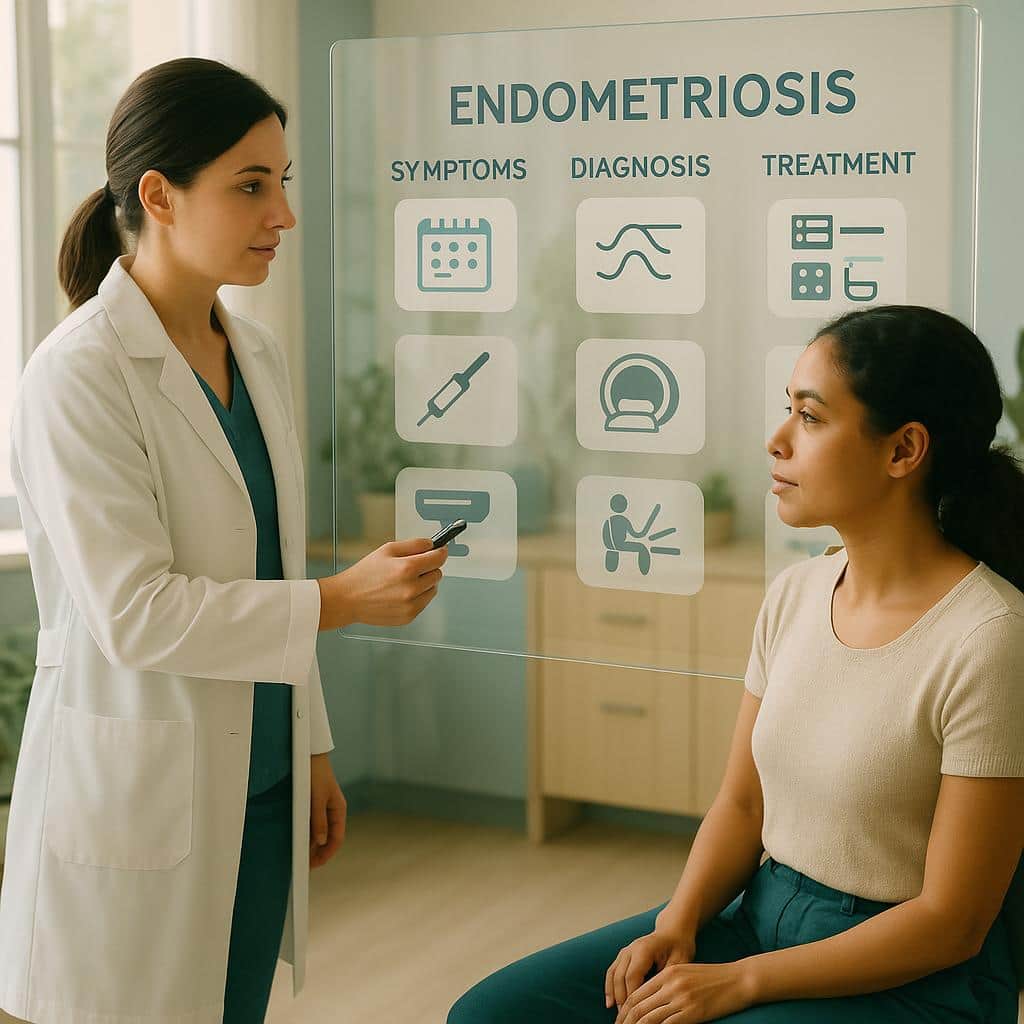
As an introduction to the disorder, here is a concise overview of the signs and symptoms of endometriosis, its causes, complications, and treatment options. First, let’s cover what endometriosis is.
What is the Endometrium?
The endometrium, also known as the endometrial lining, is the tissue that forms the “wallpaper” or lining of the uterus, which is the pear-shaped organ that houses a growing baby. During pregnancy and menstruation, the endometrium plays vital roles.
What is Endometriosis Pain?
Endometriosis is pronounced (en-doe-me-tree-O-sis). It is a medical condition in which tissue similar to what normally lines the inner walls of the uterus (the endometrium) grows outside the uterus. Often very painful and even debilitating, it may involve the ovaries, fallopian tubes, bowels, vagina, cervix, and the tissues that line the pelvis. In rare cases, it can also affect other organs, such as the bladder, kidneys, or lungs.
Signs and Symptoms of Endometriosis Pain
Not all women experience the same symptoms of endometriosis or the same degree of intensity. Some women may not experience any symptoms at all. It is also important to understand that symptom severity is not a reliable indicator of disease progression—some women with advanced stages have no symptoms, while others with mild cases endure many. Common endometriosis pain symptoms include painful periods (dysmenorrhea), infertility, diarrhea during the period, pain during intercourse, heavy or abnormal menstrual flow, abdominal or pelvic pain after vaginal sex, painful urination during or between menstrual periods, painful bowel movements during or between menstrual periods, and gastrointestinal problems such as bloating, diarrhea, constipation, and/or nausea.
Mechanisms of Signs and Symptoms of Endometriosis
Painful Periods (dysmenorrhea)
Cyclic release of multiple inflammatory factors activates nerve fiber growth, leads to cell damage and fibrosis, and exacerbates pain during periods.
Infertility
The overall mechanisms can include tubal blockage, local inflammation, uterine muscle dysfunction, local hormonal alterations, and more.
Diarrhea During Menstrual Periods
Diarrhea may result from endometriosis growing directly on the rectal muscle or from inflammatory substances produced by endometriosis. Local production of inflammatory molecules can lead to hypermotility of the sigmoid and rectum muscles, which can manifest as cramping and diarrhea.
Pain During Intercourse (Dyspareunia)
Endometriosis implants are often hyperinnervated (containing more nerve endings than usual) and can produce pain with pressure. The act of intercourse can apply this pressure to the upper vaginal area and uterosacral ligaments, which are common locations of endometriosis implants. Once this pain occurs and local inflammation further causes tension in the pelvic floor, the muscles surrounding the vagina can contract, worsening the problem.
Heavy or Abnormal Menstrual Flow
Endometriosis can affect bleeding patterns by increasing stress from pain or by damaging the ovaries, which can change local hormonal function.
Abdominal or Pelvic Pain After Vaginal Sex
Uterine and pelvic floor spasms are a normal part of orgasms. When these areas are hypersensitive due to endometriosis, spasms can lead to continued contractions and pain that persists. In addition, rectal fusion to the posterior vaginal wall can cause more direct pain and inflammation because pulling on the vaginal area tugs on the rectal wall. Any event that agitates the pelvis and causes minor trauma can also trigger increased molecular signaling that amplifies the problem.
Painful Urination During or Between Menstrual Periods (Dysuria)
Painful and frequent urination is a common symptom of endometriosis. Endometriosis cells and responding inflammatory cells produce inflammatory molecular signals that accumulate in the area of injury. These signals affect all pelvic organs, including the bladder, leading to bladder wall spasms. Moreover, interstitial cystitis is common in endometriosis patients and can also be a factor. In the worst-case scenario, endometriosis lesions implant inside the bladder, which can cause cyclic bleeding from the bladder (hematuria).
Painful Bowel Movements During or Between Menstrual Periods (Dyschezia)
Endometriosis causes inflammation and fibrosis (scarring) as the body attempts to heal. This inflammation and fibrosis can severely alter pelvic anatomy and distort the rectal course, gluing it to the uterus, cervix, and posterior vaginal wall. This angulation can cause constipation and difficulty evacuating stool, while inflammatory signals cause the rectal muscles to hyper-contract. These mechanisms lead to painful bowel movements that worsen during cyclic increases in inflammatory molecules. In the worst-case scenario, endometriosis can grow through the rectal wall over time, causing cyclic rectal bleeding.
Gastrointestinal Problems, Including Bloating, Diarrhea, Constipation, and Nausea
Intestinal symptoms of endometriosis can be direct or indirect, or related to conditions like small intestinal bacterial overgrowth (SIBO). Even without direct implants on the bowel, endometriosis inside the abdomen and pelvis can cause enough inflammation to irritate the intestine and cause symptoms. Direct implants on the bowel can further worsen symptoms.
Struggling with Endometriosis Pain?
Our specialists are here to help you understand your condition and explore your treatment options.
Schedule Your ConsultationCauses of Endometriosis
One cause of endometriosis is the direct transplantation of endometrial cells into the abdominal wall during a medical procedure, such as a cesarean section. Beyond this known cause, several theories exist about how it develops. One theory proposes that, during the menstrual cycle, a reverse process takes place in which tissue backs up through the fallopian tubes into the abdominal cavity, where it attaches and grows. Another theory is a genetic link, based on studies showing that if someone has a family member with endometriosis, they are more likely to have it as well. A third hypothesis suggests that endometrial tissues can travel and implant in other body parts via blood or lymphatic channels, similar to how cancer cells spread. A fourth theory proposes that cells throughout the body have the ability to transform into endometrial cells.
Complications of Endometriosis
If left untreated or in advanced stages, endometriosis can cause complications such as infertility or subfertility, chronic pelvic pain that can result in disability, and anatomic disruption of involved organ systems, including adhesions, ruptured cysts, and even renal failure.
Diagnosis of Endometriosis
Diagnosis starts with assessing signs and symptoms, followed by imaging studies such as MRI and ultrasonography. However, confirmation or exclusion of endometriosis is only possible with surgical biopsy and histopathology, with laparoscopy serving as the gold-standard surgical modality for diagnosis in all cases.
Treatment for Endometriosis
Endometriosis benefits from a multidisciplinary, holistic approach. Pain is often the most significant complaint, so many interventions focus on pain control. Options to help temporarily ease pain can be used alone or alongside medical and/or surgical treatments. Alternative therapies may also be used in conjunction with other interventions. It is essential to discuss any treatment options with a physician before implementing them. Medical and/or surgical treatments are individualized and depend on factors such as symptom type and severity, the extent of disease, overall health, and desire for pregnancy; in some cases, pain management alone may be appropriate, while in others, medical therapy is considered.
Specialists Involved in Multidisciplinary Care
- Nutritionist
- Physical therapist
- Endometriosis surgeon
- Mental health therapist
- Pain management specialist
Options to Help Temporarily Ease Pain
- Exercise
- Meditation
- Breath work
- Heating pads
- Rest and relaxation
- Prevention of constipation
Alternative Therapies That May Be Used in Conjunction With Other Interventions
- Homeopathy
- Immune therapy
- Allergy management
- Nutritional approaches
- Traditional Chinese medicine
Be sure to discuss any of these treatment options with a physician before implementing them.
The Right Medical Treatment For You
- Desire for pregnancy
- The extent of the disease
- Type and severity of symptoms
- Patient opinions and preferences
- Overall health and medical history
- Expectations of the course of the disease
- Patients’ tolerance level for medications, therapies, and/or procedures
In some cases, management of pain might be the only treatment. In others, medical options may be considered. Typical non-surgical, medical treatments for endometriosis include:
- “Watch and Wait” approaches in which the disease course is monitored and treated accordingly
- Pain medication, ranging from non-steroidal anti-inflammatory drugs (NSAIDs) to other over-the-counter and/or prescription analgesics
- Hormonal therapy, such as:
- Progestins
- Oral contraceptives with both estrogen and progestin to reduce menstrual flow and block ovulation
- Danazol (a synthetic derivative of the male hormone testosterone)
- Gonadotropin-releasing hormone antagonist therapy, which stops ovarian hormone production
Surgical Treatment Options for Endometriosis
Despite their effectiveness in symptom control, pain medications can have significant side effects, do not halt disease progression, and may be followed by symptom recurrence once stopped. By contrast, surgery can lead to long-term relief and can prevent further tissue damage. Treatment planning should be a shared decision based on individual desires, goals, and abilities.
Almost all endometriosis surgical procedures are laparoscopic or robotic. These minimally invasive surgeries use small tubes with lights and cameras inserted into the abdominal wall, allowing the surgeon to visualize internal organs and remove endometriosis.
Excision of Endometriosis
In this technique, the surgeon cuts out as much or all of the endometriosis lesions from the body, aiming to avoid leaving lesions behind while preserving normal tissues. This technique is widely adopted by highly skilled endometriosis surgeons who are world leaders.
Ablation of Endometriosis
In this technique, the surgeon burns the surface of endometriosis lesions and leaves them in the body. Most top experts highly criticize this method. Ablation is most popular with surgeons who have not received enough training to perform excision and therefore are not comfortable doing it.
Hysterectomy
This surgery removes the uterus and sometimes the ovaries. Many surgeons consider hysterectomy an outdated and ineffective treatment for endometriosis and reject performing it unless there is a clear indication, such as adenomyosis.
Laparotomy
This procedure involves cutting and opening the abdomen without thin tubes and is more extensive than laparoscopy. Very few surgeons still perform laparotomy because of its complications, and almost none of the top endometriosis surgeons use laparotomy for endometriosis.
Multidisciplinary Care
Along with effective surgical treatment, patients should work with endometriosis experts in physical therapy, mental health, nutrition, and pain management to achieve the best possible outcome.
Quick Answers
Why do I have painful urination and pelvic cramping between periods?
Painful urination with pelvic cramping between periods can happen when the bladder, ureters, uterus, pelvic floor, or nerves are being irritated—sometimes in a way that still follows a subtle cycle pattern even if you’re not actively bleeding. Endometriosis can contribute by affecting the bladder wall or tissues around the bladder and ureters, and symptoms don’t have to include visible blood in the urine. Importantly, urinary tract endometriosis isn’t always “obviously urinary,” and ureter involvement can be quiet while still significant, which is why we take these symptoms seriously.
These symptoms can also come from conditions that overlap with (or mimic) endometriosis, such as bladder pain syndrome/interstitial cystitis, pelvic floor overactivity, adenomyosis-related uterine cramping, or other pelvic pain drivers. In our evaluation process, we focus on your full flare pattern—what triggers it, how it relates to your cycle, and whether urine tests have been repeatedly negative—then use targeted exam and the right imaging (often expertly interpreted ultrasound and/or MRI) to map what’s actually going on.
If you’re noticing recurring burning with urination, pressure, cramping, or symptoms that predictably flare mid-cycle or before your period, that pattern is useful diagnostic information—not something to dismiss. You can explore our urinary symptom and diagnostic evaluation resources to see how we approach “UTI-like” symptoms with negative cultures, and you’re welcome to reach out to schedule a consultation so our team can help you sort out whether this is bladder/ureter endometriosis, a look-alike condition, or a combination.
Which adenomyosis symptoms most affect daily life?
Adenomyosis symptoms that most disrupt quality of life usually come from two main issues: how the uterus bleeds and how it hurts. Many patients describe heavy or prolonged periods that interfere with work, school, travel, and sleep—sometimes with flooding, frequent pad/tampon changes, and fatigue that can follow significant blood loss. Severe period pain (often more than “normal cramps”) is also common, and it can feel deep, aching, or pressure-like, sometimes accompanied by an enlarged, tender uterus and a sense of pelvic heaviness or bloating.
Outside of the period itself, adenomyosis can contribute to chronic pelvic pain, pain with sex for some people, and bowel or bladder discomfort—especially when symptoms flare around the menstrual cycle. It can also overlap with endometriosis, and when both are present symptoms may intensify or become harder to tease apart. If your day-to-day life is being shaped by bleeding, pain, pressure, or fertility stress, our team can help you sort out whether adenomyosis, endometriosis, fibroids, or more than one condition may be driving the pattern—and what next-step options make sense for your goals.
Why do I look pregnant from bloating with constant pelvic pressure?
Feeling so bloated you “look pregnant” along with constant pelvic pressure usually points to more than simple gas—often it’s a pelvic condition creating inflammation, swelling, or a sense of bulk. Endometriosis can irritate the bowel and pelvic lining, trigger scarring that tethers organs, and create the classic “endo belly” sensation that comes and goes (sometimes not perfectly cyclical). Pelvic pressure can also happen when endometriosis involves deeper tissues or nearby organs like the bladder, ureters, or rectum.
Just as important: these symptoms can be driven by endometriosis neighbors or coexisting conditions, especially adenomyosis and fibroids, which can make the uterus feel heavy, full, or “bulky” and add pressure on the bladder and bowel. Ovarian cysts and other benign pelvic findings can contribute, and IBS-like bowel sensitivity can overlap so closely that symptoms alone don’t reliably sort out what’s causing what. Our team focuses on mapping the full picture—uterus, ovaries, bowel, bladder, and pelvic support structures—so treatment targets the true driver(s), not just the most obvious diagnosis.
If this pressure/bloating is persistent, worsening, or changing your ability to eat, move your bowels, or urinate comfortably, it’s a strong reason to pursue a deeper evaluation rather than being told it’s “normal.” You can explore our educational content on bowel symptoms, bladder symptoms, and overlapping conditions, and reach out to schedule a consultation so we can review your history, imaging, and symptom pattern and outline a plan aimed at lasting relief.
Why do I get low back and leg pain during my period?
Low back and leg pain that predictably flares with your period can happen when pelvic inflammation irritates pain pathways that “refer” into the back, hips, buttocks, and down the leg. In some patients, endometriosis can be part of that story—either indirectly (pelvic inflammation and scarring increasing pressure and sensitivity around nearby nerves) or more directly if disease is affecting areas close to major nerves.
When period-related leg pain resembles sciatica—deep buttock pain, tingling, burning, or pain radiating down the back of the thigh—it raises the possibility of endometriosis-related sciatic irritation or pelvic floor involvement (often described as piriformis-type pressure on the nerve). These symptoms may start before bleeding, peak during the period, and linger afterward, and in more significant cases can be associated with weakness or changes in walking.
Because back and leg pain can also come from the spine, hips, or muscles, the key is the pattern and the full symptom “constellation,” including pelvic pain, bowel/bladder symptoms, or pain with sex. Our team can help you sort out whether your pain fits an endometriosis/adenomyosis pattern and, if needed, plan next-step evaluation such as targeted imaging and a strategy focused on lasting relief rather than temporary suppression.
Can endometriosis cause infertility and pelvic pain in your 20s?
Yes. Endometriosis can absolutely show up in your late 20s and it can be a driver of both chronic pelvic pain and fertility challenges. Pain can include severe or worsening period cramps, pain with sex, bowel or bladder pain, and “flare” patterns that track with your cycle—although symptom severity doesn’t always match how much disease is present.
Endometriosis can affect fertility in several ways, including adhesions that distort tubo‑ovarian anatomy, inflammation and immune signaling that interferes with fertilization or embryo development, and ovarian factors—especially when endometriomas are involved. For some patients, the uterine environment also matters, particularly when adenomyosis is present alongside endometriosis. In our practice, we focus on listening to your full symptom and fertility story and then building an evaluation that looks for endometriosis while also checking for common look‑alikes or coexisting issues, so we can tailor a plan to your goals—whether that’s pain relief, preserving fertility, or both.